
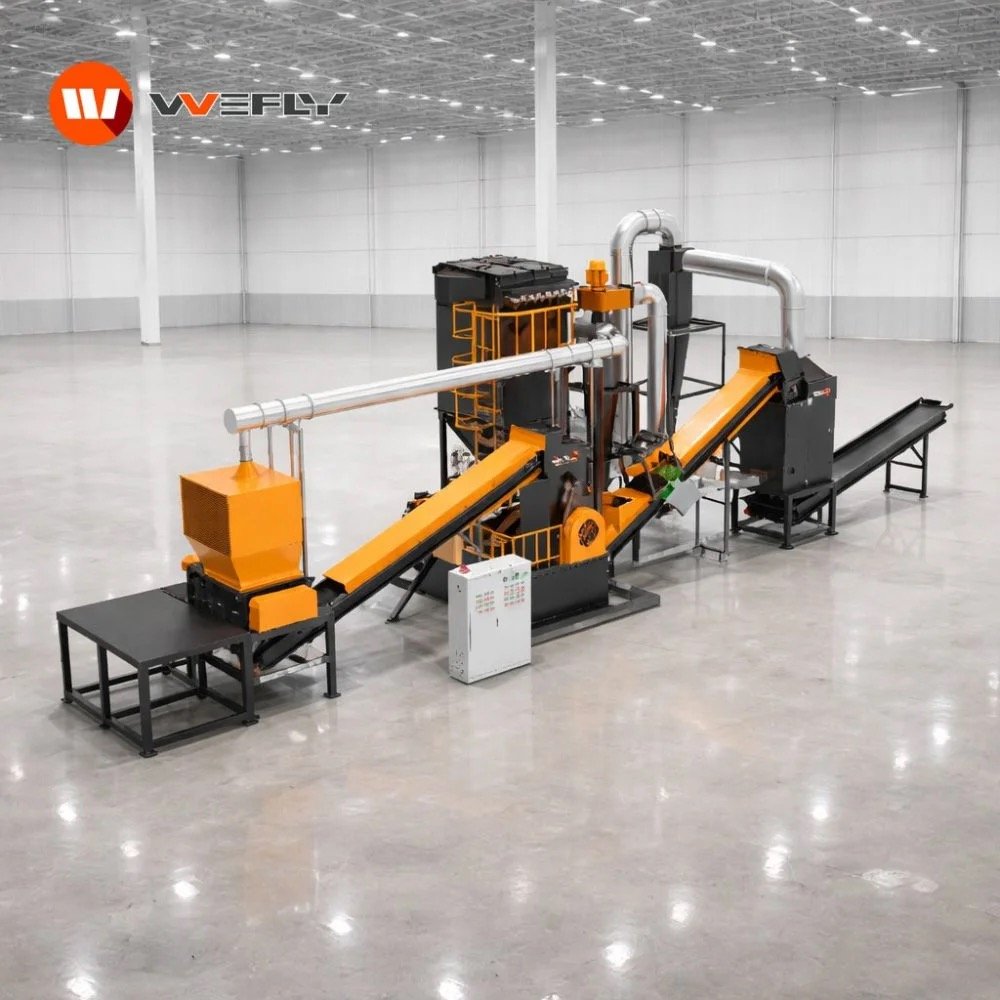
Waste Radiator Crushing Recycling Line for Copper Aluminum Separation
A Waste Radiator Crushing Recycling Line is used to process scrap radiators and recover copper, aluminum, and iron from mixed metal materials.
Waste radiators from air conditioners, generators, automobiles, and other equipment contain valuable non-ferrous metals. With an automatic crushing and sorting line, recycling plants can improve recovery efficiency, reduce manual dismantling, and increase material value.
🔵 View WOLFU Waste Radiator Crushing Recycling Line
The WOLFU Waste Radiator Crushing Recycling Line is designed for automatic scrap radiator processing, using shredding, crushing, magnetic separation, air separation, and dust collection to recover copper, aluminum, and iron with high sorting purity.
Key Specifications
| Feature | Specification | Benefit |
|---|---|---|
| Product Name | Waste Radiator Crushing Recycling Line | Complete radiator recycling solution |
| Model | 2500G | Suitable for medium and large recycling operations |
| Brand | WOLFU | Industrial recycling equipment manufacturer |
| Application | Waste Radiator Recycling | Recovers metal from scrap radiators |
| Raw Material | Air conditioner radiators, generator radiators, automobile radiators | Wide scrap radiator compatibility |
| Capacity | 1500–2500 kg/h | Supports efficient industrial processing |
| Total Power | 154 KW | Supports crushing and sorting operation |
| Final Recovery | Copper, aluminum, iron | Improves scrap metal recycling value |
| Sorting Purity | Up to 99% | Produces cleaner separated materials |
| Main Process | Double-shaft shredding, hammer crushing, magnetic separation, air separation | Complete physical separation workflow |
| Dust Control | Closed dust collection system | Helps improve workshop environment |
| Warranty | 1 Year | Supports project purchasing and after-sales planning |
Recycling Process
Step 1: Waste Radiator Feeding
Waste radiators from air conditioners, vehicles, generators, and other equipment are fed into the recycling line for automatic processing.
Step 2: Double-Shaft Shredding
The double-shaft shredder performs coarse crushing, reducing whole radiators into smaller pieces for further processing.
Step 3: Hammer Crushing
The hammer crusher further crushes the material into smaller particles, usually around 3 cm, making copper, aluminum, and iron easier to separate.
Step 4: Magnetic Separation
The magnetic separator removes iron from the crushed material stream before non-ferrous metal separation.
Step 5: Air Separation
The air separator separates copper and aluminum based on material density and airflow sorting principles.
Step 6: Dust Collection
The closed dust collection system uses negative-pressure operation and two-stage dust removal to reduce dust generation in the workshop.
🔵 Request a Quote for WOLFU Waste Radiator Crushing Recycling Line
Main Advantages
High Sorting Purity
Through shredding, crushing, magnetic separation, and air separation, the final sorting purity can reach up to 99%.
Automatic Radiator Processing
The line reduces manual dismantling work and supports continuous recycling of waste radiators.
Direct Processing of Radiators with Iron Frames
The system can process radiators with iron frames directly, helping simplify the recycling workflow.
Lower Metal Loss
The crushing and separation process is designed to reduce metal loss and improve total recovery value.
Cleaner Production Environment
Closed operation, negative-pressure dust collection, and two-stage dust removal help reduce dust leakage during crushing and sorting.
Wear-Resistant Components
Wear-resistant crusher blades and screens support stable operation and longer service life in heavy scrap metal recycling projects.
Suitable Applications
- Waste radiator recycling plants
- Air conditioner radiator recycling
- Automobile radiator recycling
- Generator radiator recycling
- Copper aluminum separation projects
- Scrap metal recycling facilities
- Non-ferrous metal recovery plants
- Industrial solid waste recycling projects
Related WOLFU Solutions
For scrap copper cable recycling, review:
🔵 WOLFU Scrap Copper Wire Recycling Separator Machine
For aluminum scrap melting and ingot casting, review:
🔵 WOLFU Aluminum Can Recycling Machine
For copper and aluminum ingot casting projects, review:
🔵 WOLFU Medium Frequency Furnace & Ingot Casting Line
Why Choose WOLFU?
WOLFU provides waste radiator recycling lines, copper wire recycling machines, aluminum recycling systems, metal melting furnaces, ingot casting lines, and customized industrial recycling solutions.
For radiator recycling projects, WOLFU can recommend suitable equipment based on radiator type, target capacity, required sorting purity, plant layout, dust control requirements, and downstream metal processing needs.
Conclusion
A Waste Radiator Crushing Recycling Line is a practical solution for recovering copper, aluminum, and iron from scrap radiators.
The WOLFU 2500G line supports 1500–2500 kg/h capacity, 154 KW total power, double-shaft shredding, hammer crushing, magnetic separation, air separation, sorting purity up to 99%, and closed dust collection.
If your company needs reliable equipment for air conditioner radiator recycling, automobile radiator recycling, generator radiator recycling, or copper aluminum separation, WOLFU can provide a customized recycling line based on your project requirements.
🔵 Get a Quote for WOLFU Waste Radiator Crushing Recycling Line
FAQ
What materials can this radiator recycling line process?
It can process waste radiators from air conditioners, generators, automobiles, and other scrap metal sources.
What materials can be recovered?
The line can recover copper, aluminum, and iron from waste radiators.
What is the processing capacity?
The listed capacity of the 2500G model is 1500–2500 kg/h.
Can it process radiators with iron frames?
Yes. The equipment can process radiators with iron frames directly, helping simplify the recycling process.
How does the machine control dust?
The line uses closed operation, negative-pressure dust collection, and two-stage dust removal to reduce dust generation during crushing and separation.