
Solar Panel Precious Metal Recovery: How to Recover Silver and Tin from Waste PV Panels
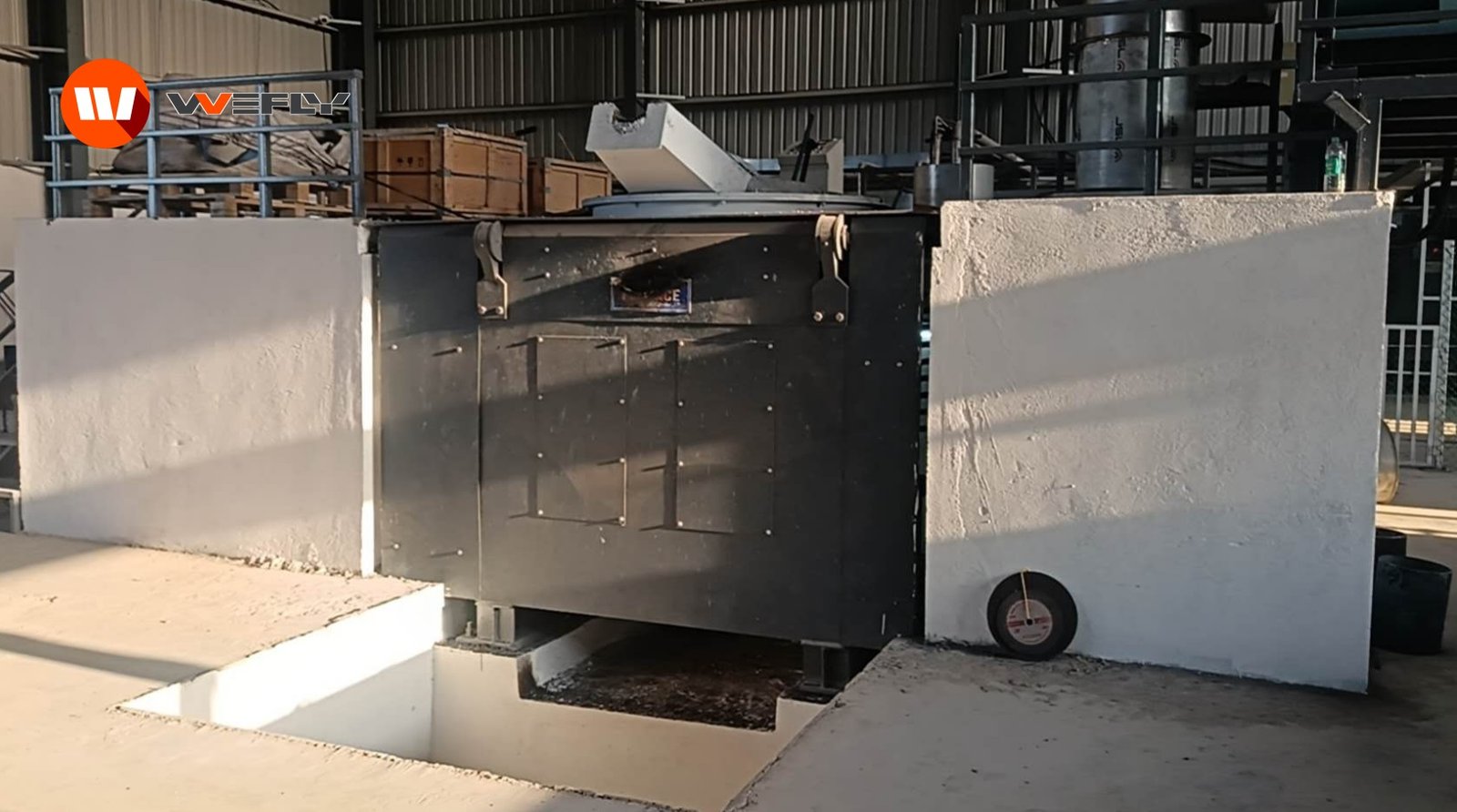
WOLFU Solar Panel Precious Metal Recovery Equipment at Client's FactoryAccording to the joint IRENA and IEA-PVPS report on end-of-life solar PV management, the raw materials locked inside solar panel waste stream could be worth more than USD 15 billion. For PV panel recycling plant operators, that number is not an abstraction. A large share of it sits in two metals that most lines are not yet fully equipped to recover: silver and tin.
At Wolfu (Luoyang) Furnace Industry Co., Ltd., we deliver one-stop solar panel precious metal recovery plant solutions worldwide — from system design and equipment manufacturing to global installation. Our portfolio already spans photovoltaic panel recycling lines, induction melting furnaces engineered for gold, silver and copper, and vacuum smelting systems. In this article, we explain where the value hides in a retired panel, and how our solar panel precious metal recovery equipment recovers it as refined, sellable metal.
Where the Precious Metals Hide in a Solar Panel
A standard crystalline-silicon PV module contains glass, aluminum, silicon, copper, and polymers — but the profit margin often comes from the smallest fractions by weight:
- Silver is screen-printed onto every cell as front-side busbars and fingers, and used in paste form for cell interconnection. Solar has become one of the largest industrial consumers of silver — demand the industry tracks annually at The Silver Institute. A single module contains only several grams — but at plant scale, across thousands of tonnes of feedstock, silver recovered from the silicon fraction can significantly change the economics of a recycling project.
- Tin is used as solder coating on the copper ribbons (tabbing and bus wire) that interconnect the cells. PV ribbon typically contains roughly 80% copper, 8% tin, and 5% lead by weight, and tin use in PV ribbon has grown to more than 45,000 tonnes per year globally, as reported by the International Tin Association.
The challenge is separation. The silver is dispersed as a micro-layer bonded to silicon powder; the tin is alloyed onto a copper substrate. Recovering them at commercial purity requires a purpose-built refining chain behind the sorting line — not just shredders and sorters.
Step One: Sort the Panel into Clean, Concentrated Streams
Solar panel precious metal recovery starts with upstream quality. If the sorting stage delivers mixed, contaminated fractions, no downstream chemistry can fix it economically.
Our solar panel recycling equipment is engineered around this principle, splitting delaminated modules into three product streams — silicon fragments and powder, copper ribbons, and crushed glass — at up to 97% purity, as we detailed in our PV recycling sorting system overview.
The result is exactly what the refining stage needs:
- a metal-rich silicon powder carrying the silver paste.
- a copper ribbon fraction carrying the tin-lead solder coating.
Step Two: Silver Recovery — From Silicon Powder to Ingots
The silicon powder fraction from the PV panel recycling sorting line feeds a wet silver extraction line that recovers the metal through a closed, continuous process:
- Powder conditioning. Feed material is dried, de-dusted, and metered into the solar panel precious metal recovery line to stabilize leaching efficiency.
- Acid leaching. The powder enters a corrosion-resistant reaction vessel where controlled acid dosing dissolves the silver into solution. A filter press system then separates the leachate from the solid silicon residue — which can itself be purified for resale.
- Precipitation. In the reaction tank, sodium chloride solution converts dissolved silver nitrate into silver chloride precipitate. Vacuum filtration separates the AgCl, and multiple washing stages remove residual impurities — including tin and other metal compounds.
- Reduction. The purified silver chloride enters the reduction reactor, where a reducing agent converts AgCl into fine silver powder, collected by vacuum filtration and drying.
- Electrolytic refining and casting. The powder is refined in silver electrolysis equipment, then melted and cast into high pure silver ingots.
The final casting step runs on the same core technology as our medium frequency induction melting furnace line — induction furnaces we build for gold, silver, copper, steel and aluminum, from 300 kg laboratory-scale units up to 20-tonne industrial production lines. Precise induction heating means fast, uniform melting, low burn loss of precious metal, and consistent ingot quality — the difference between selling “silver-bearing material” and selling London Good Delivery-style refined product.
Step Three: Tin Recovery — Untangling the Solder Ribbon
The copper ribbon fraction looks like scrap copper — but the tin-lead solder coating makes direct resale difficult and lowers the copper price. The solar panel precious metal recovery equipments Wolfu supplies:
- Hydrometallurgical dissolution. Acetic acid/hydrogen peroxide mixtures selectively dissolve the solder layer while leaving the copper substrate intact; tin is subsequently recovered as metallic tin or tin oxide powder.
- Vacuum smelting and molten-salt electrolysis. For higher-throughput plants, the ribbon can be processed directly in a vacuum induction melting furnace of the type we build for copper, lead and complex non-ferrous feeds. Under controlled vacuum, differences in vapor pressure separate the alloy constituents into clean, marketable metal fractions.
Whichever chemistry fits your feedstock and local regulations, the engineering principles are the same ones behind every Wolfu system: precise thermal control, corrosion-resistant materials, tight process automation, and equipment designed to run continuously with minimal downtime.
What to Ask Before Buying Solar Panel Precious Metal Recovery & Refining Equipment
If you are evaluating suppliers for a silver and tin recovery line, we recommend asking five questions — and we are happy to answer every one of them for our own equipment:
- What is the recovery rate and purity?
- What are the reagent and energy consumption figures per tonne? Operating cost, not purchase price, dominates project economics.
- How is the solar panel precious metal recovery line commissioned, and who trains my operators? Every Wolfu turnkey project includes plant layout design, equipment manufacturing, installation, commissioning, and operator training.
The global policy environment is also moving in one direction: IEA PVPS Task 12 and successive EU waste framework directives are pushing producers and recyclers toward high-value, high-purity recovery. Plants that master solar panel precious metal recovery early will own the most profitable position in the value chain.
The Bottom Line
Waste solar panels are, in effect, a high-grade urban ore. The recyclers who profit most from the coming wave will not be those who simply shred panels — they will be those who refine what remains. With Wolfu’s sorting, refining and smelting equipment in one integrated turnkey line, high silver ingots and commercial-grade tin are an achievable, bankable output of your plant, not a lost byproduct.
Want to discuss your solar panel precious metal recovery project? Get a customized solution and quotation from our engineering team — tell us your target capacity, feedstock type, and expected panel mix, and we will respond with a tailored process proposal.