
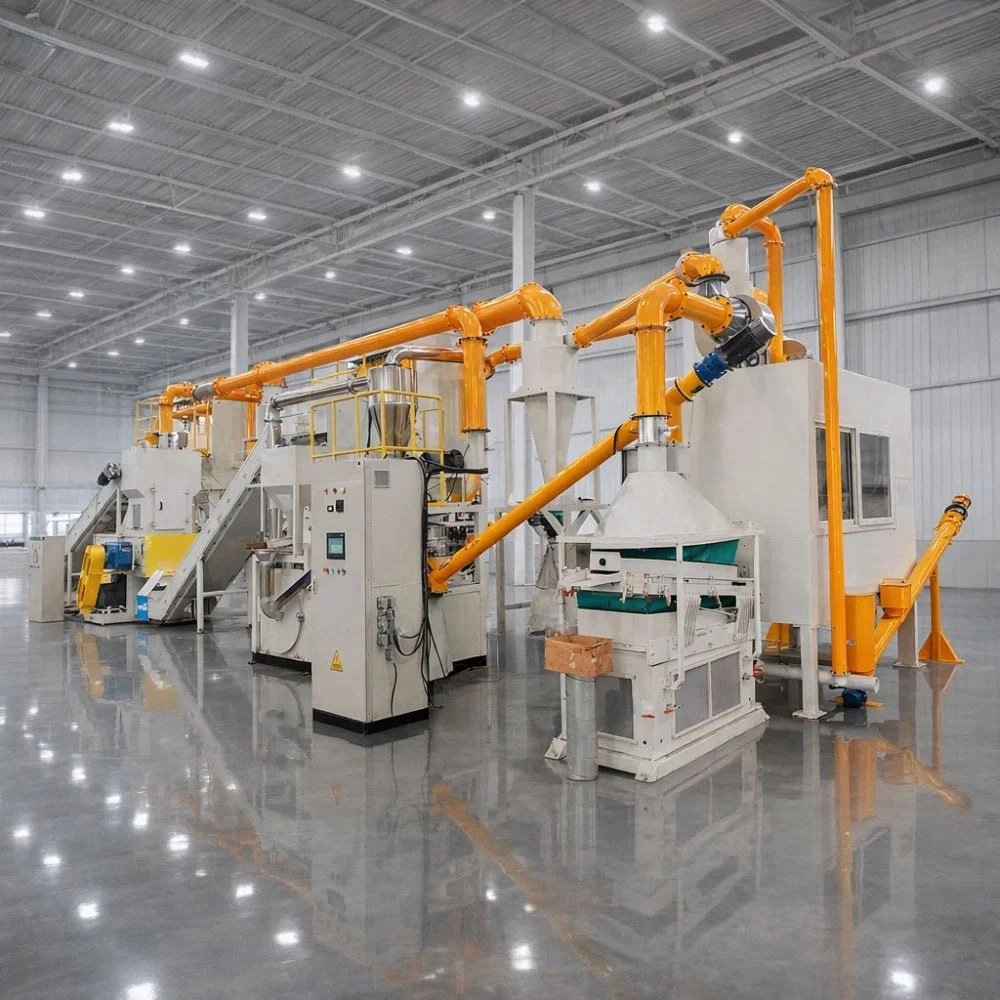
Global Solar Panel Recycling Market Outlook and WOLFU’s Technology Advantages
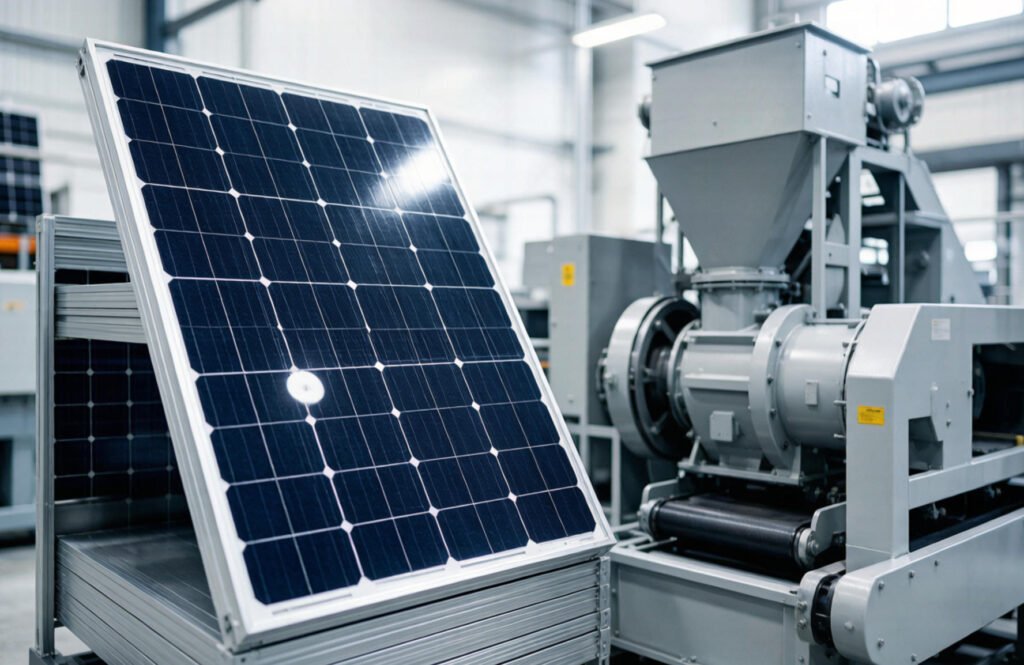
Solar Panel Recycling
Global cumulative solar installations have exceeded 2.3 terawatts, a large-scale modules is entering retirement. IRENA predicts that by 2050, global solar waste will reach 78 million tons. In this upcoming wave of solar recycling, WOLFU stands at the forefront with mature recycling equipment and proven project delivery experience both domestically and internationally.
History of the Global Solar Industry
1839 — French physicist Becquerel discovers the photovoltaic effect, laying the foundation for solar energy physics.
1954 — Bell Labs creates the first practical single-crystal silicon solar cell, achieving 6% efficiency.
2000 — Germany enacts the EEG (Renewable Energy Sources Act), kicking off the policy-driven era. Global cumulative installed capacity is only 1.3 GW.
2012 — Global cumulative solar installations surpass 100 GW.
2020 — The cost of solar electricity drops below coal. A global consensus on carbon neutrality fuels explosive growth.
2025 — Global cumulative installations exceed 2.3 terawatts. The first large batch of modules enters retirement.
The Solar Panel Recycling Boom Is Coming
Solar panels are typically designed to last 25 to 30 years. This means that global solar panels will officially enter the retirement period starting from 2025. A single solar panel is made up of about 92% glass, aluminum, and semiconductor materials, and also contains roughly 1% silver and other precious metals. Retired panels are not “waste” — they are “urban mines” waiting to be tapped.
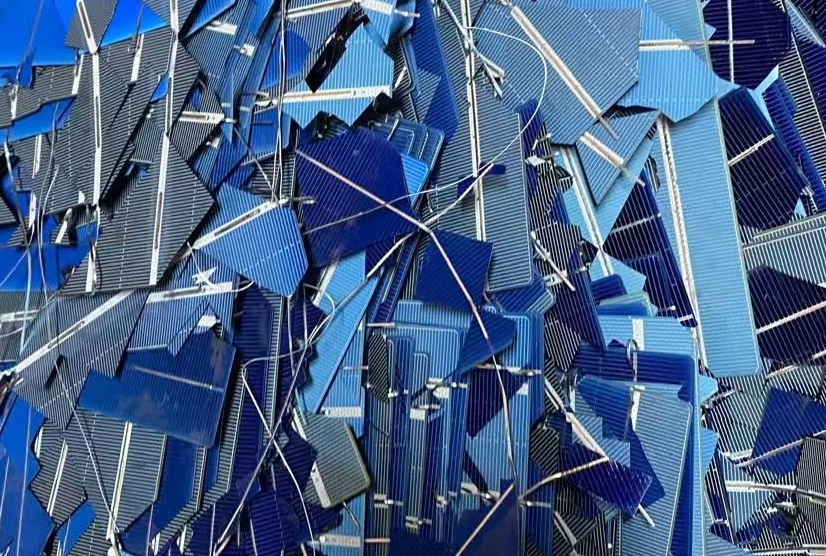
Solar Panel Recycling
🔵 View WOLFU Solar PV Panel Recycling Plant
Global Retirement Scale Forecast
- 860,000 tons — Global retired module volume in 2025
- 3.8 million tons — Projected global retirement volume in 2030
- 78 million tons — Global cumulative waste by 2050 (IRENA estimate)
- 20 million tons — China’s cumulative retirement volume by 2040
Global Legislation Speeds Up Recycling Systems
European Union: The revised WEEE Directive (effective 2026) raises the solar panel recycling rate target to 85%. Manufacturers must bear full lifecycle responsibility.
China: The Ministry of Industry and Information Technology released the “Interim Measures for Solar Panel Recycling Management” in 2025, clarifying extended producer responsibility and recycling network requirements. The target is to reach 250,000 tons of cumulative recycling utilization by 2027.
United States: California, Washington State, and others have taken the lead in implementing Extended Producer Responsibility (EPR) legislation. The Inflation Reduction Act includes solar recycling subsidy provisions.
Japan, South Korea, India: These countries have successively introduced solar waste management frameworks, subsidy programs, and recycling standards.
The share of new global solar project contracts that include recycling service clauses has jumped from 8% in 2023 to 34% in 2025.
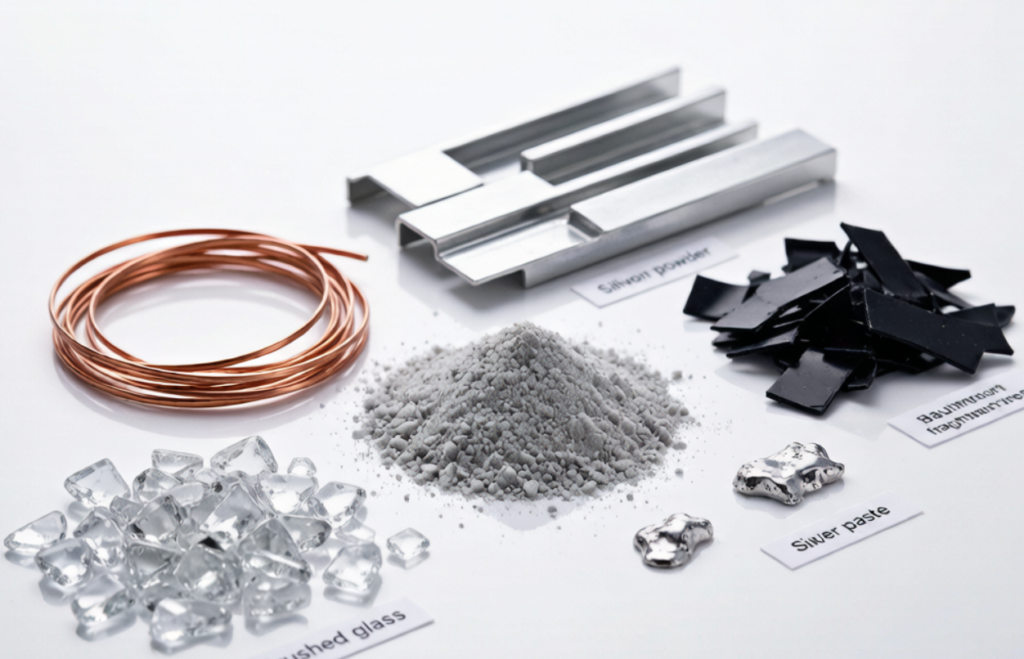
Solar Panel Recycling
WOLFU – A Leader in Mature Technology and Proven Practice of Solar Panel Recycling
In this looming recycling wave, technology maturity and engineering execution capability are what matter most. WOLFU, a professional manufacturer of recycling production lines and metallurgical equipment, has built a complete equipment system and global delivery capability in the field of solar panel recycling.
Company Overview
WOLFU is a specialized manufacturer focused on advanced recycling production lines and metallurgical equipment. The company provides global customers with complete system solutions covering solar panel recycling, battery recycling, non-ferrous metal recycling, and metal smelting and refining. WOLFU has full-process delivery capabilities — from solution design and equipment manufacturing to installation, commissioning, and personnel training — with customers spanning multiple countries and regions worldwide.
Core Products and Technical Specifications
WOLFU offers solar recycling production lines covering a range of processing capacities, meeting the diverse needs of small and medium projects as well as large industrial-scale recycling plants:
| Processing capacity | 1,500–2,000 kg/h | 200 kg/h |
| Motor power | 315 kW | 90 kW |
| Equipment weight | 11 tons | 9.5 tons |
| Footprint | 36 × 8 × 5 m | Compact layout |
| Recycled outputs | Junction boxes, aluminum frames, glass, metals, silicon powder, plastics | |
| Control method | PLC fully automatic control | |
| Process type | Physical recycling (no chemical pollution) |
Mature Physical Recycling Process
WOLFU’s solar recycling production line uses a purely physical separation process. Through mechanical crushing, grinding, and physical sorting, it achieves efficient material recovery. This is widely recognized in the industry as one of the most environmentally friendly and stable recycling technology routes available.
Process: Pre-treatment disassembly → Crushing → Grinding → Airflow vibration sorting → Electrostatic sorting → Dust collection
These six steps work in sequence: First, junction boxes, aluminum frames, rubber seals, and glass layers are removed. The remaining materials are then crushed and ground into fine particles. Next, airflow vibration separates materials of different densities — copper, silicon powder, plastics, and more. Electrostatic sorting further removes any residual metals, boosting recovery purity. Finally, an integrated dust collection system captures the dust generated during crushing and grinding, keeping the workshop clean and safe.
🔵 Request a Quote for WOLFU Solar PV Panel Recycling Plant
Technology Advantages & Core Competitiveness
- Fully Automated Production Line: PLC fully automatic control covers the entire process from material feeding to final output, supporting continuous operation.
- Multi-Material High Recovery Rate: Capable of recycling six major categories of materials — junction boxes, aluminum frames, glass, metals, silicon powder, and plastics. The recovery rate for high-value materials leads the industry.
- Low Energy Consumption Design: Equipment is designed with low energy consumption as a core goal. The power-to-capacity ratio is optimized to help customers control per-unit processing costs and improve profit margins.
- Customizable: Production line solutions can be tailored to customer needs, workshop layout, automation level, and final recovery targets, flexibly adapting to different project scales.
- Full Lifecycle Service: Pre-sales consulting, installation and commissioning, personnel training, spare parts supply, remote support, and other full-lifecycle services.
Successful Application Scenarios and Project Track Record
WOLFU’s solar panel recycling equipment has been successfully delivered in multiple locations, building up a wealth of practical experience:
Suitable Applications
- Waste solar panel recycling plants
- Decommissioned PV power stations
- Solar farm replacement projects
- Industrial PV waste disposal plants
- Renewable energy recycling companies
- Photovoltaic module recycling projects
- Solid waste recycling facilities
Related WOLFU Solutions
For aluminum frame removal before full PV recycling, review:
🔵 WOLFU Solar Panel Aluminum Frame Removing Machine
For high-capacity PV module recycling, review:
🔵 WOLFU Solar Panel Recycling Line
For photovoltaic silicon processing after recovery, review:
🔵 WOLFU Industrial Silicon Melting Induction Furnace
Why Choose WOLFU?
WOLFU provides solar panel recycling equipment, battery recycling lines, metal melting furnaces, aluminum casting systems, and customized industrial recycling solutions.
For solar PV panel recycling projects, WOLFU can recommend suitable equipment based on panel type, target capacity, workshop layout, automation level, and final material recovery goals.
Conclusion
With a complete solar panel recycling equipment system, WOLFU has completed multiple project deliveries, including full-process support from solution design through to production operation. The company also provides aluminum frame disassembly machines, industrial silicon smelting induction furnaces, and other supporting equipment, giving customers an end-to-end solution from component disassembly to silicon material purification.
At a time when the global solar recycling market is still fragmented and fewer than 30 companies worldwide have processing capacity at the 10,000-ton level, WOLFU has established itself as one of the rare equipment suppliers in this industry with complete engineering delivery capability — backed by mature recycling production lines, flexible customization, and full-lifecycle service.
🔵 Get a Quote for WOLFU Solar PV Panel Recycling Plant
FAQ
What materials can this solar PV panel recycling plant recover?
It can recover glass, metal, silicone powder, and plastic from used photovoltaic panels.
What is the processing capacity?
The processing capacity is 200 kg/h.
Is this production line fully automatic?
Yes. It is a fully automatic production line designed to reduce manual labor and support stable operation.
What are the core components?
The core components include motor and PLC.
What projects is this recycling plant suitable for?
It is suitable for decommissioned PV power stations, waste solar panel recycling plants, solar farm replacement projects, and industrial PV waste disposal facilities.
The projection of 78 million tons of solar waste by 2050 raises significant concerns about recycling capacity. It’s interesting that manufacturers will be responsible for an 85% recycling rate as outlined in the revised WEEE Directive. With the recycling service clauses in new contracts increasing from 8% to 34%, how can smaller companies prepare for this shift in responsibility and ensure compliance with emerging regulations?
let’s talk by WhatsApp:+86 151 0379 2578