
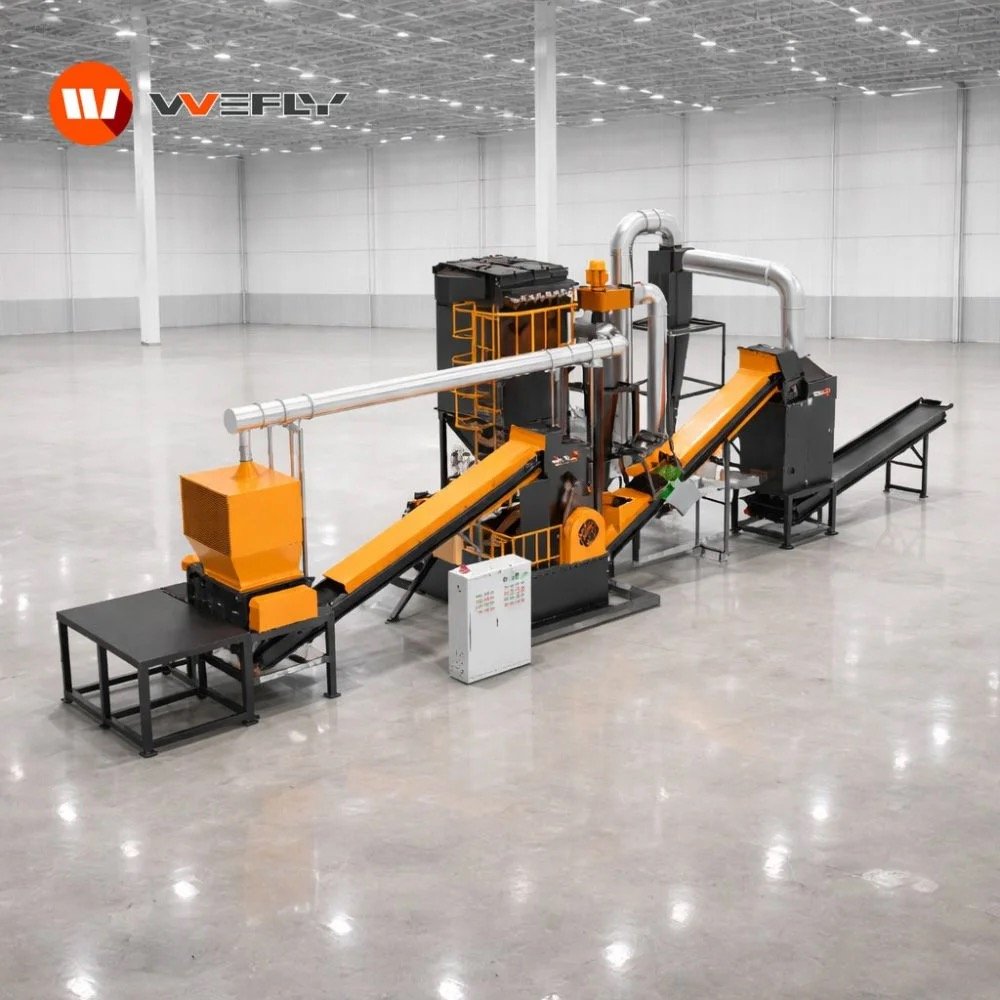
Waste Radiator Crushing Recycling Line for Metal Recovery
A waste radiator crushing recycling line is designed to process discarded air conditioner radiators, car radiators, and industrial heat exchanger scrap. These waste radiators usually contain valuable metals such as copper, aluminum, and iron, making them important materials for recycling businesses.
Manual dismantling is slow, labor-intensive, and often inefficient. A complete crushing and separation line can improve processing speed, increase metal recovery value, and reduce unnecessary material waste.
WOLFU provides a professional waste radiator crushing recycling line for scrap metal recycling plants, waste processing facilities, and industrial resource recovery operations.
What Is a Waste Radiator Crushing Recycling Line?
A waste radiator crushing recycling line is an industrial system used to crush, separate, and recover metals from used radiators. The system typically includes feeding equipment, crushers, conveyors, magnetic separators, air separation systems, and dust collection equipment.
The main purpose is to separate copper, aluminum, and iron from mixed radiator waste. After separation, recovered metals can be sold, remelted, or reused in industrial manufacturing.
This type of recycling line is suitable for processing air conditioner radiators, automobile radiators, copper-aluminum radiators, and other heat exchange components.
How the Radiator Recycling Process Works
Material Feeding
Waste radiators are loaded into the feeding system. Depending on the line design, materials may be fed manually or through a conveyor.
Crushing and Size Reduction
The radiator is crushed into smaller pieces. This step breaks the structure and prepares the mixed materials for separation.
Magnetic Separation
Iron and other ferrous materials are removed by magnetic separators. This improves the purity of the remaining copper and aluminum material.
Airflow and Gravity Separation
Copper and aluminum are separated according to density differences through airflow, vibration, and gravity separation systems.
Dust Collection
Dust collection equipment helps reduce airborne particles and keeps the recycling workshop cleaner and safer.
Main Advantages of Radiator Crushing Recycling Equipment
High Metal Recovery Value
Radiators contain valuable copper and aluminum. Efficient separation helps recyclers recover more usable material and improve profit margins.
Reduced Manual Labor
Automated crushing and separation reduce dependence on manual dismantling and improve overall production efficiency.
Stable Processing Capacity
A complete recycling line can support continuous processing, making it suitable for commercial scrap recycling operations.
Improved Material Purity
Separated copper, aluminum, and iron have higher resale and reuse value than mixed scrap materials.
Cleaner Recycling Operation
Dust collection and controlled material handling help improve workshop conditions and reduce environmental impact.
Applications of Waste Radiator Recycling Lines
- Scrap Metal Recycling Plants: Processing copper-aluminum radiator waste
- Automotive Recycling Facilities: Recovering metals from used vehicle radiators
- Air Conditioner Recycling: Separating copper and aluminum from AC radiators
- Industrial Waste Processing: Handling heat exchanger and cooling system scrap
- Metal Recovery Businesses: Producing separated copper, aluminum, and iron materials
Why Radiator Recycling Matters
Waste radiators are common in automotive repair, appliance recycling, HVAC replacement, and industrial maintenance. If these materials are not properly recycled, valuable copper and aluminum may be wasted.
According to the United States Environmental Protection Agency, recycling metals helps conserve natural resources, reduce landfill waste, and lower the environmental impact of manufacturing.
For recyclers, radiator processing offers both environmental and commercial value. Efficient equipment allows companies to recover high-value metals while reducing handling costs.
Why Choose WOLFU Waste Radiator Crushing Recycling Line?
WOLFU’s waste radiator crushing recycling line is designed for efficient metal separation, stable production, and practical industrial operation.
The equipment helps recycling businesses process mixed radiator scrap into separated copper, aluminum, and iron materials. This supports higher recovery value and better material reuse.
WOLFU also provides related recycling and industrial equipment, including:
For more technical articles and industry updates, visit the WOLFU Industry Blog.
How to Choose the Right Radiator Recycling Line
Processing Capacity
Select equipment based on your expected daily or hourly radiator processing volume. Proper capacity planning helps avoid production bottlenecks.
Material Type
Different radiators may contain different ratios of copper, aluminum, iron, and plastic. Equipment should match your main scrap material source.
Separation Efficiency
Higher separation efficiency improves copper and aluminum purity, increasing final material value.
Automation Level
Automated feeding, crushing, conveying, and separation systems reduce labor costs and improve consistency.
Environmental Control
Dust collection and noise reduction should be considered when building a professional recycling production line.
Business Value of Radiator Recycling
Copper and aluminum are widely used in construction, electrical equipment, transportation, and industrial manufacturing. Because these metals retain strong reuse value, radiator recycling can become a profitable part of scrap metal processing.
A well-designed recycling line helps businesses convert bulky, mixed waste radiators into cleaner separated materials. This improves storage efficiency, transportation value, and resale opportunities.
For recycling companies, investing in radiator crushing and separation equipment can strengthen long-term competitiveness in the metal recovery market.
Conclusion
A waste radiator crushing recycling line is a practical solution for recovering copper, aluminum, and iron from discarded radiators and heat exchanger scrap.
With automated crushing, separation, and dust collection, the system improves processing efficiency, reduces labor intensity, and supports higher material recovery value.
If your business needs reliable radiator recycling equipment for scrap metal recovery, WOLFU provides industrial solutions designed for efficient and stable operation.
Explore WOLFU Waste Radiator Crushing Recycling Line and Request a Quote
FAQ
What materials can be recovered from waste radiators?
Common recoverable materials include copper, aluminum, iron, and sometimes plastic or other minor components.
What types of radiators can this recycling line process?
It can process air conditioner radiators, automobile radiators, copper-aluminum radiators, and industrial heat exchanger scrap.
Why use an automatic radiator recycling line?
An automatic line improves processing speed, reduces manual labor, increases separation efficiency, and helps recover higher-value metals.