
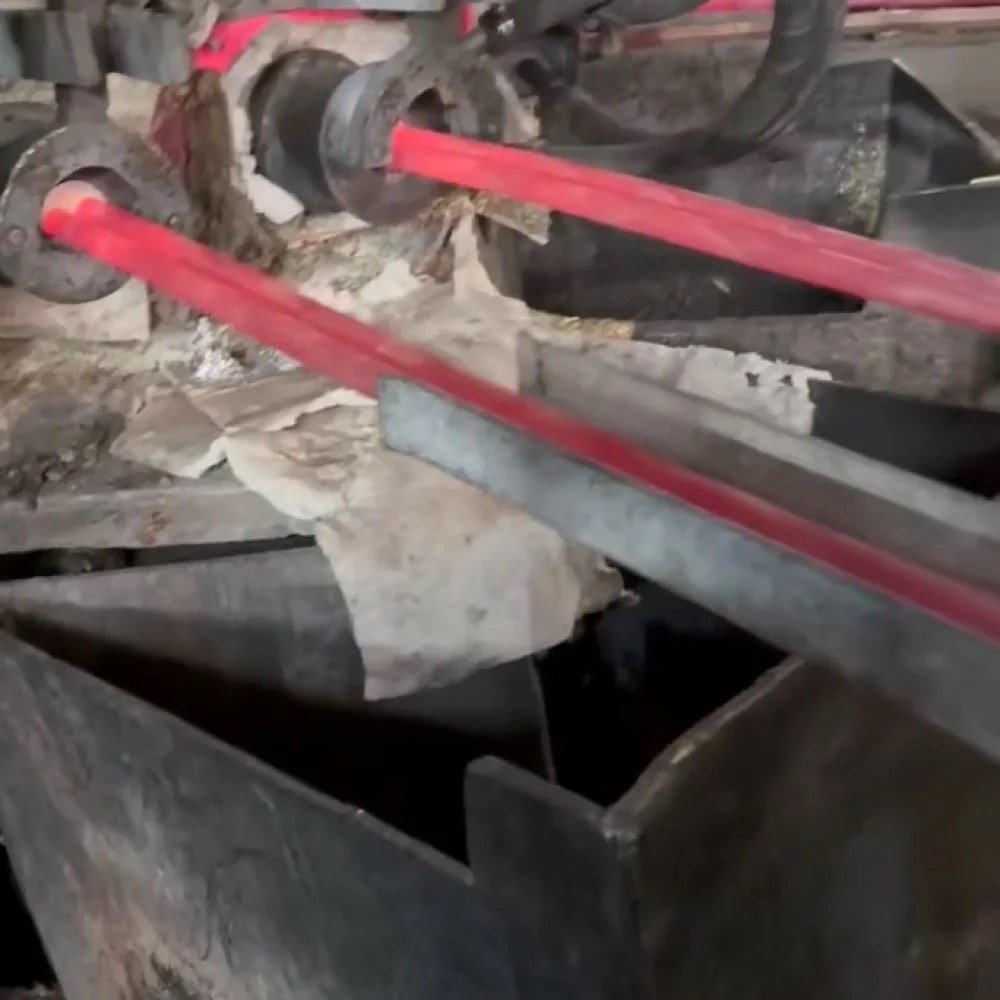
Horizontal Copper Rod Continuous Casting Machine for Copper Rod Production
A Horizontal Copper Rod Continuous Casting Machine is used for efficient copper cathode melting and continuous production of copper rods, brass rods, and copper alloy products.
For copper processing plants, cable material factories, non-ferrous metal foundries, and alloy casting workshops, stable casting quality and continuous output are essential for long-term production.
🔵 View WOLFU Horizontal Copper Rod Continuous Casting Machine
The WOLFU Horizontal Copper Rod Continuous Casting Machine with Melting Furnace integrates copper melting, temperature holding, continuous casting, cooling, tension control, take-up, and automatic control support into one complete production system.
Key Specifications
| Feature | Specification | Benefit |
|---|---|---|
| Product Name | Horizontal Copper Rod Continuous Casting Machine with Melting Furnace | Complete copper rod casting solution |
| Brand | WOLFU | Industrial furnace and casting equipment manufacturer |
| Machine Type | Continuous Casting Machine | Supports continuous copper rod production |
| Raw Material | Copper Cathode | Suitable for high-quality copper rod production |
| Final Product | Copper Rod, Brass Rod, Copper Alloy Products | Flexible non-ferrous metal output |
| Voltage | 380V | Standard industrial power |
| Power | 500–3200 KW Customized | Can match different production scales |
| Capacity | 3000–12000 Tons / Year | Suitable for industrial copper processing plants |
| Output Cycle | 4–6 Seconds | Supports efficient continuous production |
| Casting Speed | 60–700 mm/min | Flexible for different casting specifications |
| Maximum Furnace Temperature | 1300℃ | Supports copper and copper alloy melting |
| Holding Furnace Control | ±10℃ | Improves molten copper stability |
| Noise Level | ≤80 dB | Supports industrial workshop operation |
| Certification | ISO9001 | Supports B2B project purchasing |
Casting Options
| Item | Specification |
|---|---|
| Casting Type | 2, 4, 6 |
| Casting Material | Lead Brass, Copper, Copper Alloy |
| Casting Specification | Φ12–Φ80, Φ120, Φ140, Φ180, Φ200 mm |
| Equipment Power | 550 KW sample configuration |
| Sample Production Capacity | 4000 Tons / Year |
Production Process
Step 1: Copper Cathode Melting
Copper cathodes are loaded into the induction melting furnace and melted into molten copper for continuous casting.
Step 2: Oxidation Protection
During melting, molten copper can be protected by charcoal or graphite covering to reduce oxidation before entering the holding furnace.
Step 3: Holding Furnace Temperature Control
The holding furnace keeps molten copper at a stable temperature of about 1150℃ ±10℃ before casting.
Step 4: Horizontal Continuous Casting
Molten copper enters the continuous casting machine and is crystallized through a water-cooled copper mold to form bright copper rods.
Step 5: Tension and Take-Up
The regulating wheel frame, tension device, and twin-head take-up machine guide and collect the finished copper rod for downstream processing.
🔵 Request a Quote for WOLFU Horizontal Copper Rod Continuous Casting Machine
Main Advantages
Complete Melting and Casting System
The line includes induction melting furnace, continuous casting machine, regulating wheel frame, tension device, twin-head take-up machine, water cooling system, electrical control system, feeding system, and temperature measuring system.
Stable Temperature Control
The holding furnace temperature control range of ±10℃ helps maintain stable molten copper quality before crystallization.
High Production Efficiency
The system supports 4–6 seconds output cycle and 3000–12000 tons/year capacity, making it suitable for continuous industrial production.
Flexible Casting Specifications
The machine supports multiple casting types and rod specifications, including Φ12–Φ80, Φ120, Φ140, Φ180, and Φ200 mm.
Automatic Control Support
The production line can be configured with PLC programmable control, process parameter presetting, and position feedback for easier operation.
Suitable Applications
- Copper rod production plants
- Brass rod casting workshops
- Copper alloy processing factories
- Non-ferrous metal foundries
- Wire and cable material production
- Copper cathode melting projects
- Industrial continuous casting lines
Related WOLFU Equipment
For copper and aluminum ingot casting, review:
🔵 WOLFU Medium Frequency Furnace & Ingot Casting Line
For industrial metal melting, review:
🔵 WOLFU Medium Frequency Induction Melting Furnace
For cooling support in casting lines, review:
🔵 WOLFU Closed Water Cooling Tower
Why Choose WOLFU?
WOLFU provides copper rod continuous casting machines, induction melting furnaces, cooling systems, metal casting equipment, recycling production lines, and customized metallurgical solutions.
For copper rod continuous casting projects, WOLFU can recommend suitable equipment according to rod diameter, annual output, casting speed, raw material type, automation level, and workshop layout.
Conclusion
A Horizontal Copper Rod Continuous Casting Machine is a practical solution for copper cathode melting and continuous production of copper rods, brass rods, and copper alloy products.
The WOLFU line supports 380V voltage, 500–3200 KW customized power, 3000–12000 tons/year capacity, 4–6 seconds output cycle, 60–700 mm/min casting speed, 1300℃ maximum furnace temperature, and automatic control support.
If your company needs reliable equipment for copper rod casting, brass rod production, or copper alloy continuous casting, WOLFU can provide a customized production line based on your project requirements.
🔵 Get a Quote for WOLFU Horizontal Copper Rod Continuous Casting Machine
FAQ
What raw material does this machine process?
It is mainly designed for copper cathode melting and continuous casting.
What final products can it produce?
It can produce copper rods, brass rods, and copper alloy products.
What is the annual production capacity?
The listed capacity range is 3000–12000 tons per year, depending on configuration.
What casting specifications are available?
The system supports Φ12–Φ80, Φ120, Φ140, Φ180, and Φ200 mm casting specifications.
Can WOLFU customize the production line?
Yes. WOLFU can customize the line according to rod diameter, annual output, casting speed, raw material type, automation requirements, and workshop layout.