
Induction Melting vs. Fuel-Fired Furnaces: Which Is Better for Metal Recycling?

As manufacturers and metal recycling companies evaluate energy costs, production efficiency, and industrial electrification, selecting the right melting technology has become an increasingly important investment decision.
Two common options are electric induction melting furnaces and fuel-fired melting furnaces.
Both technologies can process recyclable metals, but they differ in heating methods, energy requirements, temperature control, maintenance, and operating costs.
For recycling plant operators, choosing between them requires more than comparing equipment prices.
The right solution depends on the metal being processed, production capacity, local energy prices, electrical infrastructure, and long-term operating requirements.
This guide explains the key differences and provides practical considerations for selecting industrial metal melting equipment.
1. Why Melting Technology Matters in 2026
Industrial electrification is becoming an important consideration for manufacturers seeking to modernize production equipment and manage energy use.
At the same time, metal recycling businesses face pressure to control operating costs while maintaining consistent material quality.
Copper, aluminum, steel, and other recyclable metals require different melting conditions. Their thermal properties, oxidation behavior, and processing requirements influence furnace selection.
For facilities planning new investments or replacing aging equipment, the choice between electric induction and fuel-fired melting can affect:
- Energy consumption and utility costs
- Melting capacity and production scheduling
- Temperature control and product consistency
- Maintenance requirements
- Workplace conditions and environmental controls
- Future equipment expansion
Understanding these factors helps operators make decisions based on actual production needs rather than general equipment claims.
2. How Does an Induction Melting Furnace Work?
An induction melting furnace uses electromagnetic induction to heat electrically conductive materials.
Alternating current flows through an induction coil, generating a changing magnetic field.
This field induces electrical currents within the metal charge, producing heat through electrical resistance.
Depending on the furnace design, electromagnetic forces can also create movement within the molten metal.
Main Components
A typical medium-frequency induction melting system includes:
- Induction furnace body and coil
- Electrical power supply and control cabinet
- Cooling water system
- Refractory lining or suitable crucible
- Tilting or pouring mechanism
- Supporting electrical and safety systems
Advantages of Induction Melting
Induction systems can provide responsive electrical power control and are suitable for many batch melting applications.
Because heat is generated within the metal charge, induction melting avoids the need for direct fuel combustion inside the furnace.
This can reduce combustion-related emissions at the point of use.
However, induction equipment requires a suitable electrical supply, reliable cooling, and proper maintenance.
Actual melting performance depends on the metal, charge preparation, furnace configuration, and operating procedures.
3. How Do Fuel-Fired Melting Furnaces Work?
Fuel-fired melting furnaces use combustion to generate heat.
Common fuel sources include natural gas, liquefied petroleum gas, and fuel oil.
Heat is transferred to the metal through hot combustion gases, radiation, and the furnace structure.
Depending on the application, fuel-fired equipment may include crucible furnaces, reverberatory furnaces, rotary furnaces, and other configurations.
Main Components
Typical systems may include:
- Furnace chamber or crucible
- Burners and fuel supply system
- Combustion air equipment
- Refractory lining
- Temperature monitoring and controls
- Exhaust and emissions management equipment
Advantages of Fuel-Fired Melting
Fuel-fired furnaces can be suitable for facilities with established fuel infrastructure or limited electrical capacity.
Certain furnace configurations also support continuous melting, holding, or large-scale processing.
However, performance varies significantly between furnace types.
A well-designed fuel-fired furnace may be economically competitive where fuel prices are favorable, while an inefficient or poorly maintained system can experience substantial heat losses.
4. Induction vs. Fuel-Fired Furnaces: Key Differences
The following comparison summarizes important operating characteristics.
| Comparison Factor | Induction Furnace | Fuel-Fired Furnace |
|---|---|---|
| Energy Source | Electricity | Natural gas, LPG, or fuel oil |
| Heating Method | Electromagnetic induction | Combustion heat transfer |
| Temperature Control | Electrical power regulation | Burner and combustion control |
| Point-of-Use Combustion | No fuel combustion in the furnace | Combustion gases are generated |
| Electrical Requirements | Significant electrical capacity may be required | Usually lower electrical demand for the heating process |
| Cooling Requirements | Often requires active water cooling | Depends on furnace design |
| Maintenance Focus | Coil, power supply, cooling, refractory | Burners, fuel system, exhaust, refractory |
| Operating Cost | Influenced by electricity tariffs and demand charges | Influenced by fuel prices and thermal efficiency |
| Typical Applications | Batch melting and selected foundry operations | Melting, holding, and selected continuous operations |
Neither technology is automatically superior in every situation.
A proper comparison should consider the complete production process, not just the furnace heating method.
5. Which Furnace Has Lower Operating Costs?
Operating cost is often the deciding factor when evaluating industrial melting equipment.
However, comparing electricity prices directly with natural gas prices does not provide a complete answer.
A more useful approach is to calculate the total cost per ton of metal melted.
Energy Cost per Ton
For an induction furnace:
Electricity Cost per Ton = Electricity Consumption (kWh/ton) × Electricity Price ($/kWh)
For a fuel-fired furnace:
Fuel Cost per Ton = Fuel Consumption per Ton × Fuel Unit Price
Fuel consumption should be expressed in consistent units, such as MMBtu per ton or cubic meters per ton.
Illustrative Cost Comparison
Consider two hypothetical melting operations:
| Parameter | Induction Furnace | Gas-Fired Furnace |
|---|---|---|
| Energy Consumption | 650 kWh/ton | 5.0 MMBtu/ton |
| Energy Price | $0.10/kWh | $8.00/MMBtu |
| Calculated Energy Cost | $65/ton | $40/ton |
Under these assumptions, the gas-fired furnace has a lower direct energy cost.
However, this example does not include electrical demand charges, standby losses, labor, refractory maintenance, melting losses, or other operating expenses.
The assumed energy consumption values are illustrative rather than guaranteed equipment performance figures.
A different electricity tariff, fuel price, furnace design, or operating schedule could change the result.
Other Costs to Consider
A realistic cost comparison should also include:
- Labor requirements
- Furnace maintenance and replacement parts
- Refractory lining consumption
- Cooling water and auxiliary equipment
- Metal oxidation and melting losses
- Emissions management
- Production downtime
- Equipment depreciation
For plants operating multiple shifts, equipment utilization can have a significant influence on total production cost.
6. Which Technology Is Better for Copper and Aluminum Recycling?
Copper and aluminum are widely processed in industrial recycling facilities, but they have different melting characteristics.
Copper Recycling Applications
Copper has a relatively high melting temperature and is commonly processed using induction melting technology.
Medium-frequency induction furnaces can support batch melting of appropriately prepared copper scrap.
Important considerations include:
- Copper scrap composition
- Required melt capacity
- Furnace lining compatibility
- Temperature and oxidation control
- Final casting requirements
Fuel-fired furnaces can also process copper and copper alloys when appropriately designed.
The best option depends on production scale, energy availability, and material specifications.
Aluminum Recycling Applications
Aluminum melts at a substantially lower temperature than copper.
Both induction and fuel-fired furnaces are used in aluminum processing.
For aluminum recycling, equipment selection should account for oxidation losses, dross formation, scrap cleanliness, and holding requirements.
Certain fuel-fired furnace configurations may be advantageous for specific large-scale or continuous operations.
Induction systems may be attractive for selected batch melting applications requiring responsive process control.
What About Steel and Other Metals?
Induction melting is widely used in foundry operations involving iron and steel.
However, the appropriate furnace capacity, power rating, and refractory materials must be selected according to the metal and production requirements.
No single furnace configuration should be assumed suitable for every material.
7. Environmental and Safety Considerations
Environmental performance is another factor influencing furnace investment decisions.
Induction furnaces do not generate combustion exhaust gases from fuel burning within the furnace.
However, their overall greenhouse gas emissions depend partly on how the electricity is generated.
Fuel-fired furnaces produce combustion-related emissions and may require appropriate exhaust treatment systems.
Both technologies can generate fumes and particulate emissions from metal charges, contaminants, fluxes, or other processing activities.
Therefore, suitable ventilation and emissions controls remain necessary.
Safety Requirements
Induction melting systems require attention to electrical safety, cooling system reliability, refractory condition, and molten metal handling.
Fuel-fired systems require additional controls for combustion, fuel supply, burners, and exhaust ventilation.
For both furnace types, wet or contaminated scrap can create serious molten metal hazards.
Operators should follow appropriate material preparation procedures and established industrial safety practices.
8. How to Choose the Right Furnace for Your Recycling Plant
Before purchasing melting equipment, plant operators should evaluate the complete production environment.
The following questions can help guide the selection process.
What Metal Will Be Processed?
Copper, aluminum, steel, and other metals have different melting and handling requirements.
The furnace should be designed for the intended material rather than selected solely by capacity.
What Is the Required Production Capacity?
Determine the required output per batch, shift, and operating day.
Consider melting time, charging, pouring, and planned maintenance.
What Energy Infrastructure Is Available?
Evaluate electrical supply capacity, electricity tariffs, fuel availability, and potential infrastructure upgrades.
For induction equipment, electrical demand and cooling requirements are particularly important.
What Is the Expected Operating Schedule?
A plant operating continuously may have different economic priorities from a facility running occasional production batches.
Standby losses and utilization rates should be included in the evaluation.
What Final Product Will Be Produced?
The required output may be ingots, castings, or intermediate metal products.
Pouring methods, casting equipment, and product quality requirements can influence the furnace configuration.
9. WOLFU Medium-Frequency Induction Melting Solutions
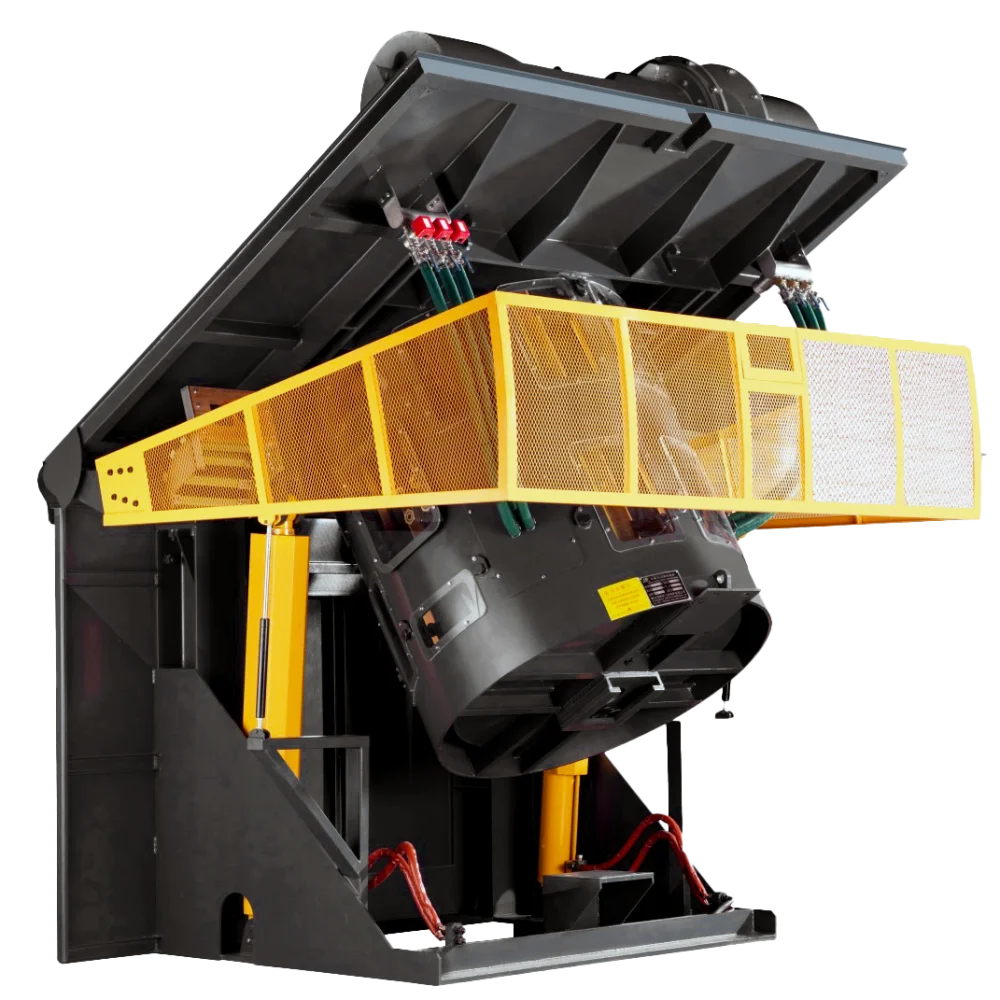
WOLFU supplies industrial medium-frequency induction melting equipment for metal processing applications.
Depending on the selected configuration, these systems can be used for suitable copper, aluminum, steel, and other metal melting operations.
WOLFU equipment solutions may include:
- Medium-frequency induction furnace systems
- Electrical power supply and control equipment
- Cooling and auxiliary systems
- Furnace tilting and pouring arrangements
- Supporting casting equipment
The final equipment selection should be based on the customer’s material type, required capacity, available utilities, and production objectives.
Explore the WOLFU Medium Frequency Induction Melting Furnace for equipment information.
For facilities evaluating metal melting and casting operations, WOLFU also offers medium-frequency furnace solutionsfor related industrial applications.
10. Final Considerations: Choose Based on Total Production Value
The decision between induction melting and fuel-fired furnaces should not be based on a single efficiency claim or energy price comparison.
Induction technology offers electrically controlled heating and avoids direct combustion within the furnace.
Fuel-fired technology remains practical for many industrial applications, particularly where fuel infrastructure, production requirements, and operating economics support its use.
For metal recycling businesses, the best investment is the equipment configuration that provides suitable melting performance, consistent product quality, manageable operating costs, and reliable long-term operation.
Discuss Your Metal Melting Project With WOLFU
Are you planning a new metal recycling facility or upgrading an existing melting operation?
WOLFU provides medium-frequency induction melting equipment and related industrial processing solutions.
Contact WOLFU to discuss your raw materials, production capacity, electrical requirements, and equipment configuration.