
Battery Recycling in 2027: What New Material Recovery Targets Mean for Recycling Plants
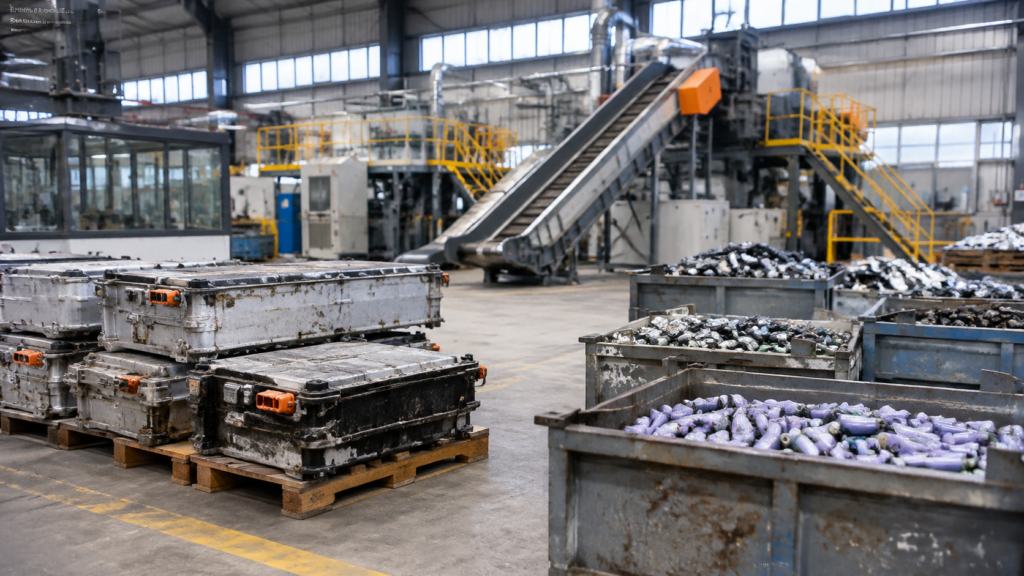
The global battery industry is entering a new stage of development. Electric vehicles, energy storage systems, and industrial electrification are increasing the demand for lithium-ion batteries. At the same time, governments are introducing stricter requirements for battery recycling and material recovery.
One important milestone is approaching in the European Union. Under the EU Batteries Regulation, recycling operations must meet specific material recovery targets by December 31, 2027.
These requirements are drawing greater attention to the technologies, production capacity, and material recovery processes used by industrial recycling facilities.
For battery recycling companies, the challenge is no longer simply processing waste batteries. It is building reliable systems that can recover valuable materials, maintain consistent output quality, and meet increasingly demanding environmental and operational requirements.
1. Why 2027 Is an Important Year for Battery Recycling
The rapid expansion of electric mobility and battery energy storage is changing the global recycling industry.
Lithium-ion batteries contain valuable materials, including lithium, cobalt, nickel, copper, aluminum, and graphite. Recovering these resources can help reduce dependence on primary raw material supplies and support a more circular battery supply chain.
In July 2023, the European Union adopted Regulation (EU) 2023/1542, establishing a comprehensive framework for batteries and waste battery management.
An important part of this regulation is its material recovery schedule.
By December 31, 2027, the required material recovery targets are:
- Cobalt: 90%
- Copper: 90%
- Lead: 90%
- Nickel: 90%
- Lithium: 50%
These percentages refer to the recovery of each specified material from waste batteries, not the percentage of the entire battery weight.
The regulation also establishes higher targets for December 31, 2031, including 95% recovery for cobalt, copper, lead, and nickel, and 80% for lithium.
In September 2026, the European Commission confirmed that the existing recycling efficiency and material recovery targets remain appropriate.
For recycling plant operators, these requirements highlight the importance of accurate material separation, effective downstream recovery, and reliable production management.
2. What Valuable Materials Can Be Recovered from Lithium-Ion Batteries?
Lithium-ion batteries contain several materials with potential industrial and commercial value.
However, their composition varies depending on battery chemistry, design, and application.
Lithium
Lithium is an important component of many rechargeable battery chemistries.
It is generally concentrated in electrode materials and can be recovered through suitable downstream treatment processes.
Cobalt and Nickel
These metals are commonly found in nickel-based cathode chemistries, including NMC and NCA batteries.
Their recovery is particularly relevant to recycling operations handling battery materials with higher cobalt and nickel content.
Copper and Aluminum
Copper is commonly used in battery current collectors, while aluminum is found in other conductive components and battery structures.
Mechanical separation can help recover copper- and aluminum-containing fractions for further processing.
Graphite and Other Materials
Graphite is widely used in lithium-ion battery anodes.
Steel casings, plastics, separator materials, and other components may also be recovered or separated during industrial processing.
The actual recovery potential depends on the incoming battery chemistry and the selected recycling process.
3. How Battery Recycling Technologies Support Material Recovery
Meeting material recovery targets requires more than installing a crushing machine.
A complete recycling operation must consider the entire material flow, from battery collection and preparation to separation and downstream refining.
Battery Inspection and Pre-Treatment
Incoming batteries should be identified according to chemistry, design, condition, and processing requirements.
Damaged batteries and different battery formats may require separate handling procedures.
Electrical discharge, safe dismantling, and controlled feeding should be incorporated into the plant’s operating procedures where applicable.
Mechanical Processing
Industrial mechanical recycling systems use several technologies to release and separate valuable battery materials.
Typical equipment includes:
- Shredding and crushing machines
- Fine grinding systems
- Vibrating screening equipment
- Magnetic separators
- Gravity separation systems
- Airflow separation equipment
- Dust collection systems
These processes help separate different material fractions and prepare them for subsequent treatment.
Black Mass Recovery
Black mass is a mixture of fine electrode materials recovered from processed lithium-ion batteries.
It generally contains valuable cathode and anode components, although its composition varies considerably.
Black mass is an important intermediate product in the battery recycling supply chain.
However, recovering black mass does not automatically mean that lithium, cobalt, and nickel have been extracted as refined products.
Additional hydrometallurgical or other suitable refining processes may be required to recover individual metals.
4. Why Battery Recycling Plant Design Matters
As material recovery requirements become more demanding, recycling businesses need to evaluate their production systems as complete operations rather than isolated machines.
Several design considerations influence overall plant performance.
Material Separation Accuracy
Different battery materials have different physical properties.
Particle size, density, magnetic characteristics, and material liberation all influence separation performance.
Appropriate equipment combinations and process adjustments are important for producing cleaner material fractions.
Dust Collection and Process Control
Battery recycling can generate fine powders during crushing, grinding, and screening.
A suitable dust collection system and controlled processing environment help reduce dust leakage and improve workshop management.
Negative-pressure operation can also support more effective containment of airborne particles.
Downstream Processing Compatibility
The quality of recovered intermediate materials affects subsequent refining operations.
For example, black mass specifications should be evaluated according to the requirements of the downstream processing facility.
A recycling plant should therefore be designed around both its front-end separation equipment and its intended material recovery partners.
5. Battery Chemistry Is Changing Recycling Economics
Not all lithium-ion batteries have the same recycling value.
One important development is the growing use of lithium iron phosphate (LFP) batteries.
Unlike nickel-rich NMC batteries, LFP batteries do not rely on cobalt and nickel as cathode materials.
This changes the composition of the recovered material and can influence the economics of recycling.
For example:
- NMC batteries contain lithium, nickel, cobalt, and manganese in their cathode materials.
- LFP batteries use lithium iron phosphate chemistry.
- Both types contain recoverable copper, aluminum, and other materials.
As battery chemistry evolves, recycling companies must adapt their material recovery strategies.
A plant designed around one battery composition may not deliver the same economic results when processing a different feedstock.
Before selecting equipment, investors should evaluate the expected proportion of LFP, NMC, and other battery types in their incoming material supply.
6. An Important Investment Consideration: Feedstock Availability
A recycling plant needs a reliable supply of suitable materials to operate economically.
This issue deserves particular attention as the global battery industry expands.
According to the International Energy Agency’s 2026 analysis, battery manufacturing scrap remains a major source of recycling feedstock today.
End-of-life electric vehicle and energy storage batteries are expected to become the dominant source of available recycling materials from the mid-2030s onward.
This reflects the time required for newly deployed batteries to complete their service lives.
For recycling investors, this creates several important considerations:
- Secure reliable battery manufacturing scrap or other suitable feedstock.
- Evaluate the availability of end-of-life batteries in the target market.
- Consider battery chemistry and material composition.
- Avoid selecting plant capacity based only on optimistic future waste projections.
- Assess transportation, storage, and regulatory requirements.
A recycling line with high theoretical processing capacity cannot operate efficiently without sufficient and consistent incoming materials.
Feedstock planning should therefore be part of the initial investment assessment.
7. How to Choose the Right Battery Recycling Equipment
Selecting a suitable recycling line requires a clear understanding of the project’s operational and commercial objectives.
The following factors should be evaluated before purchasing equipment.
| Selection Factor | What to Evaluate |
|---|---|
| Battery Type | Cylindrical, prismatic, pouch, or mixed lithium-ion batteries |
| Material Composition | LFP, NMC, NCA, and other battery chemistries |
| Processing Capacity | Required throughput in kg/h or tons per day |
| Recovery Targets | Black mass, copper, aluminum, and other material fractions |
| Separation Technology | Crushing, screening, magnetic, gravity, and air separation |
| Dust Control | Negative-pressure systems and industrial dust collection |
| Downstream Processing | Requirements for black mass refining and metal recovery |
| Plant Layout | Workshop space, electrical supply, storage, and maintenance access |
For new recycling projects, equipment should be configured according to the actual feedstock and expected output.
An integrated system can improve coordination between processing stages, but it must also be compatible with the facility’s environmental, safety, and production requirements.
8. WOLFU Lithium Battery Recycling Solutions
WOLFU provides industrial lithium battery recycling equipment designed to recover valuable material fractions from waste lithium-ion batteries and battery-related production scrap.
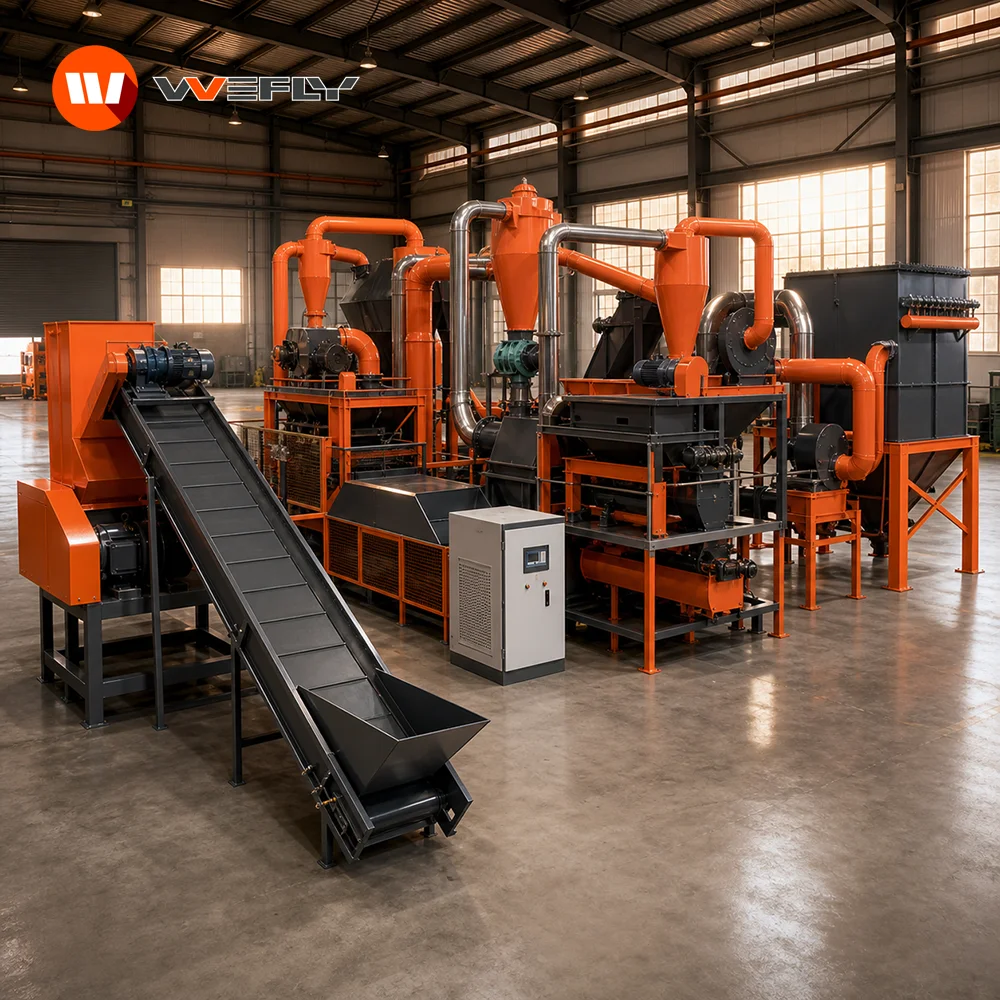
The WOLFU lithium battery recycling plant integrates mechanical processing and physical separation technologies.
Its main equipment configuration can include:
- Primary and secondary crushing systems
- Grinding and material liberation equipment
- Vibrating screening systems
- Magnetic separation equipment
- Gravity and airflow separation systems
- Dust collection and negative-pressure systems
The system is designed to separate materials such as black powder, copper, aluminum, and separator materials.
These recovered fractions can then be directed toward suitable downstream recycling or refining processes.
The final equipment configuration depends on battery chemistry, feedstock condition, processing capacity, workshop layout, and customer requirements.
Explore the WOLFU Lithium Battery Recycling Plant to learn more about the equipment and available processing solutions.
9. Preparing for the Next Stage of Battery Recycling
The 2027 material recovery targets represent an important milestone in the development of the battery recycling industry.
However, long-term competitiveness will depend on more than regulatory compliance.
Recycling companies must also consider material quality, feedstock availability, production costs, process safety, and downstream market demand.
The most successful projects will be those that connect suitable mechanical separation technologies with effective material refining and reliable production management.
For equipment investors, planning ahead is essential.
Understanding the incoming battery materials, selecting the right processing configuration, and establishing a complete material recovery strategy can help build a more sustainable and commercially viable recycling operation.
Plan Your Battery Recycling Project With WOLFU
Are you planning to establish or expand a lithium-ion battery recycling facility?
WOLFU provides industrial battery recycling equipment and customized production line solutions based on different material types, processing capacities, and project requirements.
Contact WOLFU to discuss your battery materials, production targets, and equipment configuration.