
Critical Raw Materials Recovery in 2026: Why Copper, Aluminum, and Silicon Matter
As global industries expand their investments in renewable energy, electric infrastructure, and advanced manufacturing, the demand for reliable raw material supplies continues to shape industrial development.
Copper, aluminum, and silicon play essential roles in this transition. They are widely used in electrical equipment, solar energy systems, transportation, electronics, and industrial manufacturing.
However, growing material demand also raises an important question: How can manufacturers recover valuable resources from industrial scrap and end-of-life products instead of relying entirely on newly extracted materials?
In 2026, material recovery is increasingly becoming a strategic consideration for recycling companies, metal processors, and industrial equipment investors.
Understanding the technologies behind efficient metal recovery is essential for building more resilient and commercially viable recycling operations.
1. Why Raw Material Recovery Matters in 2026
The global shift toward electrification and resource efficiency is creating new opportunities for industrial recycling.
Electrical grids require substantial quantities of copper and aluminum. Solar photovoltaic systems depend on silicon-based technologies, aluminum structures, and conductive metals. Meanwhile, manufacturing operations continue to generate valuable metal scrap that can be returned to production.
Several factors are driving greater interest in material recovery:
- Supply chain resilience: Recovered materials can help diversify industrial raw material sources.
- Resource efficiency: Recycling reduces the need to discard potentially reusable metals.
- Industrial sustainability: Proper recovery processes can reduce waste and support circular manufacturing.
- Economic opportunity: Recovered metals may be processed into commercially valuable secondary raw materials.
The European Union’s Critical Raw Materials Act has also increased attention on resource security, recycling capacity, and strategic material supply chains.
Although copper, aluminum, and silicon do not all share the same regulatory classification, each plays an important role in modern industrial material recovery.
For recycling businesses, the opportunity lies in selecting the right processing technologies for each material stream.
2. Copper Recovery: Supporting Electrification and Industrial Growth
Copper is widely used in power transmission, electrical motors, industrial equipment, and renewable energy infrastructure.
Its electrical conductivity and recyclability make it a valuable material for secondary metal processing.
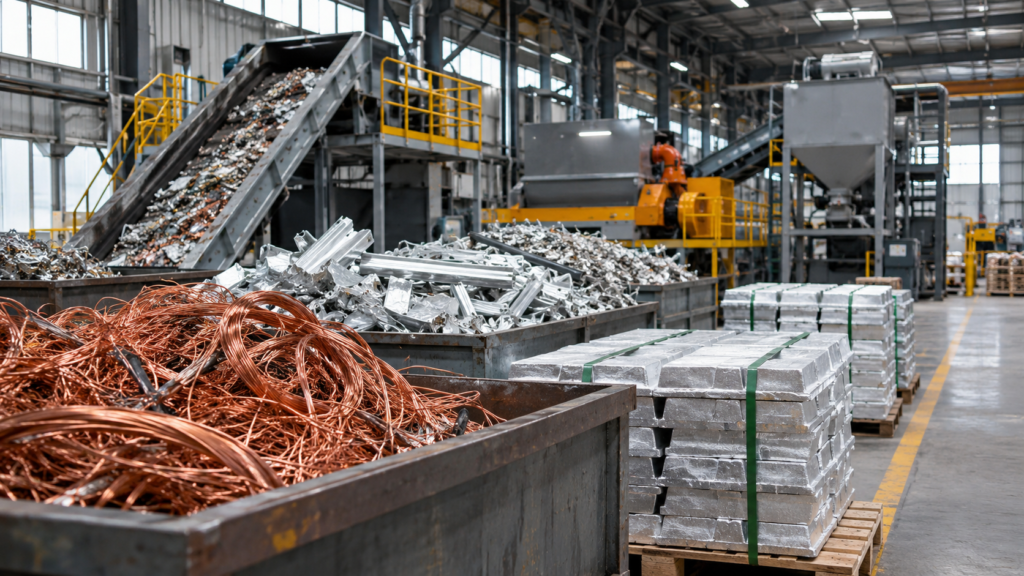
Common copper-bearing recycling materials include:
- Industrial copper wire and cable scrap
- Electrical equipment components
- Manufacturing offcuts
- Copper-containing photovoltaic components
- Selected electronic and industrial waste streams
From Copper Scrap to Reusable Metal
A typical copper recycling operation may involve several processing stages:
Collection → Sorting → Insulation Removal → Metal Separation → Melting → Casting
Effective preparation is particularly important. Contaminants, mixed alloys, and nonmetallic residues can affect melt quality and downstream processing.
After suitable sorting and preparation, copper scrap can be remelted and cast into ingots or other intermediate products.
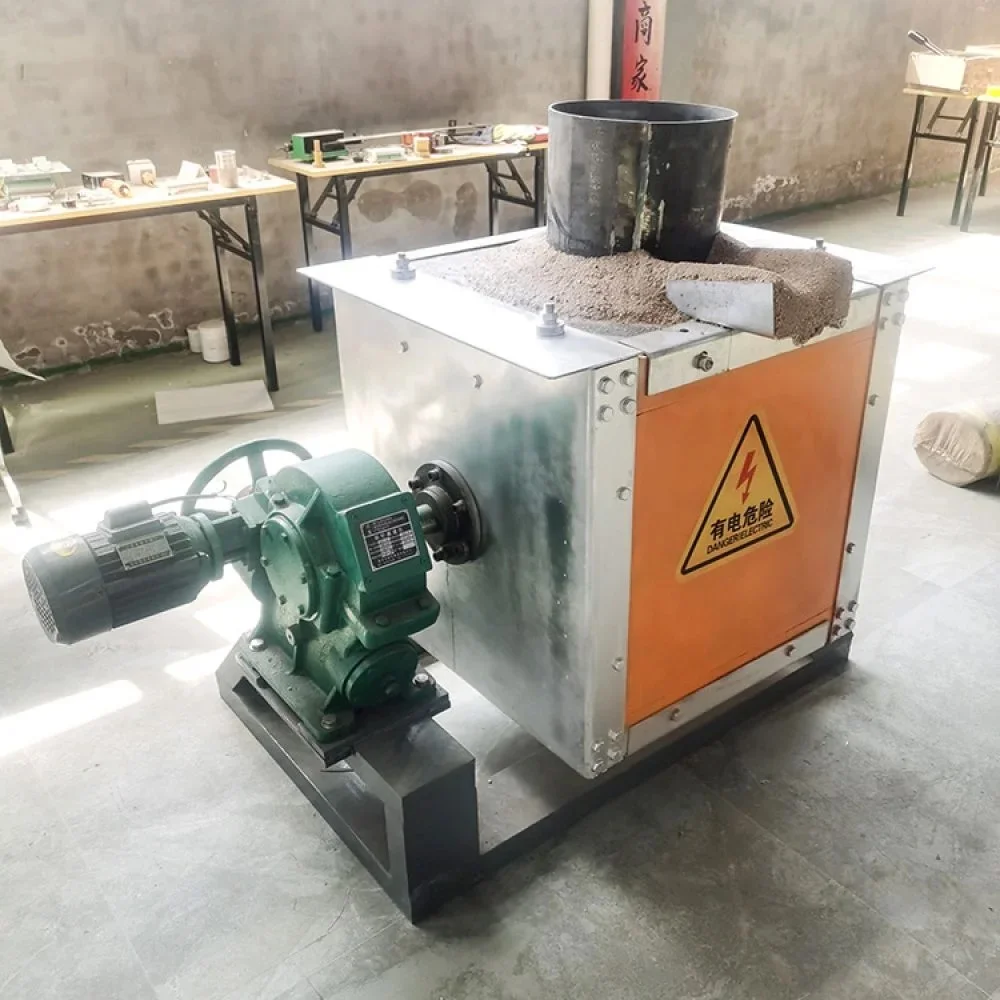
For industrial operations, a properly configured medium-frequency induction melting furnace provides controlled electrical heating for metal melting applications.
Furnace selection should account for feedstock composition, required throughput, power availability, and final product specifications.
3. Aluminum Recycling: Recovering Value from Industrial Scrap
Aluminum is another important material in the global circular economy.
Its relatively low density, corrosion resistance, and recyclability make it suitable for applications ranging from transportation to renewable energy infrastructure.
One increasingly relevant source of secondary aluminum is end-of-life solar photovoltaic equipment.
Many solar panels contain aluminum frames that can be separated during dismantling and directed toward conventional aluminum recycling operations.
Industrial aluminum scrap may also originate from manufacturing facilities, construction materials, and metal fabrication processes.
Why Scrap Quality Matters
Not all aluminum scrap can be processed in the same way.
Different alloy compositions, surface coatings, attachments, and contamination levels may require separate preparation procedures.
For recycling operators, proper sorting helps maintain alloy consistency and reduce unnecessary processing losses.
After preparation, suitable aluminum scrap can enter a melting and casting operation.
WOLFU’s Copper & Aluminum Ingot Casting Production Line combines industrial melting equipment with downstream casting components.
Such integrated systems can help recycling facilities organize the transition from prepared metal scrap to cast products.
The appropriate equipment configuration depends on the material grade, production capacity, casting requirements, and operating conditions.
4. Silicon Recovery: New Opportunities in the Solar Industry
Silicon has a central role in photovoltaic manufacturing and semiconductor production.
As solar installations continue to expand globally, the long-term management of manufacturing waste and retired photovoltaic modules is becoming increasingly important.
Silicon-containing waste streams may include:
- Photovoltaic manufacturing scrap
- Silicon wafer fragments
- Off-specification silicon materials
- Silicon recovered from processed solar modules
However, recovering silicon is more technically demanding than simply melting conventional metal scrap.
Recovery Is Not the Same as Purification
Recovered silicon may contain metallic impurities, residual coatings, or other contaminants.
The required treatment depends on its original condition and intended end use.
For example, silicon intended for metallurgical applications may have different purity requirements from silicon used in photovoltaic or semiconductor manufacturing.
Consequently, silicon recovery, silicon melting, and high-purity silicon production must be treated as distinct processing stages.
Depending on the application, a recycling facility may require mechanical separation, chemical treatment, thermal processing, refining, or a combination of technologies.
Once suitable silicon feedstock has been prepared, industrial melting equipment can support downstream processing.
WOLFU offers an Industrial Silicon Melting Induction Furnace designed for silicon melting applications.
Its medium-frequency induction heating system provides controlled thermal processing for appropriately prepared silicon materials.
Importantly, melting alone does not guarantee that recycled silicon will meet solar-grade or semiconductor-grade purity requirements. Additional refining and quality verification may be necessary.
5. How Industrial Melting Technology Supports Material Recovery
Material recovery involves more than extracting valuable components from waste.
For many recycling businesses, the next challenge is converting separated materials into products suitable for industrial reuse.
This is where melting and casting technologies become important.
Controlled Heating
Industrial melting equipment must deliver appropriate thermal conditions for the material being processed.
Different metals have different melting temperatures, thermal properties, and processing requirements.
Induction melting systems use electromagnetic energy to heat electrically conductive materials through a suitable furnace configuration.
Consistent Production
Stable furnace operation supports repeatable melting and casting procedures.
Depending on the system design, automated monitoring and control functions can assist operators with temperature management, power regulation, and equipment protection.
Integration With Casting Equipment
For metal recycling operations, melting is often followed by pouring, cooling, and casting.
An integrated production line can combine these stages into a coordinated manufacturing process.
However, actual production efficiency depends on equipment sizing, material quality, operating practices, and plant design.
6. Choosing the Right Equipment for a Recycling Project
Selecting industrial recycling equipment requires a clear understanding of both the raw materials and the intended output.
Before investing in a new production line, project developers should evaluate several important factors.
| Evaluation Factor | Key Consideration |
|---|---|
| Feedstock | What materials will be processed, and how contaminated are they? |
| Production Capacity | How many tons must the facility process per hour or day? |
| Final Product | Will the output be ingots, refined material, or another intermediate product? |
| Energy Supply | Is sufficient electrical capacity available? |
| Process Integration | What sorting, separation, melting, and casting equipment is required? |
| Environmental Controls | What emissions, residues, and waste treatment systems are necessary? |
| Maintenance | What technical support and replacement parts will the facility require? |
A successful recycling project should be designed around the complete material flow rather than an individual machine.
For example, an induction furnace cannot replace the sorting and separation processes needed to prepare contaminated scrap.
Similarly, a silicon melting system cannot independently perform every stage of photovoltaic material recovery.
Understanding these distinctions helps businesses make better equipment decisions and avoid unnecessary capital expenditure.
7. WOLFU’s Approach to Industrial Recycling and Metal Processing
At WOLFU, industrial recycling and metallurgical equipment solutions are developed around different material processing requirements.
Our product portfolio includes:
- Induction melting furnaces for metal processing
- Copper and aluminum melting and ingot casting systems
- Industrial silicon melting equipment
- Photovoltaic recycling equipment
- Supporting metallurgical and production line equipment
Rather than treating every recycling project as identical, equipment selection should consider feedstock characteristics, production targets, facility conditions, and downstream requirements.
WOLFU supports customers with equipment configuration, production line planning, installation guidance, and technical assistance.
Explore our industrial recycling and metallurgical equipment to learn more about available solutions.
8. Looking Ahead: The Future of Industrial Material Recovery
The growing importance of copper, aluminum, and silicon highlights a broader shift in industrial resource management.
Manufacturers and recycling companies are increasingly evaluating how recovered materials can contribute to supply chain resilience and long-term production planning.
For equipment investors, the key opportunity is not simply processing more waste.
It is developing technically sound recovery systems that can convert suitable scrap materials into consistent, commercially useful outputs.
As recycling technologies advance, the integration of material separation, controlled melting, refining, and casting will remain an important part of industrial resource recovery.
For companies planning a metal recycling or metallurgical processing project, selecting the appropriate equipment and process configuration is an essential first step.
Discuss Your Recycling Project With WOLFU
Planning a copper, aluminum, or silicon processing facility?
WOLFU provides industrial melting equipment and customized metallurgical production solutions for a range of processing applications.
Contact the WOLFU engineering team to discuss your raw materials, required production capacity, and equipment configuration.