
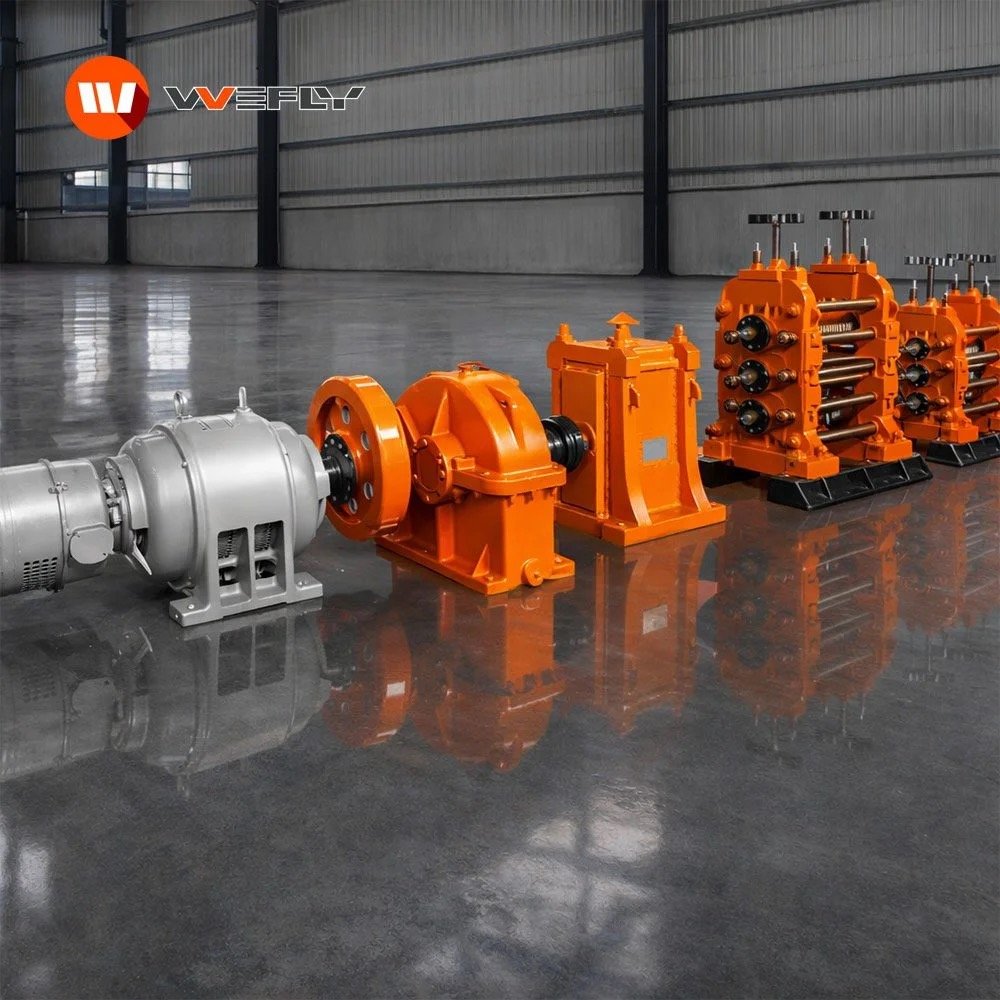
How to Choose a Hot Rolling Steel Rebar Production Line
A Hot Rolling Steel Rebar Production Line converts steel billets or prepared steel materials into rebar, steel rods, angle steel, flat bars, and other structural steel products.
For steel plants and metal processing factories, the right rolling line should match the required product diameter, hourly capacity, annual output, power supply, workshop size, and final steel profile.
🔵 View WOLFU Hot Rolling Steel Rebar Production Line
The WOLFU rolling mill production line combines automatic operation, continuous rolling technology, durable rollers, and optional continuous casting integration. It is designed for stable, high-volume steel bar and structural steel production.
Key Specifications
| Feature | Specification | Practical Benefit |
|---|---|---|
| Machine Type | Automatic horizontal rolling mill | Supports continuous production |
| Voltage | 380V | Standard industrial configuration |
| Main Power | 240 kW | Provides stable rolling performance |
| Finished Diameter | 6.5–32 mm | Covers common rebar and rod sizes |
| Finished Length | 3–12 m | Suitable for construction and industrial use |
| Hourly Capacity | 5–20 tons/hour | Matches different production scales |
| Annual Output | 1,000–150,000 tons | Flexible plant capacity |
| Roller Hardness | Up to 58 HRC | Improves wear resistance |
| Warranty | 1 year | Supports equipment purchasing |
What Can the Production Line Make?
The WOLFU hot rolling line can produce several steel products, including:
- Reinforcing steel bars
- Round steel rods
- Angle steel
- Channel steel
- Flat bars
- Selected steel plates
- Other structural steel profiles
This flexibility allows a steel plant to adjust production according to market demand and downstream customer requirements.
🔵 Request a Quote for WOLFU Hot Rolling Steel Rebar Production Line
How the Rolling Process Works
Step 1: Prepare the Steel Billets
Steel billets are inspected and prepared before entering the rolling process. The billet size and composition should match the target finished product.
Step 2: Heat the Billets
The billets are heated to the required rolling temperature. If the line is connected to continuous casting equipment, retained billet heat can help reduce reheating demand.
Step 3: Start Continuous Rolling
The heated billet passes through a series of horizontal rolling stands. Each stand gradually reduces the billet cross-section and forms the required profile.
Step 4: Control Product Dimensions
The rolling system controls the diameter, shape, and surface profile of the finished steel product.
Step 5: Cut and Collect Finished Products
After rolling, the rebar or steel rod is cut to the required length and transferred for cooling, bundling, storage, or delivery.
Main Advantages
Continuous Rolling Technology
Continuous rolling reduces unnecessary handling between production stages and helps improve hourly output.
Broad Product Range
The same production line can be configured for rebar, rods, angle steel, flat bars, channel steel, and other profiles.
Durable Rolling Components
The rollers use nodular infinite cold hard steel with hardness up to 58 HRC, supporting stable performance under continuous industrial use.
Flexible Production Capacity
The line can be configured for 5–20 tons per hour, making it suitable for small, medium, and larger steel rolling projects.
Reduced Energy Consumption
When integrated with continuous casting, the line can use the retained thermal energy of hot billets and reduce additional reheating requirements.
Suitable Applications
The WOLFU Hot Rolling Steel Rebar Production Line is suitable for:
- Steel rebar factories
- Construction steel manufacturers
- Steel rod production plants
- Mini steel mills
- Metal processing factories
- Continuous casting and rolling projects
- Structural steel production plants
How to Choose the Right Rolling Mill
Confirm the Finished Product
First determine whether the plant will produce rebar, round rods, angle steel, flat bars, channel steel, or several product types.
Confirm the Diameter Range
The WOLFU production line can manufacture steel products with diameters from 6.5 mm to 32 mm.
Calculate Required Capacity
A 5-ton-per-hour line may suit a smaller plant, while a 20-ton-per-hour system is more appropriate for higher-volume production.
Review Raw Material Size
The rolling process can use steel billets or prepared steel feedstock. Raw material dimensions should match the rolling mill design.
Check the Workshop Layout
The plant needs sufficient space for billet heating, rolling stands, cutting equipment, cooling beds, bundling, electrical systems, and maintenance access.
Evaluate Continuous Casting Integration
Connecting the rolling mill with continuous casting equipment can simplify material transfer and improve production efficiency.
🔵 Get a Customized Steel Rolling Line Recommendation from WOLFU
Related WOLFU Equipment
For steel melting before billet casting, review:
🔵 WOLFU Medium Frequency Induction Melting Furnace
For metal ingot casting and continuous production, review:
🔵 WOLFU Medium Frequency Furnace and Ingot Casting Line
For heat treatment of heavy steel workpieces, review:
🔵 WOLFU Trolley Annealing Furnace
Why Choose WOLFU?
WOLFU provides rolling mill systems, induction melting furnaces, continuous casting equipment, heat treatment furnaces, and customized metal processing solutions.
For a hot rolling project, WOLFU can help evaluate:
- Required steel product
- Billet dimensions
- Hourly production capacity
- Annual production target
- Rolling stand configuration
- Power supply
- Workshop layout
- Continuous casting integration
The production line can be customized according to the customer’s steel grade, product dimensions, factory conditions, and investment plan.
Conclusion
A Hot Rolling Steel Rebar Production Line provides an efficient solution for producing rebar, steel rods, angle steel, flat bars, channel steel, and other structural steel products.
The WOLFU line supports 6.5–32 mm finished diameters, 3–12 m product lengths, 5–20 tons per hour, and annual production from 1,000 to 150,000 tons.
With automatic control, continuous rolling technology, durable 58 HRC rollers, and optional continuous casting integration, the system is suitable for steel plants and metal processing factories seeking stable, high-volume production.
🔵 Get a Quote for WOLFU Hot Rolling Steel Rebar Production Line
FAQ
What products can the WOLFU rolling mill produce?
It can produce rebar, steel rods, angle steel, channel steel, flat bars, and other structural steel products.
What is the finished product diameter range?
The finished steel product diameter ranges from 6.5 mm to 32 mm.
What is the production capacity?
The line can be configured for approximately 5–20 tons per hour.
Can the line connect with continuous casting equipment?
Yes. The system can be integrated with continuous casting equipment to improve production flow and use retained billet heat.
Can WOLFU customize the production line?
Yes. WOLFU can customize the rolling mill according to product type, billet size, capacity, power supply, and workshop layout.