
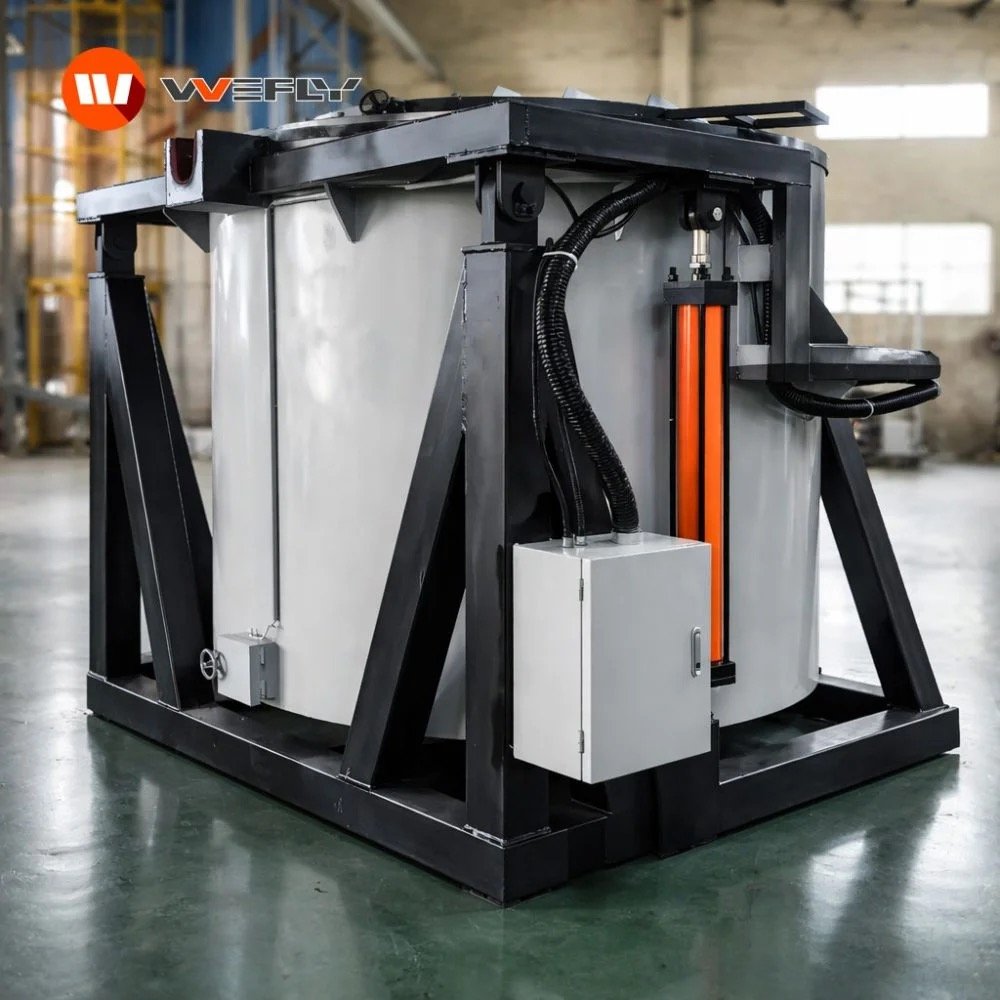
How to Choose a Crucible Melting Furnace for Non-Ferrous Metals
A Crucible Melting Furnace is a practical melting solution for non-ferrous metal processing, casting, and recycling operations.
It is commonly used for aluminum, copper, brass, zinc, and other non-ferrous metals. For foundries and recycling plants, the right furnace should provide stable heating, reliable temperature control, easy operation, and suitable melting capacity.
🔵 View WOLFU Crucible Melting Furnace
The WOLFU Crucible Melting Furnace is designed for efficient smelting and holding of non-ferrous metals. It can use gas or oil combustion systems, making it suitable for plants with different fuel conditions and production requirements.
Key Specifications
| Feature | Specification | Practical Benefit |
|---|---|---|
| Furnace Type | Gas / oil fired crucible melting furnace | Flexible fuel choice |
| Applicable Metals | Aluminum, copper, brass, zinc | Suitable for non-ferrous metal processing |
| Capacity Range | 0.1T–2T | Covers small to medium production needs |
| Power Range | 80KW–1000KW | Supports different melting capacities |
| Input Voltage | 3 Phase 380V / 660V | Industrial power compatibility |
| Heating System | Gas or oil combustion | Stable high-temperature performance |
| Main Uses | Smelting and holding | Suitable for casting and ingot production |
| Support | Plant design, installation, commissioning | Helps complete project setup |
What Is a Crucible Melting Furnace?
A crucible melting furnace uses a heat source to melt metal inside a crucible. The crucible holds the metal charge during melting and allows the molten metal to be poured or transferred after reaching the required temperature.
The WOLFU furnace is designed for non-ferrous metal smelting and holding. It is suitable for aluminum casting plants, copper processing factories, brass melting operations, zinc processing, and metal recycling facilities.
Unlike some induction furnaces, a gas or oil fired crucible furnace can be a good choice when fuel cost, local energy supply, or plant conditions make combustion heating more practical.
🔵 Request a Quote for WOLFU Crucible Melting Furnace
Available Furnace Models
| Model | Power | Input Voltage | MF Voltage | Frequency |
|---|---|---|---|---|
| 0.1T | 80KW | 3 Phase 380V | 750V | 2500HZ |
| 0.25T | 180KW | 3 Phase 380V | 750V | 2000HZ |
| 0.35T | 200KW | 3 Phase 380V | 750V | 1500HZ |
| 0.5T | 400KW | 3 Phase 380V | 1500V | 1500HZ |
| 0.75T | 600KW | 3 Phase 380V | 1500V | 1000HZ |
| 1T | 700KW | 3 Phase 660V | 2400V | 800HZ |
| 1.5T | 800KW | 3 Phase 660V | 2500V | 600HZ |
| 2T | 1000KW | 3 Phase 660V | 2500V | 600HZ |
How the Furnace Works
Step 1: Prepare the Metal Material
Operators prepare aluminum, copper, brass, zinc, or other non-ferrous metal materials before loading.
Raw material should be checked for moisture, excessive impurities, and unsuitable foreign materials. Cleaner feed material helps improve melting efficiency and final metal quality.
Step 2: Load the Crucible
The prepared metal is placed into the crucible. The crucible should match the metal type, furnace capacity, and operating temperature.
Correct loading helps maintain stable melting and reduces unnecessary process delays.
Step 3: Start Gas or Oil Heating
The combustion system provides high-temperature heat to melt the metal inside the crucible.
Gas or oil heating can be selected according to local fuel availability, operating cost, and customer plant conditions.
Step 4: Hold the Molten Metal
After melting, the furnace can hold molten metal at a stable temperature before casting, pouring, or ingot production.
Stable holding is important for continuous casting work and aluminum ingot production lines.
Step 5: Pour or Transfer the Metal
The molten metal can be poured into molds, transferred to casting equipment, or used in downstream metal processing.
Main Advantages
Flexible Fuel Options
The furnace can operate with gas or oil combustion systems. This allows customers to select the energy source that best matches local supply and operating cost.
Suitable for Multiple Non-Ferrous Metals
The furnace can process aluminum, copper, brass, zinc, and other non-ferrous metals used in casting and recycling industries.
Stable Smelting and Holding
The furnace is suitable not only for melting, but also for holding molten metal before casting or ingot production.
Flexible Capacity Range
WOLFU provides furnace models from 0.1T to 2T, allowing customers to choose a configuration based on production scale and batch size.
Easy Operation and Maintenance
The furnace structure is designed for practical industrial use, with simple operation and convenient maintenance.
Common Applications
The WOLFU Crucible Melting Furnace is suitable for:
- Aluminum casting plants
- Copper processing factories
- Brass melting workshops
- Zinc processing operations
- Non-ferrous metal recycling facilities
- Aluminum ingot production lines
- Metal casting plants
- Small and medium foundries
How to Choose the Right Model
Choose by Metal Type
Aluminum, copper, brass, and zinc have different melting temperatures and process requirements. Before selecting a furnace, confirm your main material first.
Choose by Capacity
Small workshops may choose 0.1T, 0.25T, or 0.35T models. Medium production plants may choose 0.5T, 0.75T, 1T, 1.5T, or 2T configurations.
Choose by Fuel Source
If gas is more economical and stable in your area, a gas-fired configuration may be suitable. If oil is more available, an oil-fired system may be more practical.
Choose by Production Workflow
If your plant needs only batch melting, a smaller furnace may be enough. If your plant connects with an ingot casting line or continuous production process, a larger furnace may be more suitable.
🔵 Get a Customized Furnace Recommendation from WOLFU
Related WOLFU Equipment
For larger induction melting applications, review:
🔵 WOLFU Medium Frequency Induction Melting Furnace
For small-batch induction melting, review:
🔵 WOLFU Small Induction Crucible Furnace
For aluminum ingot production, review:
🔵 WOLFU Aluminum Can Recycling Machine
Why Choose WOLFU?
WOLFU provides industrial furnaces, recycling production lines, aluminum casting systems, and supporting equipment for metal processing customers.
For crucible melting furnace projects, WOLFU can provide equipment selection, plant layout design, production line planning, manufacturing, factory testing, shipping support, installation guidance, commissioning support, and long-term technical service.
A suitable furnace configuration helps improve melting efficiency, reduce production instability, and support better metal casting or recycling output.
Conclusion
A Crucible Melting Furnace is a practical solution for aluminum, copper, brass, zinc, and other non-ferrous metal melting.
The WOLFU Gas & Oil Fired Crucible Melting Furnace offers flexible fuel options, 0.1T–2T capacity choices, stable smelting and holding performance, and support for foundries, casting plants, aluminum ingot production lines, and recycling facilities.
If your factory needs reliable equipment for non-ferrous metal melting and holding, WOLFU can recommend a suitable furnace model based on your metal type, fuel condition, capacity requirement, and production workflow.
🔵 Get a Quote for WOLFU Crucible Melting Furnace
FAQ
What metals can the WOLFU Crucible Melting Furnace melt?
It can melt aluminum, copper, brass, zinc, and other non-ferrous metals used in casting and recycling industries.
What is the capacity range?
The furnace model range is from 0.1T to 2T, depending on production requirements.
What fuel can be used?
The furnace can use gas or oil combustion systems according to customer energy source and plant conditions.
Is this furnace suitable for aluminum ingot production?
Yes. It is suitable for aluminum casting plants and aluminum ingot production lines.
Does WOLFU provide installation support?
Yes. WOLFU can provide remote guidance or on-site installation and commissioning support.