
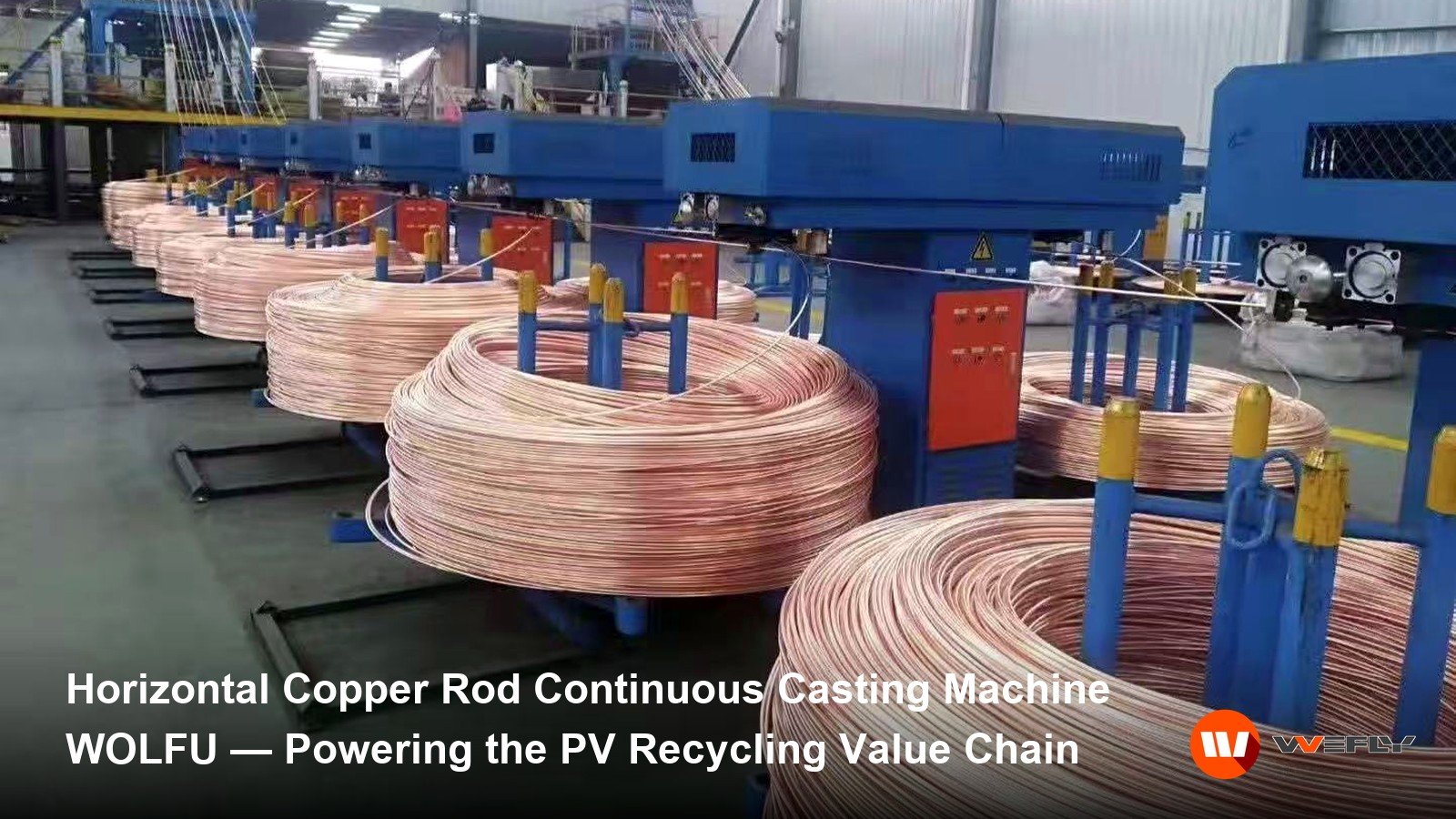
Copper Rod Continuous Casting Machine: The Missing Link in the Solar Panel Recycling Value Chain
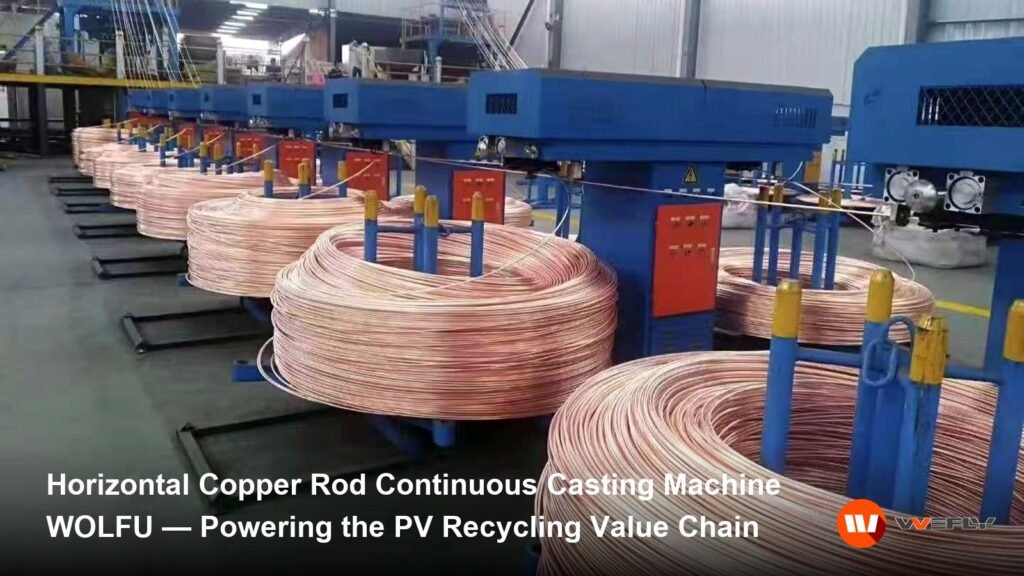
Introduction
The solar industry is heading for a waste surge — and single crystalline-silicon module carries copper ribbons, busbars and junction-box cabling, which are the highest-value metals inside the panel. The International Renewable Energy Agency (IRENA) projects that the market value of materials recovered from end-of-life solar panels could exceed USD 20 billion a year by 2050, and copper accounting for a growing share. See the IRENA analysis.
The problem is: most recyclers stop at the sort line. The step between “recovered copper” and “sellable copper products” is a melting and continuous-casting line — precisely what a horizontal copper rod continuous casting machine delivers. Below you can see why it belongs in the PV recycling value chain, and what to look for when you buy one.
1. Why copper is a priority target in solar panel recycling
A typical crystalline-silicon module includes roughly 70% glass and 13% aluminium, but the most value metals are silver, copper and silicon. Copper appears as flat cell ribbons, soldered busbars, junction-box terminals and on the cabling. Because copper is infinitely recyclable without losing conductivity, does not have to be mined and refined from pristine cathode. As the growing demand of solar and broader electrification, recovered copper is becoming a strategic feedstock.
2. The copper recycling gap: from scrap copper to bright rod
Recovered copper from a solar panel recycling line arrives as mixed ribbon, chopped conductor and busbar offcuts. You must remelt it, protect it from oxidation, hold it at a stable temperature and cast it into a uniform rod or bar, and then it can be turned into a marketable product. A copper rod continuous casting machine is the tool that does this in repeatable process.
3. How a horizontal copper rod continuous casting machine closes the loop
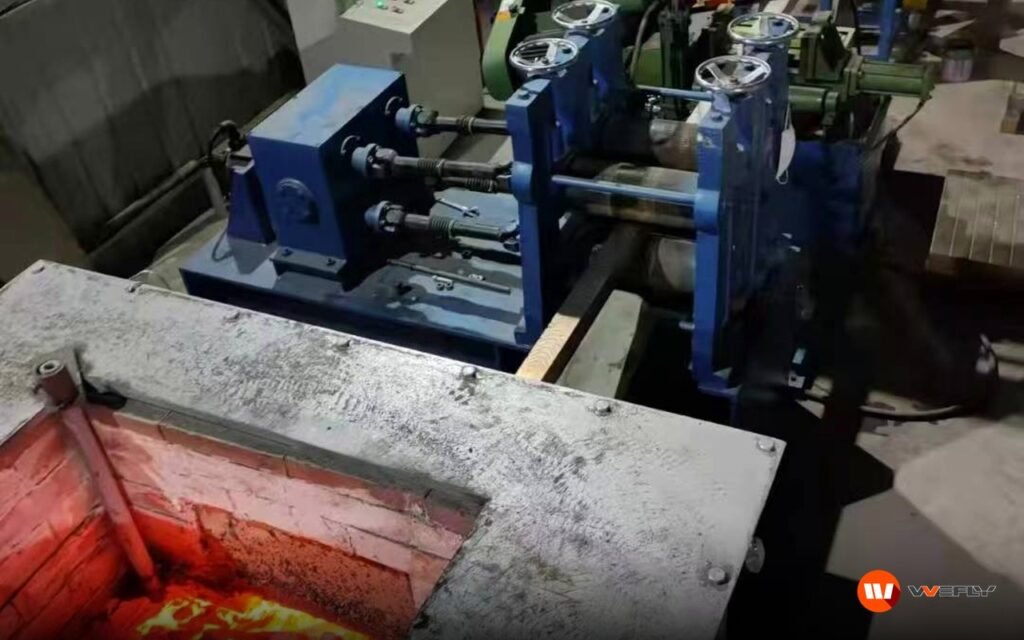
A horizontal copper rod continuous casting machine takes copper cathode or processed scrap, melts it in an induction furnace, protects the melt with a charcoal or graphite cover to reduce oxidation, holds it in a furnace at around 1150 °C ±10 °C, and casts it through a water-cooled copper mould into bright copper rod, brass rod or copper-alloy products. The entire chain — melting, holding, casting, tension and take-up — runs as one continuous, controllable process.
4. What a WOLFU line looks like
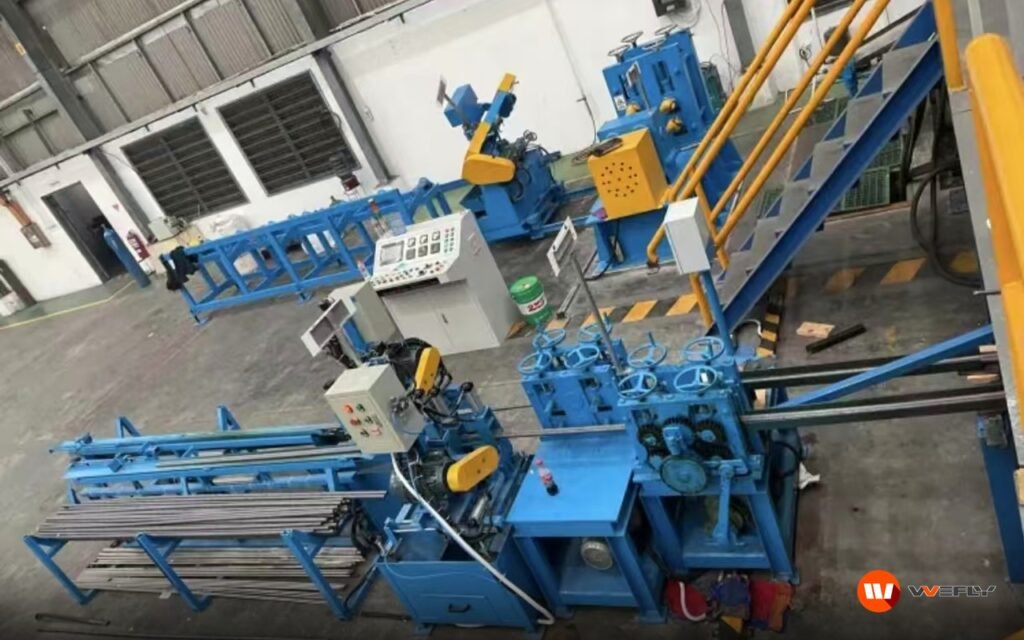
WOLFU’s horizontal copper rod continuous casting machine with melting furnace packages the whole chain: induction melting furnace, casting machine, regulating wheel frame, tension device, twin-head take-up machine, water-cooling system, electrical control and temperature-measurement systems. Key figures as below.
| Capacity | 3,000 – 12,000 tonnes / year (configurable) |
| Casting cycle | 4 – 6 seconds |
| Casting speed | 60 – 700 mm/min |
| Rod diameter | Φ12 – Φ80 mm, up to Φ120 / Φ140 / Φ180 / Φ200 mm |
| Casting type | 2, 4 or 6 strands |
| Raw material | Copper cathode or recovered copper scrap |
| Final product | Copper rod, brass rod, copper-alloy products |
| Holding furnace | ≈1150 °C ±10 °C |
| Max furnace temp | 1300 °C |
| Power range | 500 – 3,200 kW (customisable) |
| Certification | ISO 9001 |
Full specification on the WOLFU copper rod product page: Horizontal Copper Rod Continuous Casting Machine — WOLFU
5. Where the recycled copper rod goes
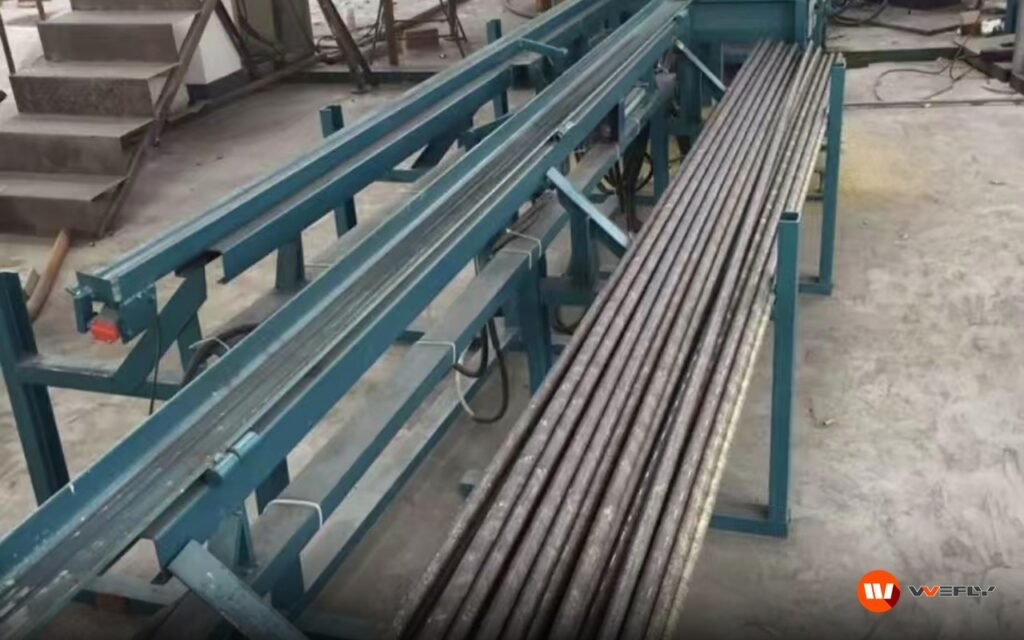
Recycled rod and bar re-enter exactly the industries that first demanded virgin copper: cable and wire plants drawing 8 mm rod, brass and copper-alloy foundries, non-ferrous casting workshops, and transformer or motor-component producers. In a circular economy this is the cleanest possible loop — a recovered conductor becoming a new conductor. It is why copper recovery is economically attractive in waste solar industry. Read how WOLFU tackles the solar panel recycling side of the chain.
6. How to choose the right machine
Selection is driven by your feedstock and final product. Ask three questions. First, what is your scrap composition — pure copper, brass or mixed alloy? Second, what rod diameter and strand count do you need? Third, does the supplier provide a complete turnkey package — melting, holding, casting, take-up, water cooling and automation? The answer determines whether your line runs profitably or not.
Conclusion
Solar panel recycling is moving from pilot to industrial scale. The recyclers who will profit most are the ones who can turn recovered copper into a finished, saleable product on site. A horizontal copper rod continuous casting machine has that capability.
| Ready to close the copper rod continuous casting machine in your recycling line? Request a WOLFU quotation →Explore the full WOLFU solar panel recycling equipment range for the complete front-end of the PV recycling line. |
FAQ
Q: Can the copper rod continuous casting machine run on recovered copper from PV panels?
A: Yes. The line runs on copper cathode or processed copper scrap — exactly what a solar panel recycling line produces. Melt protection and stable holding temperature keep quality consistent.
Q: What diameters can be cast?
A: Standard configurations produce Φ12–Φ80 mm, with larger options up to Φ120–Φ200 mm depending on the line.
Q: What is the capacity of WOLFU copper rod continuous casting machine?
A: Typically 3,000–12,000 tonnes per year, configurable to your plant size.
Q: Do you supply the full line?
A: Yes. WOLFU delivers the complete package — induction melting furnace, casting machine, tension/take-up, water cooling, electrical control and automation — plus installation and commissioning.
Q: How do I get a quote?
A: Send your feedstock type, target rod diameter and annual capacity to WOLFU. Engineers reply within 24 hours with a process diagram and quotation.