
Why Copper Recycling Matters as Global Power Grids Expand
The global energy landscape is changing. Expanding electrical grids, renewable energy installations, data centers, and industrial electrification are increasing the importance of copper in modern infrastructure.
Copper is essential for power transmission, electrical equipment, motors, transformers, and industrial manufacturing. As electricity networks grow and existing infrastructure requires upgrades, maintaining a reliable copper supply becomes increasingly important.
One practical solution is copper recycling.
By recovering usable copper from industrial scrap, discarded cables, and electrical equipment, recycling companies can return valuable material to manufacturing supply chains.
For metal processors and recycling plant operators, understanding the complete process—from scrap preparation to industrial melting and casting—is essential for developing efficient and reliable operations.
1. Why Global Power Grid Expansion Matters for Copper Recycling
Electricity infrastructure depends heavily on conductive materials.
Copper is widely used in power cables, transformers, motors, switchgear, and electrical connections because of its excellent electrical conductivity and durability.
Several developments are influencing long-term copper demand:
- Power grid modernization: Aging electrical networks require equipment replacement and infrastructure upgrades.
- Renewable energy expansion: Solar and wind installations need electrical cables, transformers, and grid connections.
- Data center development: Large computing facilities require extensive electrical distribution and cooling infrastructure.
- Industrial electrification: Manufacturers are adopting more electrically powered equipment and production processes.
These trends increase the importance of both primary copper production and secondary copper recovery.
Recycling cannot eliminate the need for newly mined copper, but it can provide an additional material source while reducing the amount of recoverable metal sent to waste.
For industrial recycling businesses, this creates opportunities to process copper-bearing scrap into materials suitable for further manufacturing.
2. Where Does Recyclable Copper Come From?
Copper recycling facilities receive materials from a variety of industrial and commercial sources.
However, not all copper scrap has the same composition, purity, or processing requirements.
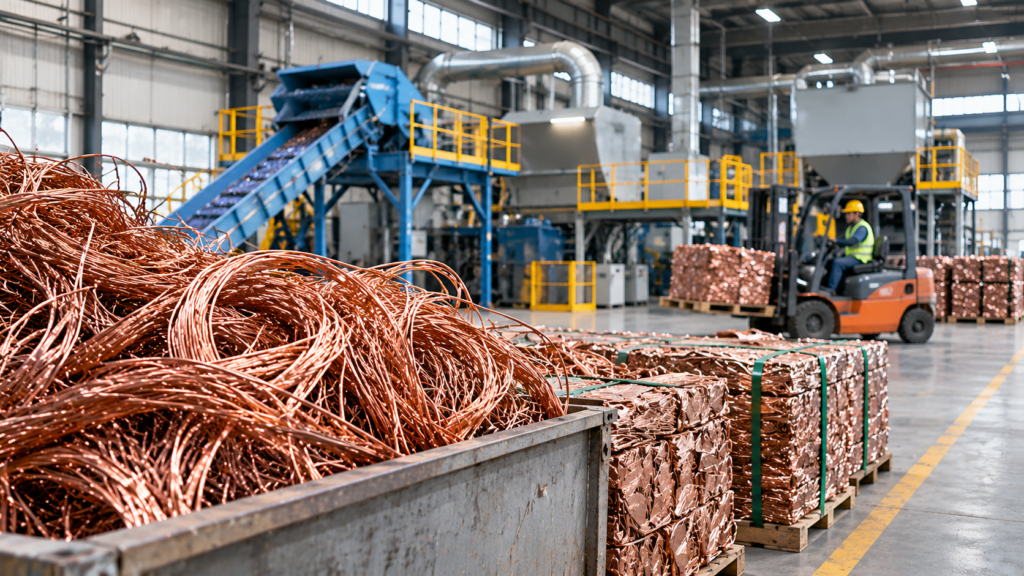
Industrial Copper Wire and Cable Scrap
Electrical cables and manufacturing offcuts are common sources of recoverable copper.
Depending on the material, processing may involve cable stripping, granulation, mechanical separation, and sorting.
Insulation and other nonmetallic components should be removed before the prepared copper enters a melting operation.
Electrical Equipment and Industrial Components
Transformers, motors, generators, and other electrical equipment may contain valuable copper windings and conductive components.
These materials often require dismantling and separation before recycling.
Manufacturing Scrap
Copper fabrication facilities generate offcuts, machining scrap, and rejected components.
When properly segregated, relatively clean manufacturing scrap can be easier to process than mixed post-consumer materials.
Mixed Metal Scrap
Copper may also be recovered from mixed industrial waste streams.
These materials generally require additional identification and sorting to separate copper from aluminum, steel, brass, and other metals.
The quality of incoming scrap directly influences the efficiency and consistency of downstream melting and casting.
3. How Industrial Copper Recycling Works
A typical copper recycling operation involves several interconnected stages.
The exact process depends on feedstock characteristics, plant capacity, and final product requirements.
Step 1: Collection and Material Identification
Incoming scrap is inspected and classified according to its composition and condition.
Separating relatively pure copper from copper alloys and mixed materials helps prevent unwanted changes in the final melt composition.
Step 2: Mechanical Preparation
Cable stripping, cutting, shredding, or granulation may be required to prepare the material.
For insulated cables, mechanical separation helps recover the copper conductor while removing plastic or rubber coverings.
Step 3: Sorting and Contaminant Removal
Ferrous metals, aluminum, nonmetallic residues, and other unwanted materials should be removed using appropriate separation methods.
Proper sorting can reduce unnecessary melting losses and improve product consistency.
Step 4: Copper Melting
Prepared copper scrap is transferred into suitable industrial melting equipment.
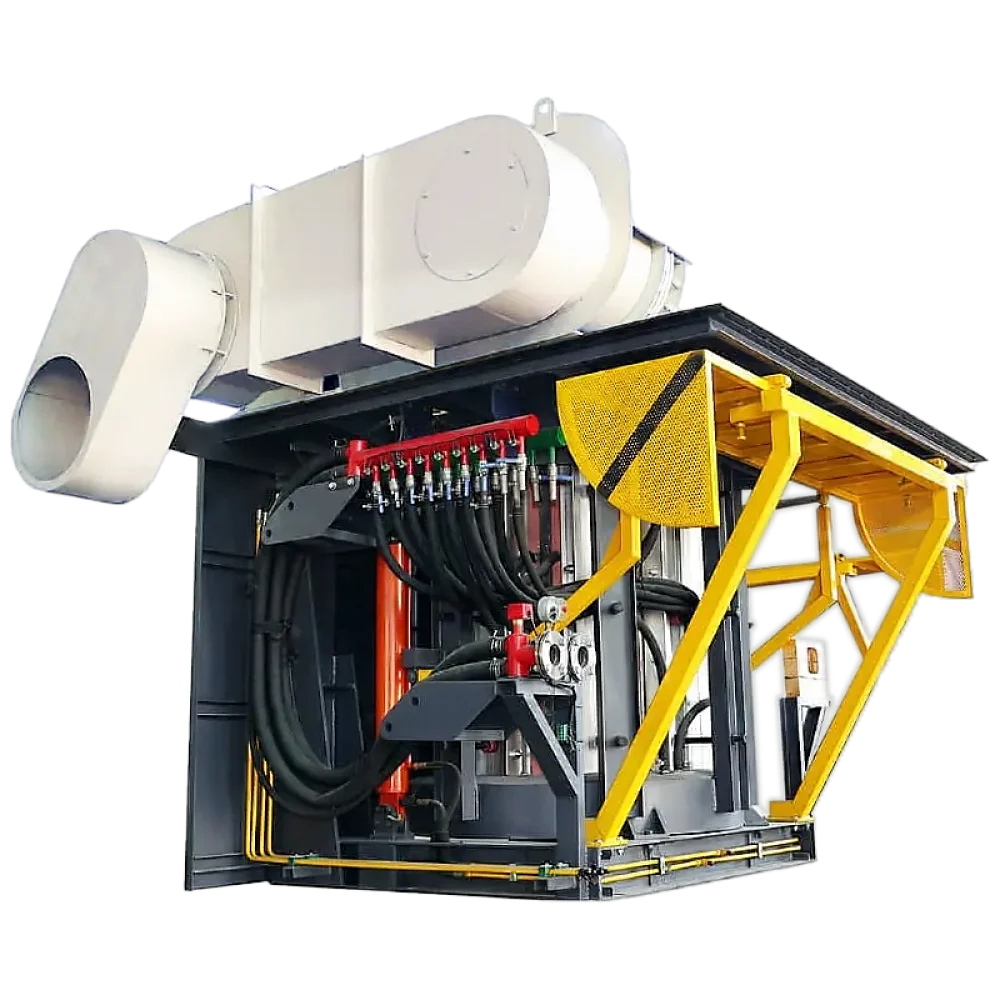
A medium-frequency induction melting furnace can be used for copper melting applications, depending on furnace design and operating requirements.
Induction heating generates heat within electrically conductive material through electromagnetic interaction.
The furnace configuration, refractory lining, operating procedures, and power supply must be appropriate for copper processing.
Step 5: Casting and Cooling
After melting and any required treatment, molten copper can be poured into molds or transferred to downstream casting equipment.
The resulting products may include copper ingots or other intermediate forms for additional processing.
Step 6: Quality Inspection
Recovered copper products may require chemical composition testing, visual inspection, and other quality checks.
Final specifications depend on the intended industrial application.
4. The Role of Induction Melting Furnaces in Copper Recycling
Induction melting technology is widely used in metal processing because it provides electrically controlled heating without requiring direct combustion inside the furnace.
For appropriately prepared copper scrap, induction melting can support batch melting and subsequent casting operations.
Controlled Power Input
Induction furnace systems allow operators to regulate electrical power during the melting process.
This supports process control, although actual melting performance depends on furnace design, charge material, and operating conditions.
Suitable for Industrial Metal Processing
Medium-frequency induction furnaces can be configured for different metals and production capacities.
However, furnace selection should be based on the specific material being processed rather than assuming one configuration is suitable for every application.
Integration With Casting Systems
For facilities producing copper ingots, melting equipment can be combined with pouring and casting operations.
WOLFU offers industrial melting and casting equipment solutions for metal processing applications.
Explore the WOLFU medium-frequency furnace product range for related equipment configurations.
5. What Affects Recycled Copper Quality?
Producing reusable copper requires more than reaching the correct melting temperature.
Several factors can influence the composition, appearance, and suitability of the finished product.
Scrap Composition
Mixing copper with brass, bronze, aluminum, or other metals may introduce unwanted alloying elements.
Proper material identification and segregation are essential.
Surface Contamination
Oil, paint, insulation residues, and other contaminants can create processing difficulties.
Suitable cleaning and preparation procedures should be considered before melting.
Oxidation and Melt Handling
Copper can react with oxygen during high-temperature processing.
Appropriate melting practices, temperature management, and melt treatment help control oxidation-related quality issues.
Furnace and Refractory Conditions
Furnace lining condition, equipment maintenance, and operating procedures can influence process reliability and contamination risks.
Final Product Requirements
Copper intended for general remelting may have different specifications from copper used in demanding electrical applications.
For example, producing high-conductivity electrical-grade copper may require additional refining and verification beyond conventional scrap melting.
A melting furnace alone does not guarantee a specific copper purity or electrical conductivity grade.
6. How to Choose Equipment for a Copper Recycling Plant
Equipment selection should begin with the characteristics of the scrap material and the required finished product.
Before purchasing a copper melting furnace or casting line, recycling operators should evaluate the following factors.
| Selection Factor | Key Questions |
|---|---|
| Scrap Type | Is the feedstock clean copper, cable scrap, or mixed metal waste? |
| Production Capacity | What is the required output per batch, shift, or day? |
| Electrical Supply | Is sufficient power available for the planned furnace? |
| Furnace Configuration | What capacity and heating system suit the process? |
| Casting Method | Will the facility produce ingots or another intermediate product? |
| Quality Requirements | What composition and testing standards must be met? |
| Environmental Controls | How will fumes, residues, and other process emissions be managed? |
| Maintenance | What technical support and spare parts are required? |
For facilities handling insulated copper cables, the melting furnace is only one part of the overall recycling process.
Mechanical preparation, material separation, and environmental controls may also be necessary.
A properly planned production line should connect these stages into a practical and maintainable workflow.
7. WOLFU Industrial Copper Melting and Casting Solutions
WOLFU provides industrial melting equipment and metallurgical processing solutions for customers working with different metal materials.
For copper recycling applications, equipment planning may involve:
- Medium-frequency induction melting furnaces
- Electrical power supply and control systems
- Furnace cooling and supporting equipment
- Metal pouring and casting equipment
- Production line configuration and technical support
The final configuration depends on the customer’s raw materials, operating conditions, production targets, and finished product requirements.
WOLFU’s industrial equipment portfolio includes melting and related processing solutions for different metallurgical applications.
When evaluating a new copper recycling project, customers should provide information about their scrap composition, desired production capacity, available electrical supply, and intended casting products.
These details help determine a suitable equipment configuration.
8. The Future of Copper Recycling in an Electrified Economy
Global power infrastructure is expected to remain an important driver of copper demand.
As electrical networks expand and industrial equipment is replaced, the recovery of usable copper from existing materials will continue to support resource efficiency and manufacturing supply chains.
For recycling companies, long-term competitiveness depends on more than access to scrap.
Material preparation, process control, equipment reliability, product quality, and operating costs all influence project performance.
Investing in appropriately configured melting and casting equipment can support a more consistent industrial recycling operation.
Plan Your Copper Recycling Project With WOLFU
Are you evaluating a new copper melting furnace or planning to expand an existing metal recycling facility?
WOLFU provides industrial melting equipment and metallurgical processing solutions tailored to different production requirements.
Visit WOLFU Industry to discuss your scrap materials, production capacity, and equipment needs.