
Lead Acid Battery Recycling Machine for Safe and Efficient Recovery
A lead acid battery recycling machine is an essential solution for processing spent lead acid batteries safely and efficiently. Lead acid batteries are widely used in automotive, industrial, and backup power systems, but improper disposal poses environmental and safety risks due to lead toxicity and acid leakage.
Recycling lead acid batteries helps recover valuable lead, plastic components, and electrolyte materials while preventing hazardous waste from entering landfills. Modern recycling machines automate shredding, separation, and material recovery, helping recycling facilities improve efficiency and safety.
For companies focused on responsible battery recycling, WOLFU offers a professional lead acid battery recycling machine designed for high recovery rates and stable industrial operation.
What Is a Lead Acid Battery Recycling Machine?
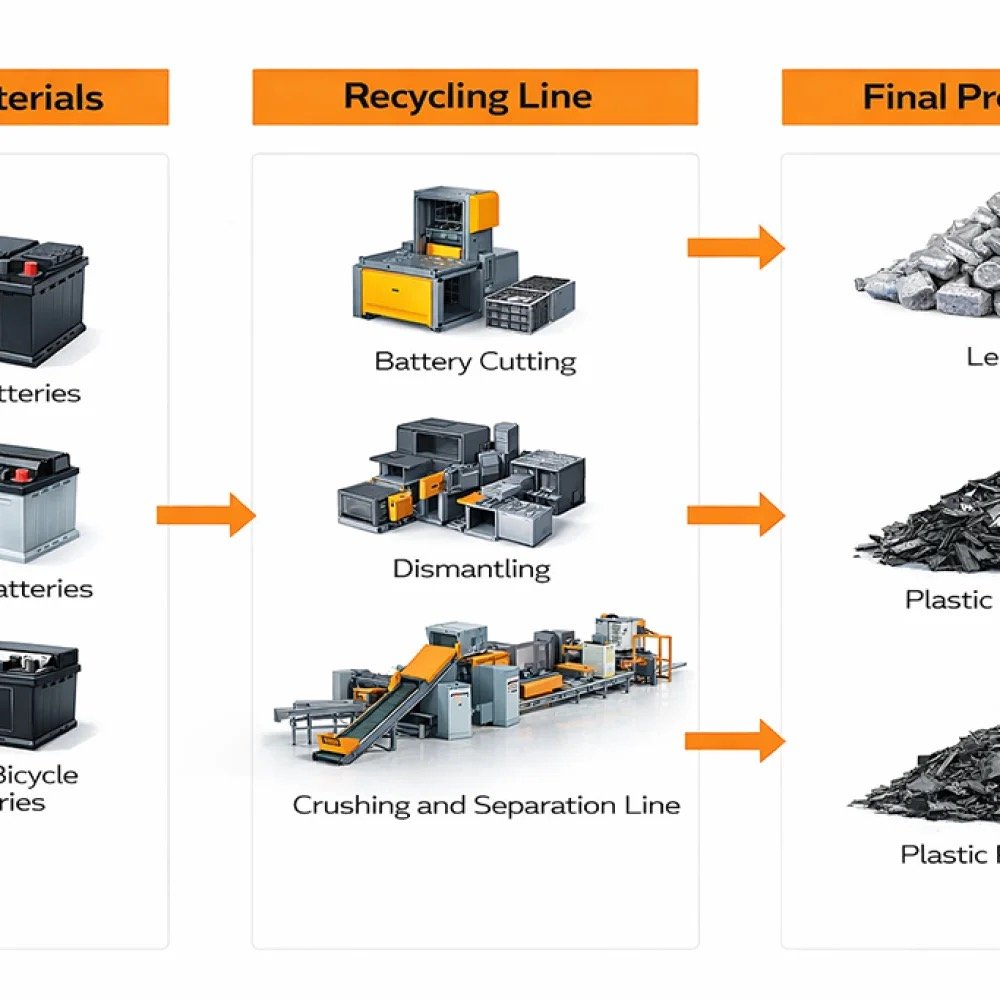
A lead acid battery recycling machine is industrial equipment used to dismantle spent lead acid batteries, separate metal and plastic components, and recover valuable lead and polypropylene materials. The system typically includes shredders, conveyors, separators, water tanks, and dust control systems.
The recycling process must safely handle hazardous materials such as sulfuric acid and lead compounds. By automating key steps, modern recycling lines reduce worker exposure to dangerous substances while maximizing material recovery and value.
Lead acid battery recycling is an established industry segment, with stringent safety and environmental requirements in many regions. Professional recycling equipment helps facilities meet regulatory standards and improve operational outcomes.
How the Battery Recycling Process Works
Battery Feeding and Discharging
Spent lead acid batteries are safely fed into the system and fully discharged to eliminate residual electrical energy before further processing.
Crushing and Shredding
The batteries are crushed to break the shell and internal components. Shredding helps liberate lead plates, plastic casings, and electrolyte materials for separation.
Separation and Recovery
After shredding, lead components, polypropylene plastic, and other materials are separated using mechanical and density separation systems. Lead alloys and plastic fragments are isolated for further refinement or resale.
Water and Dust Control
Advanced recycling machines include water spraying and dust collection to control airborne contaminants and maintain a safer recycling environment.
Main Advantages of Lead Acid Battery Recycling Machines
High Lead Recovery Rate
Automated separation systems help recover a high proportion of lead from spent batteries, increasing material reuse value.
Reduced Environmental Risk
Proper battery recycling prevents hazardous lead and acid discharge into soil and water systems, supporting environmental protection goals.
Improved Worker Safety
Automated processing reduces manual handling of acidic and toxic materials, lowering exposure risk for recycling personnel.
Material Purity
Mechanical and density separation systems improve the purity of recovered lead and plastic materials, which enhances resale and reuse potential.
Stable Industrial Operation
Modern recycling lines support continuous processing with minimal downtime, suitable for commercial recycling facilities.
Applications of Lead Acid Battery Recycling Equipment
- Automotive Battery Recycling: Recovering lead and plastics from vehicle batteries
- Industrial Battery Processing: Recycling forklift, UPS, and industrial backup batteries
- Battery Remanufacturing: Recovering materials for reuse in new battery production
- Waste Management Centers: Supporting heavy battery recycling services
- Secondary Metal Processing Plants: Integrating lead recovery with other metal recycling operations
Why Battery Recycling Matters
Lead acid batteries contain valuable lead alloys and plastic components, but they also include toxic materials that can harm the environment if disposed of improperly. According to the United States Environmental Protection Agency, proper recycling significantly reduces environmental hazard and conserves valuable resources.
Establishing efficient recycling systems helps reduce landfill waste, improve material reuse, and support regulatory compliance in many markets.
For recycling companies and metal recovery businesses, investing in professional recycling equipment helps improve safety, increase recovery value, and build sustainable operations.
Why Choose WOLFU Lead Acid Battery Recycling Machine?
WOLFU’s lead acid battery recycling machine is designed for efficient metal and plastic separation with stable performance in industrial operations.
This system supports shredding, separation, density sorting, and dust control, helping recycling businesses achieve higher recovery rates while maintaining safer production conditions.
WOLFU also offers related recycling and industrial equipment, including:
For more recycling industry news and insights, visit the WOLFU Industry Blog.
How to Choose the Right Lead Acid Battery Recycling System
Processing Capacity
Select equipment based on the number of batteries you need to process daily or hourly to match your production goals.
Separation Efficiency
Higher separation efficiency improves material purity and resale value for recovered lead and plastics.
Environmental Control
Dust collection and water sprayer systems help minimize airborne contaminants and improve workshop safety.
Automation Level
Advanced automation reduces manual work and lowers worker exposure to toxic materials.
Service and Support
Reliable after‑sales support and maintenance services help ensure stable long‑term operation.
Conclusion
A lead acid battery recycling machine offers a practical and safe solution for processing spent lead acid batteries while recovering valuable lead and plastic components.
By automating shredding, separation, and material recovery, the system improves efficiency, reduces environmental risk, and supports sustainable recycling operations.
If your business is expanding battery recycling capabilities, WOLFU provides dependable industrial equipment designed for modern recycling workflows.
Explore WOLFU Lead Acid Battery Recycling Machine and Request a Quote
FAQ
What materials are recovered from lead acid batteries?
Recovered materials typically include lead alloys, polypropylene plastic, and electrolyte residues that can be further processed or refined.
Is lead acid battery recycling safe?
Proper recycling with industrial equipment helps control toxic exposure, prevent environmental contamination, and support safe material handling.
Who uses lead acid battery recycling machines?
Automotive recyclers, industrial battery recyclers, waste management facilities, and secondary metal processing plants commonly use this equipment.