
Solar Panel Recycling Line for End-of-Life PV Module Recovery
As solar energy continues to expand across utility, commercial, and industrial markets, end-of-life PV module management is becoming a serious recycling challenge. A solar panel recycling line helps recycling companies, solar farm operators, and renewable energy waste processors recover valuable materials from damaged, defective, or retired photovoltaic panels.
Instead of sending used solar panels directly to landfill, a complete recycling system can separate aluminum frames, glass, junction boxes, copper, silicon powder, plastics, and other reusable materials. This approach supports cleaner disposal, better material recovery, and more efficient circular use of solar industry waste.
For businesses planning to enter the photovoltaic recycling market, choosing the right processing equipment is essential. The right system should not only break down solar panels, but also recover materials in a controlled, stable, and commercially useful way.
Why Solar Panel Recycling Is Becoming More Important
Solar panels are usually designed for long service life, but every module will eventually reach the end of its usable period. In addition, many panels are removed earlier because of transportation damage, installation failure, storm damage, production defects, or solar farm repowering projects.
As more solar projects are installed around the world, the number of retired PV modules will continue to increase. This creates both an environmental challenge and a business opportunity. Without proper recycling, valuable materials may be wasted. With proper recycling, glass, aluminum, copper, silicon powder, and plastics can be separated for further processing.
For recycling companies, this means solar panel waste is no longer just a disposal problem. It can become a recoverable material stream when processed by a complete and well-designed production line.
What Is a Solar Panel Recycling Line?
A solar panel recycling line is an integrated industrial system used to process waste photovoltaic modules. It usually combines pre-processing, frame removal, glass separation, shredding, crushing, grinding, material separation, and dust collection.
The purpose is not simply to crush solar panels into mixed waste. A professional system separates different materials step by step, so each recovered material stream can be collected, stored, sold, refined, or reused according to downstream recycling requirements.
The WOLFU Solar Panel Recycling Line is designed for end-of-life, damaged, and waste solar panels. It uses physical processing methods to recover junction boxes, aluminum frames, glass, metals, silicon powder, and plastics.
WOLFU Solar Panel Recycling Line: Key Technical Data
WOLFU provides a complete PV module recycling solution for companies that need industrial-scale processing capacity. The standard model shown on the product page is suitable for recycling plants, renewable energy waste treatment centers, and solar farm dismantling projects.
Technical Parameters
| Model | HN-SP-1500 |
|---|---|
| Motor Power | 315 KW |
| Capacity | 1500–2000 kg/h |
| Dimension | 36 × 8 × 5 m |
| Weight | 11 Ton |
These specifications make the system suitable for customers who need continuous processing rather than small manual dismantling. The line can be configured as part of a larger recycling plant layout depending on raw material condition, target capacity, workshop space, and final material requirements.
Main Materials Recovered from Waste Solar Panels
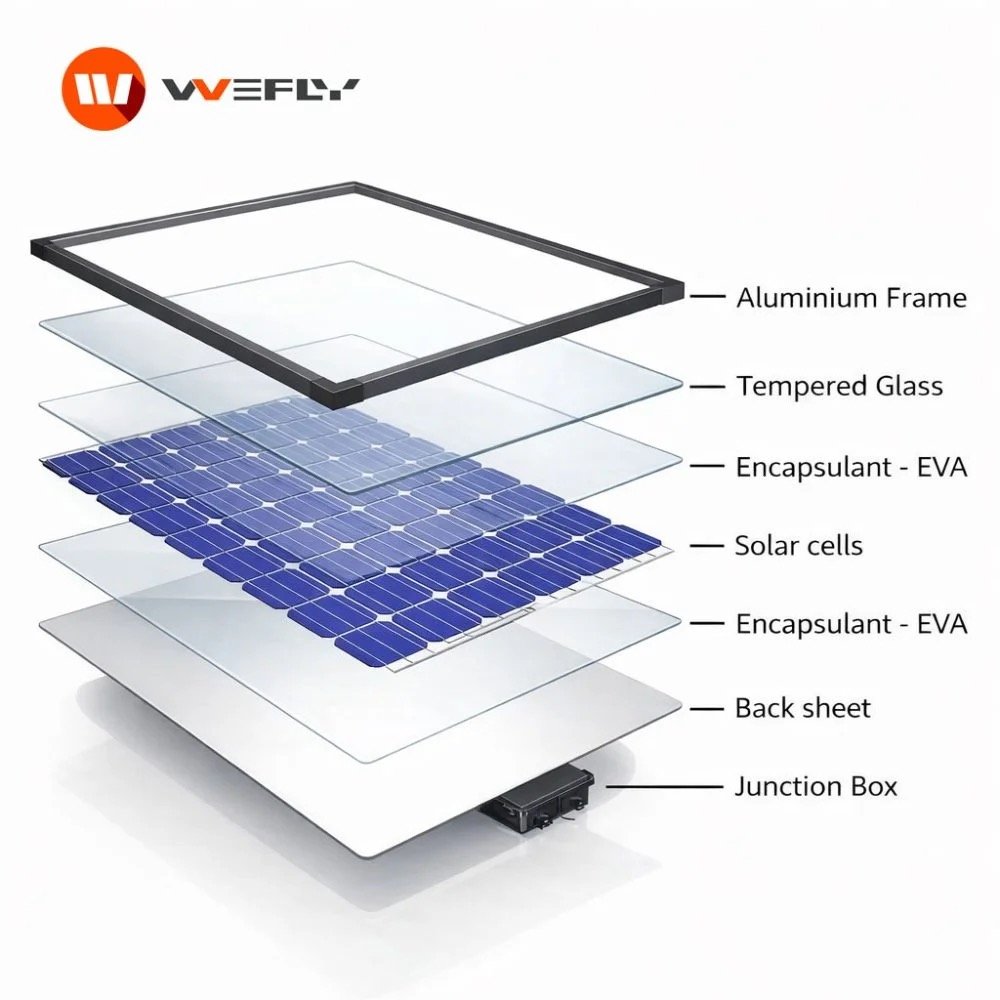
A photovoltaic module is made from multiple material layers and components. These may include tempered glass, an aluminum frame, polymer encapsulants, solar cells, copper conductors, junction boxes, back sheets, and sealing materials.
The WOLFU system is designed to recover several key material streams:
- Junction boxes from the rear side of solar panels
- Aluminum frames from module edges
- Glass from the front panel surface
- Copper and other metal fractions
- Silicon powder from processed cell material
- Plastic and non-metal materials
Recovering these materials improves the overall value of the recycling process. Aluminum and copper are especially important for metal recycling, while glass and silicon-containing materials can be further processed according to local recycling standards and downstream buyer requirements.
How the Solar Panel Recycling Process Works
A complete solar panel recycling workflow needs to protect material value while keeping the operation efficient. WOLFU’s solution follows a staged process that starts with component removal and ends with material separation and dust collection.
1. Pre-Processing and Component Removal
The first step is removing large external components from the module. A junction box separator removes the J-box, while an aluminum frame separator dismantles the frame from the panel edge. A rubber edge removal machine can remove sealing materials, and a glass separator helps separate the glass panel from the inner layers.
This pre-processing stage is important because it reduces contamination before crushing. It also allows valuable components like aluminum frames and junction boxes to be collected earlier in the process.
2. Crushing and Size Reduction
After pre-processing, the remaining panel material is transported by conveyor into the crushing section. A double-shaft shredder reduces the material into smaller strips. Then a blade cutting crusher further reduces the size before grinding.
The grinding machine processes the material into a smaller particle size suitable for separation. This step prepares mixed materials for airflow separation and electrostatic separation, which are used to separate metal and non-metal fractions more effectively.
3. Airflow Vibration Separation
Airflow vibration separation uses airflow and vibration movement to separate materials by weight, density, and physical behavior. This stage helps recover copper and other metal fractions from the crushed and ground PV module material.
For recycling plants, this is a critical part of improving material value. Cleaner material streams are easier to sell, refine, or reuse, while poorly separated mixed waste may have lower economic value.
4. Electrostatic Separation
Electrostatic separation is used after crushing and grinding to improve the separation between metal and non-metal materials. It helps remove residual metal from non-metal fractions and improves the overall recovery rate of the line.
This stage is especially useful when processing complex materials that contain fine copper, silicon-based particles, plastic, and other mixed fractions. Better separation also supports cleaner downstream processing.
5. Dust Collection and Cleaner Operation
During crushing, grinding, and separation, dust control is necessary for a cleaner workshop environment. The WOLFU solar panel recycling line includes a dust collector to capture dust generated during processing.
A proper dust collection system helps reduce environmental pollution and supports safer daily operation. For industrial recycling plants, dust control should be considered part of the overall equipment design, not an optional add-on.
Business Advantages of a Complete PV Recycling System
A complete recycling line offers stronger business value than manual dismantling or simple crushing. It gives operators a more controlled process, more stable material output, and better scalability for commercial recycling projects.
For companies entering the PV recycling market, the main advantages include:
- Higher processing efficiency for end-of-life solar panels
- Recovery of multiple materials from one production line
- Reduced manual labor compared with hand dismantling
- Improved separation of metals and non-metals
- Dust collection for cleaner plant operation
- Flexible use in solar farm dismantling and PV manufacturing scrap recycling
The system is especially useful for businesses handling decommissioned solar projects, damaged transport stock, defective production panels, or long-term renewable energy waste treatment projects.
Recommended WOLFU Equipment for Solar and Recycling Projects
For customers building a broader recycling or solar material processing facility, WOLFU offers related equipment that can support upstream and downstream industrial needs.
Solar Panel Recycling Line
The main recommended solution is the WOLFU Solar Panel Recycling Line. It is designed for processing waste, damaged, and end-of-life PV modules through dismantling, crushing, grinding, airflow separation, electrostatic separation, and dust collection.
Industrial Silicon Melting Induction Furnace
For customers involved in photovoltaic silicon processing, WOLFU also provides the Industrial Silicon Melting Induction Furnace. This equipment is designed for industrial silicon and solar-grade silicon melting, making it relevant for semiconductor and photovoltaic material production.
Polysilicon Ingot Casting Furnace
Another related product is the WOLFU Polysilicon Ingot Casting Furnace. It is used for melting and directional solidification of polycrystalline silicon materials for solar battery material production.
For additional internal reading, see this WOLFU blog page: Solar PV Panel Recycling Plant for High Recovery Rate.
How to Choose the Right Solar Panel Recycling Line
Before purchasing a recycling system, buyers should evaluate raw material type, expected input capacity, available workshop area, automation requirements, dust control standards, and target recovered materials.
For example, a company processing small batches of damaged panels may not need the same layout as a large recycling plant handling continuous solar farm decommissioning projects. Capacity planning should match real supply volume, labor cost, downstream buyers, and local environmental requirements.
Buyers should also consider whether the supplier can provide plant layout design, installation guidance, operator training, spare parts, and long-term technical support. A recycling line is not only one machine; it is a complete production system that needs stable coordination between each stage.
Conclusion: Build a More Valuable PV Recycling Process
The solar industry needs practical recycling solutions as more PV modules become damaged, retired, or replaced. A solar panel recycling line gives recycling businesses a structured way to recover glass, aluminum, copper, silicon powder, plastics, and other valuable materials from end-of-life modules.
WOLFU’s complete system combines pre-processing, crushing, grinding, airflow vibration separation, electrostatic separation, and dust collection into one industrial workflow. For companies planning to enter or expand in the PV recycling business, this type of equipment can help improve material recovery, reduce waste, and create long-term recycling value.
Ready to build a complete PV module recycling solution? Contact WOLFU to learn more about the Solar Panel Recycling Line and request a customized equipment configuration for your recycling plant.
FAQ
What materials can be recovered by a solar panel recycling line?
A solar panel recycling line can recover junction boxes, aluminum frames, glass, metals, silicon powder, plastics, and other reusable materials from waste photovoltaic modules.
What types of solar panels can this recycling line process?
The WOLFU system is designed for end-of-life solar panels, damaged PV modules, defective production panels, and waste modules from solar farm dismantling projects.
Why is electrostatic separation used in PV panel recycling?
Electrostatic separation helps separate residual metal from non-metal materials after crushing and grinding. This improves material purity and supports better recovery value.
1 comment on “Solar Panel Recycling Line for End-of-Life PV Module Recovery”