
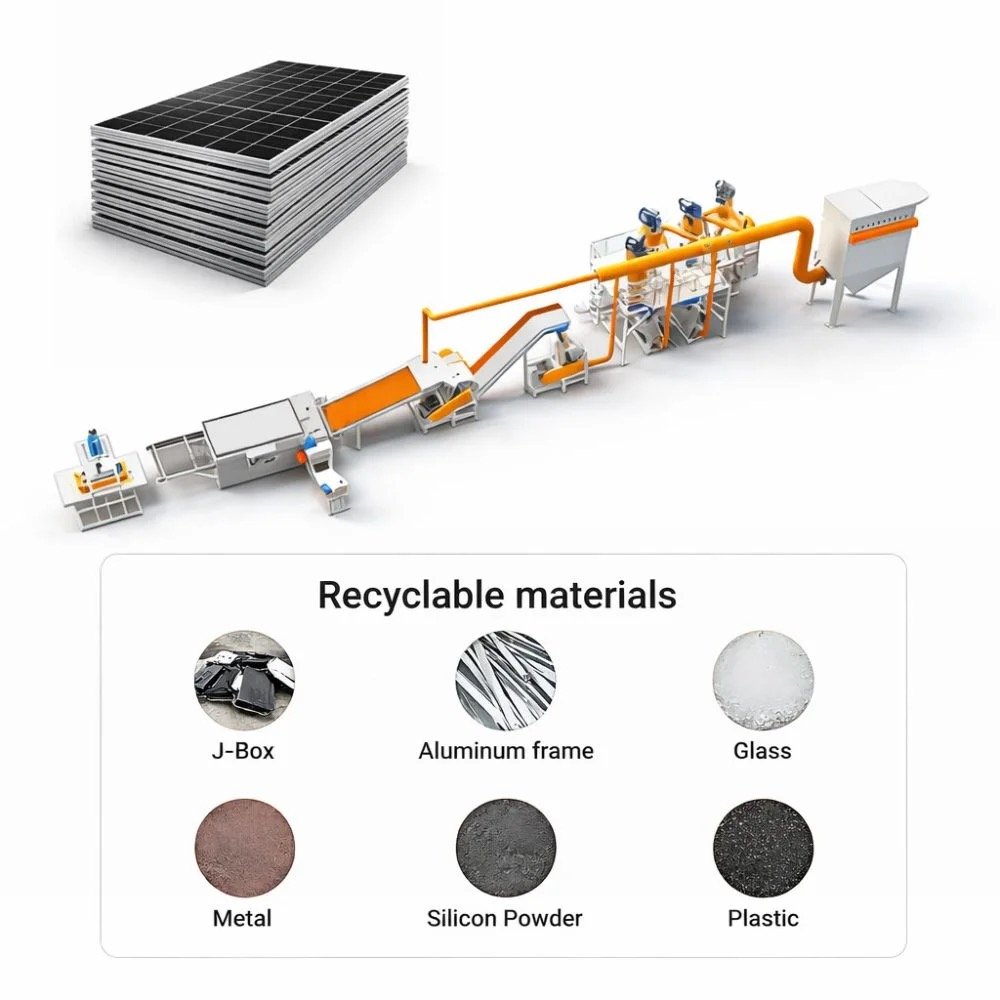
Solar PV Panel Recycling Plant for High Material Recovery
A Solar PV Panel Recycling Plant is an industrial solution for processing end-of-life photovoltaic modules and recovering valuable materials from retired solar panels. As more photovoltaic systems reach the end of their operating life, recycling companies and solar energy businesses need efficient equipment for handling increasing volumes of waste panels.
Used solar panels are not ordinary waste. They contain recyclable materials such as glass, metal, silicon powder, and plastic. With a properly configured recycling line, these materials can be separated and collected for downstream processing instead of being discarded as mixed industrial waste.
View WOLFU Solar PV Panel Recycling Plant
The WOLFU Solar PV Panel Recycling Plant is a fully automatic production line designed for recycling and processing waste photovoltaic panels. With a processing capacity of 200 kg/h and a power rating of 90 kW, it supports stable industrial production while separating glass, metal, silicon powder, and plastic.
What Is a Solar PV Panel Recycling Plant?
A solar PV panel recycling plant is a specialized recycling system used to process discarded photovoltaic panels. The line separates the different materials inside used solar modules so that valuable resources can be recovered more efficiently.
Photovoltaic modules are built from multiple materials. These can include glass, metal frames, internal conductive components, silicon-based materials, polymers, and other encapsulation materials. Because these components are combined in a layered structure, manual separation is slow and difficult to scale.
An automatic solar panel recycling line provides a more organized solution. It can process used modules through a continuous industrial workflow, reduce manual labor, and improve the consistency of material separation.
For recycling companies, the goal is not only to dispose of old panels. The goal is to recover useful materials, improve resource utilization, and reduce the amount of mixed waste requiring further handling.
Why Solar Panel Recycling Is Becoming More Important
Solar energy installations continue to expand across utility-scale power stations, commercial buildings, factories, farms, and residential projects. Over time, damaged, defective, or retired photovoltaic modules need to be replaced.
Without an effective recycling process, end-of-life modules may occupy storage space or enter general waste streams. This creates a missed opportunity because solar panels contain materials that can be separated and reused through downstream recycling channels.
A solar PV panel recycling plant helps companies build a more systematic processing workflow. Instead of handling each panel manually, operators can use a dedicated production line for continuous recycling.
This is especially important for decommissioned photovoltaic power stations, industrial waste disposal companies, solar module manufacturers, and recycling businesses preparing for larger volumes of retired panels.
How the WOLFU Solar PV Panel Recycling Plant Works
Step 1: Collecting and Preparing Waste Solar Panels
The recycling process starts with collecting used photovoltaic panels from decommissioned solar power stations, damaged module inventories, industrial solar projects, or waste panel recycling facilities.
Before processing, operators should inspect the panels and remove unsuitable foreign materials. Proper preparation helps improve production stability and prevents unnecessary wear on recycling equipment.
Step 2: Feeding Panels into the Recycling Line
After preparation, the waste panels enter the recycling system. A fully automatic line reduces the need for repeated manual handling and creates a more consistent production flow.
The WOLFU line is designed for multi-material encapsulant solar panel processing. This makes it suitable for industrial recycling projects that need a structured method for handling used photovoltaic modules.
Step 3: Separating the Main Material Streams
The system processes the waste solar panels and separates the recoverable material streams. These final products include glass, metal, silicon powder, and plastic.
Each material stream can be collected separately for downstream recycling, resale, further processing, or proper handling according to local requirements.
Step 4: Collecting Recovered Materials
After separation, operators collect the recovered materials for storage and downstream use. Cleanly separated materials are easier to manage than mixed solar panel waste.
This step improves warehouse organization and helps recycling companies develop clearer material recovery channels.
Step 5: Continuous Industrial Operation
The WOLFU system is designed as a fully automatic production line. It supports continuous industrial operation, reduces dependence on manual labor, and improves recycling efficiency.
For companies handling regular quantities of retired photovoltaic panels, automation can make the recycling process easier to manage and more scalable.
Key Advantages of the WOLFU Solar PV Panel Recycling Plant
Fully Automatic Production Line
The WOLFU solar PV panel recycling plant uses a fully automatic production design. This helps reduce manual labor and supports a more stable recycling workflow.
Automation is important for industrial waste processing because it improves repeatability and makes daily production easier to control.
200 kg/h Processing Capacity
The standard WOLFU solar panel recycling plant has a processing capacity of 200 kg/h. This makes it suitable for industrial recycling facilities and photovoltaic waste disposal projects.
The right capacity depends on the customer’s incoming panel volume, working hours, collection channels, and expansion plans.
Multi-Material Separation
The line is designed to separate several recyclable materials from used solar panels. The recovered outputs include glass, metal, silicon powder, and plastic.
Multi-material separation helps improve resource recovery and reduces the volume of mixed waste requiring disposal.
PLC-Based Control
The main components include a motor and PLC. PLC control helps the production line operate more reliably and supports a more organized industrial workflow.
For recycling plants, stable control is important because equipment downtime and process inconsistency can affect daily output.
Low-Energy Industrial Design
The system is designed for low energy consumption and stable performance. Its listed power is 90 kW.
Energy use is an important consideration for recycling businesses because electricity consumption directly affects operating cost.
Suitable for Decommissioned PV Power Stations
The line is suitable for processing used solar panels from decommissioned photovoltaic power stations. It can also support waste solar panel recycling facilities and industrial PV disposal projects.
This makes the equipment relevant for companies preparing for the increasing volume of end-of-life photovoltaic modules.
Request a Customized Solar PV Panel Recycling Plant Solution
Technical Parameters of the WOLFU Solar PV Panel Recycling Plant
The WOLFU Solar PV Panel Recycling Plant is a fully automatic recycling production line designed for used photovoltaic panels and industrial solar panel waste.
The listed processing capacity is 200 kg/h, and the listed power is 90 kW. The core components include a motor and PLC.
The machine is designed for multi-material encapsulant solar panel processing. Its final recovered materials include glass, metal, silicon powder, and plastic.
The listed machine weight is approximately 9500 kg. WOLFU provides a one-year warranty, machinery test reports, and video outgoing inspection for the equipment.
Materials Recovered from Waste Solar Panels
Glass
Glass is one of the main materials recovered from end-of-life photovoltaic modules. Solar panels contain a substantial glass layer that protects the internal components during use.
After separation, recovered glass can enter downstream recycling or material handling channels according to local market conditions.
Metal
Solar panels contain metal components that can be collected after processing. Recovering these materials helps reduce waste and improves the total value of the recycling process.
The exact metal composition may vary depending on panel design and condition.
Silicon Powder
Silicon powder is another recovered material stream from photovoltaic panel recycling. This material can be collected for downstream handling or further processing.
For solar panel recycling companies, separating silicon-based materials from mixed panel waste is an important part of the recovery workflow.
Plastic
Plastic materials can also be separated from used photovoltaic panels. Proper separation reduces the amount of mixed industrial waste and makes downstream material management easier.
Who Needs a Solar PV Panel Recycling Plant?
Solar Panel Recycling Companies
Companies specializing in solar panel recycling can use this production line to process discarded photovoltaic modules and separate the main recyclable materials.
Decommissioned PV Power Station Projects
Large photovoltaic power stations may generate significant quantities of retired or damaged panels during replacement and decommissioning. A dedicated recycling plant can help manage this material stream more efficiently.
Industrial Waste Disposal Companies
Waste management companies can add solar panel recycling to their service portfolio as photovoltaic waste volumes increase.
Solar Module Manufacturers
Manufacturers may need to process defective modules, damaged panels, production rejects, and warranty-returned photovoltaic products.
Renewable Energy Recycling Projects
Businesses building a broader renewable energy recycling operation can combine PV panel processing with battery recycling and metal recovery equipment.
How to Choose the Right Solar Panel Recycling Machine
The first factor is input material type. Customers should confirm whether they process complete photovoltaic panels, damaged modules, mixed solar panel waste, or production scrap.
The second factor is processing capacity. A 200 kg/h production line may be suitable for many industrial projects, but customers should evaluate their actual incoming waste volume before selecting equipment.
The third factor is target output. Buyers should confirm which recovered materials they want to collect, such as glass, metal, silicon powder, and plastic.
The fourth factor is automation level. A fully automatic line can reduce manual handling and make production easier to manage.
The fifth factor is workshop layout. The plant should reserve enough space for feeding, processing, material collection, maintenance, electrical control, and storage.
The sixth factor is technical support. Installation guidance, commissioning, staff training, spare parts support, and troubleshooting are important for long-term equipment operation.
Related WOLFU Equipment and Resources
For customers building a broader recycling operation, WOLFU also provides theLithium Battery Recycling Plant , which is designed to recover black mass, copper, aluminum, steel shells, and plastics from waste lithium-ion batteries.
For customers working with metal recycling and ingot production, the Medium Frequency Furnace and Ingot Casting Line supports scrap metal melting and continuous ingot casting applications.
You can also read WOLFU’s related blog article, Solar Panel Recycling Line for End-of-Life PV Module Recovery , to learn more about photovoltaic module recycling and material recovery planning.
Why Choose WOLFU?
WOLFU provides recycling production lines, industrial furnace systems, metal processing equipment, and customized engineering support. For solar panel recycling projects, customers usually need more than a single machine. They need a complete processing solution.
WOLFU can help customers evaluate raw material type, incoming panel volume, target output, workshop conditions, automation requirements, and project scale.
The company also provides pre-sales consultation, installation guidance, commissioning assistance, operation training, maintenance support, troubleshooting, and spare parts supply.
For decommissioned photovoltaic power stations, solar module manufacturers, and recycling companies, a properly configured solar PV panel recycling plant can improve material recovery and simplify industrial waste panel processing.
Conclusion
A Solar PV Panel Recycling Plant helps recycling companies process used photovoltaic modules and separate valuable materials such as glass, metal, silicon powder, and plastic.
The WOLFU system provides a fully automatic production line with a listed capacity of 200 kg/h, a power rating of 90 kW, PLC-based control, and stable industrial performance.
If your company needs a practical recycling solution for end-of-life solar panels, decommissioned PV station waste, damaged photovoltaic modules, or manufacturing rejects, WOLFU can recommend a customized configuration based on your input materials, plant layout, and recycling goals.
CTA:
Get a Quote for WOLFU Solar PV Panel Recycling Plant
FAQ
What materials can the solar PV panel recycling plant recover?
The WOLFU solar PV panel recycling plant can separate and recover glass, metal, silicon powder, and plastic from used photovoltaic panels.
What is the processing capacity of the WOLFU solar panel recycling plant?
The standard processing capacity is 200 kg/h. This makes the line suitable for industrial photovoltaic panel recycling projects.
Is the solar panel recycling production line fully automatic?
Yes. The WOLFU solar PV panel recycling plant is a fully automatic production line designed to reduce manual labor, improve efficiency, and support stable operation.