
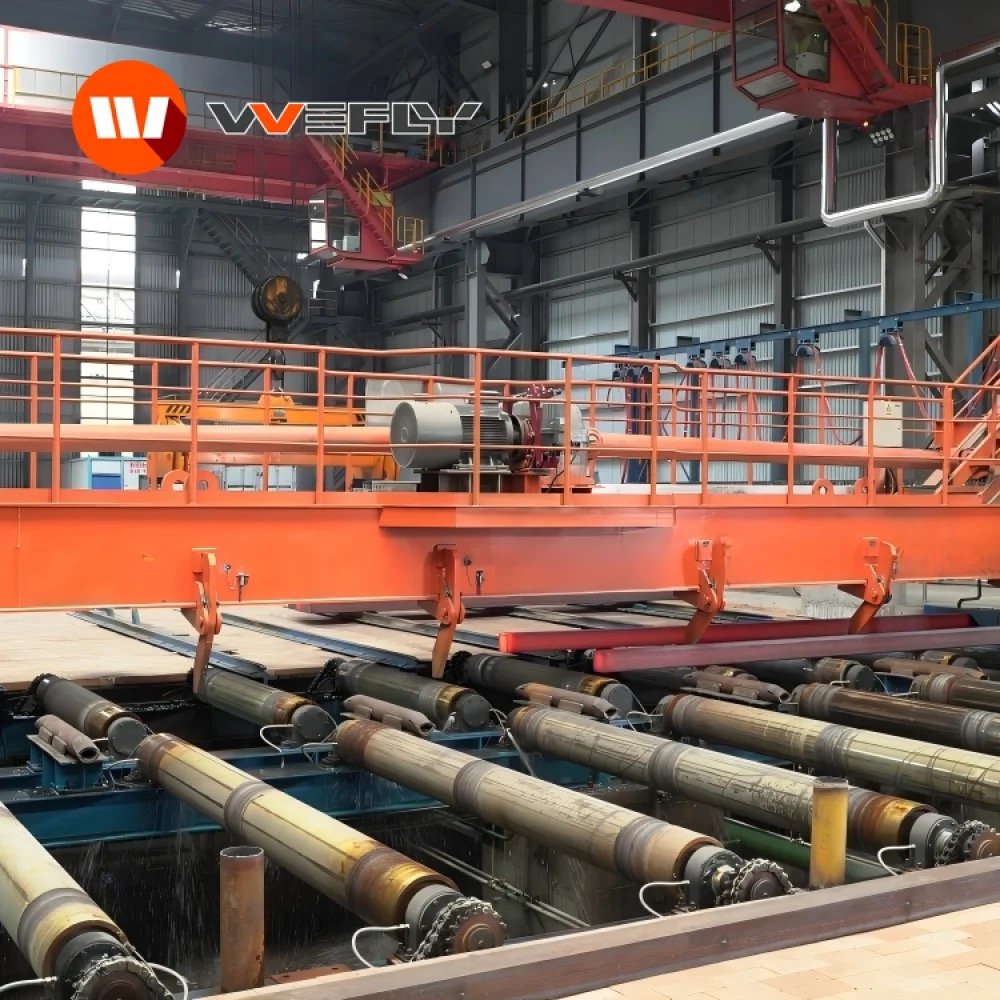
Why a Rebar Steel Melting and Continuous Casting Production Line Improves Billet Quality and Plant Efficiency
A rebar steel melting and continuous casting production line is a practical solution for steel plants that need stable billet output, better production continuity, and smoother connection to downstream rolling. On WOLFU’s product page, this line is presented as a system for efficient steel melting and continuous billet casting for rebar production, with the stated goal of improving billet quality, production continuity, and rolling efficiency.
In modern steelmaking, casting quality has a direct effect on the next stage of production. Worldsteel defines continuous casting as a process that solidifies steel as a continuous strand rather than individual ingots, while Britannica explains that billets are feedstock for long products of small cross-section. That is why a stable casting line matters so much for rebar plants: better billets usually mean a smoother rolling process later.
What Is a Rebar Steel Melting and Continuous Casting Production Line?
A rebar steel melting and continuous casting production line is a production system that combines steel melting with continuous billet casting for later rebar manufacturing. WOLFU describes this line as a billet continuous casting production line for rebar steel billet casting and forming, designed to connect steel melting and continuous casting in one efficient process route.
This kind of line matters because rebar production depends on stable billet supply. Britannica notes that billets are the starting feedstock for long products such as bars and rods, while worldsteel’s glossary explains that continuous casting forms steel into a continuous strand through water-cooled moulds. Together, these two steps explain why melting and casting are central to any rebar-oriented steel plant.
Why Continuous Casting Matters for Rebar Production
Better Production Continuity
One of the biggest advantages of this type of line is production continuity. WOLFU says the system is designed for continuous production of steel billets used in rebar manufacturing and specifically highlights improved production continuity as a major benefit. In a real steel plant, continuity matters because unstable billet flow can interrupt rolling schedules and reduce overall plant efficiency.
Worldsteel’s glossary supports this broader industrial logic by defining continuous casting as a process that turns molten steel into a continuous strand instead of separate ingots. That means the plant can maintain a smoother transition from steelmaking into billet handling and downstream processing, which is one reason continuous casting became standard in modern steel production.
Improved Billet Quality
Billet quality is one of the most important factors in rebar manufacturing. WOLFU states that this production line helps steel plants improve billet quality and casting stability, which are both essential when billets are later rolled into rebar and other long products. A more stable casting process can support better dimensional consistency and fewer downstream production problems.
That product claim fits with the broader process logic described by Britannica. Since billets are the starting form for long steel products of smaller cross-section, the quality of the billet affects the performance of later rolling operations. Better casting quality at the billet stage usually supports smoother shaping and more stable downstream output.
Stronger Link Between Melting and Rolling
WOLFU explicitly says this production line combines steel melting and continuous casting into an efficient process route, helping improve the connection between billet production and downstream rebar rolling. The product FAQ also states that one of the main advantages of continuous casting is that it connects steelmaking with rolling more effectively.
This is important for plant planning because steel plants often perform best when the earlier stages of production are designed with the rolling section in mind. Britannica’s explanation of billets as the feedstock for long products supports that same idea: casting is not an isolated step, but the preparation stage for later rolling into rebar and other long products.
Why the WOLFU Line Is Practical for Steel Plants
The WOLFU Rebar Steel Melting and Continuous Casting Production Line is presented as a heavy-duty industrial system for steel billet casting and forming. The technical parameters listed on the page include 600 KW power, 380V, 3 Phase, 4 Wire, 20000 KG weight, and equipment dimensions of 18m × 5m × 8m. WOLFU also highlights high efficiency, easy operation, and long service life as key selling points.
WOLFU further describes the system as suitable for rebar billet production and designed for reliable long-term industrial use. The page says it uses advanced continuous casting technology to support high-efficiency billet forming, stable operation, and easy maintenance, and that it is widely used in steel plants needing efficient steelmaking and billet casting for rebar production.
Another practical advantage is customization. WOLFU states that it can recommend suitable production-line solutions based on plant layout, billet size, output demand, and production process needs. For B2B buyers, that is important because steel plants rarely have identical space, throughput, or billet-specification requirements.
Main Applications of This Production Line
Rebar Billet Production
The clearest application is steel billet production for rebar manufacturing. WOLFU states this directly in both the technical parameters and FAQ, identifying the line as a system for rebar steel billet casting and forming. For mills focused on construction steel, a dedicated rebar billet casting line helps ensure stable feedstock for later rolling.
This application is also supported by broader steelmaking references. Britannica explains that billets are used as feedstock for long products such as bars and rods, which fits directly with rebar production. In other words, billet casting is not just an upstream process; it is a core part of how rebar supply is built.
Integrated Steel Plant Production
WOLFU describes the line as suitable for modern steel plants that need efficient steelmaking and continuous billet casting. Because the system combines steel melting and casting in one route, it is especially useful in plants that want a more integrated process instead of separate, loosely connected stages.
That integrated approach matches broader steel-industry practice. Worldsteel’s glossary and industry materials show that continuous casting is a foundational steelmaking step, while worldsteel’s broader publications also reflect the sector’s emphasis on process efficiency and production improvement.
Downstream Rolling Support
WOLFU says this line helps improve downstream rolling efficiency, which is one of the most useful selling points for rebar producers. When the casting line produces more stable billets, the rolling section often benefits from smoother material flow and fewer inconsistencies.
That claim is consistent with the metallurgical logic in Britannica’s explanation of steel billets and long-product rolling. Since billets are the standard feedstock for these later processes, better upstream billet preparation is directly relevant to rolling performance.
What Buyers Should Check Before Choosing This Line
1. Billet Requirements
Before choosing a line, buyers should confirm billet size, casting targets, and downstream rebar needs. WOLFU states that it can provide solutions based on billet size and output demand, which suggests that proper matching between the casting line and finished product plan is important.
2. Plant Layout and Installation Space
This is a large production system, with listed dimensions of 18m × 5m × 8m and a weight of 20000 KG. Buyers should therefore consider workshop layout, installation logistics, and material flow before purchase. WOLFU also notes that it provides layout guidance and equipment arrangement suggestions for project implementation.
3. Production Capacity and Continuity Goals
A line like this is best selected according to the plant’s real throughput goals. WOLFU states that it helps improve productivity, casting stability, and production continuity, so buyers should evaluate whether their main need is higher billet output, better quality stability, or stronger connection to rolling.
4. Operation and Maintenance
WOLFU lists easy operation and easy maintenance as major features, and says that inspection reports and outgoing video inspection are available before shipment. Buyers who want long-term reliability should also evaluate daily maintenance needs, spare parts, and operator training.
5. Supplier Support
WOLFU states that it provides production line solution support, technical planning, layout guidance, inspection before delivery, free spare parts during warranty, and after-sales technical assistance. For complex industrial equipment, this kind of support can matter almost as much as the machine itself.
Why Supporting Equipment Matters
A rebar billet casting line performs best when it fits into a complete plant system. On the same WOLFU site, related equipment includes the Hot Rolling Steel Rebar Production Line, the Medium Frequency Induction Melting Furnace, and the Closed Water Cooling Tower. These related products show that WOLFU positions the casting line as part of a broader steelmaking and rolling workflow.
This matters because continuous casting does not create business value in isolation. It creates value when the upstream melting section and downstream rolling section are matched correctly. WOLFU’s own product description repeatedly emphasizes smoother connection between melting, casting, and later rolling efficiency.
Final Thoughts
A rebar steel melting and continuous casting production line is a smart investment for steel plants that want better billet quality, stronger production continuity, and smoother downstream rebar rolling. WOLFU’s product page shows that this line is designed specifically for steel melting and continuous billet casting for rebar production, with 600 KWpower, easy operation, high efficiency, and long service life.
If your business needs a reliable solution for rebar billet manufacturing, the WOLFU Rebar Steel Melting and Continuous Casting Production Line is a strong option to consider. It is built to improve billet stability, support continuous industrial production, and connect more effectively with downstream rolling operations. Explore the product here:Rebar Steel Melting and Continuous Casting Production Line by WOLFU.
Recommended Internal Links
- Rebar Steel Melting and Continuous Casting Production Line
- Hot Rolling Steel Rebar Production Line
- Medium Frequency Induction Melting Furnace
- WOLFU Blog