
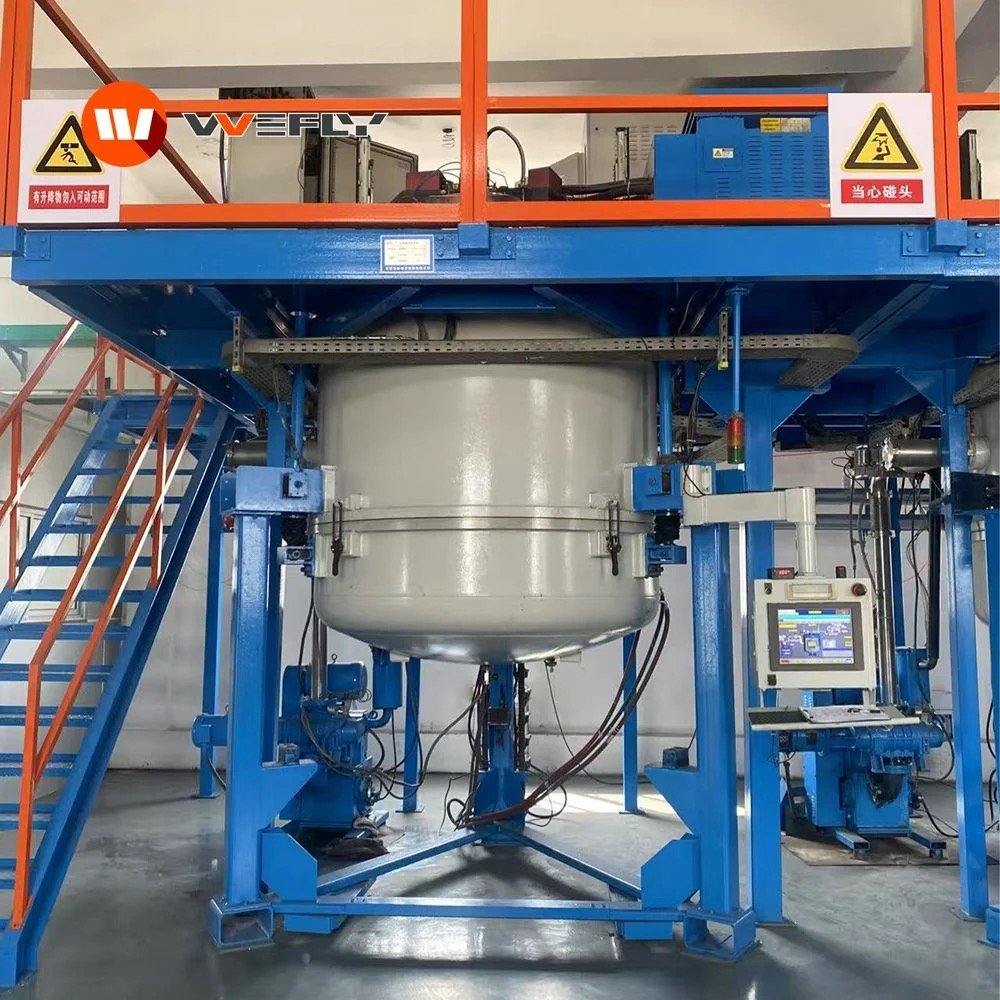
Why a Polysilicon Directional Solidification Furnace Matters for Solar Silicon Ingot Production
A polysilicon directional solidification furnace is a practical solution for manufacturers that need stable silicon ingot growth, better purity control, and more consistent solar material production. WOLFU presents this furnace as a system for high-purity silicon melting and ingot casting for solar battery materials, with high vacuum performance, precise temperature control, and automated PLC operation to support stable industrial production.
In solar silicon processing, the value of the furnace is not limited to melting alone. The key advantage comes from controlled solidification. WOLFU states that the furnace integrates high vacuum operation, inert gas protection, high-temperature melting, and controlled directional solidification, allowing a larger temperature gradient from top to bottom. According to the product page, this helps improve crystal quality and supports purification during ingot formation.
What Is a Polysilicon Directional Solidification Furnace?
A polysilicon directional solidification furnace is a high-temperature crystal growth system used to melt silicon materials and then control the direction of solidification so that the ingot forms more predictably. On the WOLFU page, the furnace is described as equipment for silicon melting and ingot casting, mainly for solar photovoltaic applications and selected semiconductor materials.
This type of furnace matters because crystal growth quality depends heavily on thermal stability and the solidification path. WOLFU explains that the system uses a vertical furnace structure and a patented thermal field design that creates a larger temperature gradient from top to bottom. In practical terms, that means the solidification process can be guided more effectively, which is one of the central goals of directional solidification in solar silicon ingot production.
Why Directional Solidification Matters in Solar Silicon Processing
Better Crystal Growth Stability
One of the main benefits of a polysilicon directional solidification furnace is improved control over crystal growth. WOLFU states that the furnace allows precise control of the temperature gradient, enabling more stable crystal growth during the solidification process. In solar silicon manufacturing, that kind of stability is important because variations in thermal behavior can affect ingot quality and downstream wafer performance.
WOLFU also says the system supports stable industrial production through automated PLC and HMI control. For buyers, this matters because stable growth is not only about crystal formation. It is also about repeatability from batch to batch. A furnace that can maintain more reliable process conditions usually makes production planning easier and final ingot quality more consistent.
Purity Improvement Through Controlled Solidification
Another major reason to use directional solidification is purification. WOLFU states that even when using 4N raw materials, the furnace can help achieve silicon purity above 5N through controlled crystallization. That is one of the strongest practical selling points on the product page because it directly links furnace design to material improvement.
For manufacturers, this is important because raw material quality and finished ingot quality are not always the same thing. A well-controlled thermal field can help improve how impurities are distributed during solidification. WOLFU directly positions this furnace as a practical solution for purification and directional solidification of silicon materials used in solar photovoltaic applications.
High Vacuum and Controlled Atmosphere Support
WOLFU also emphasizes high vacuum operation and inert gas protection. The technical table lists an ultimate vacuum of 6.67×10⁻³ Pa, which shows that vacuum performance is an important part of the furnace design. In silicon processing, vacuum capability matters because it supports cleaner high-temperature conditions and more controlled ingot formation.
This is closely connected to product quality. When temperature, atmosphere, and solidification are controlled together, the process becomes easier to stabilize. WOLFU repeatedly links these features to improved crystal quality and more reliable industrial production for photovoltaic silicon materials.
Why the WOLFU Polysilicon Directional Solidification Furnace Is Practical
The WOLFU Polysilicon Directional Solidification Furnace is designed for solar silicon ingot casting and high-purity silicon melting. According to the product page, the standard configuration includes 380V voltage, 160 KW power, 1600°C maximum temperature, 90 KG crucible capacity, 5–25 mm/hour directional solidification speed, and 6.67×10⁻³ Pa ultimate vacuum. These figures show that the machine is built for demanding thermal processing rather than general-purpose high-temperature heating.
WOLFU also lists a broader model table with different configurations, including 3 KG, 90 KG, 270 KG, and 450 KGcapacities, each with different power ratings and vacuum parameters. That indicates the furnace family is scalable and can be matched to different production sizes. For B2B buyers, this is useful because solar silicon projects do not all operate at the same ingot scale or plant capacity.
Another practical advantage is automation. WOLFU says the system uses PLC and HMI control for full automation, allowing operators to complete the full process with minimal manual intervention. This is a meaningful point for industrial buyers because automation can reduce operating variability and support more consistent process control over long production cycles.
Main Applications of This Furnace
Solar Silicon Ingot Production
The clearest application is solar silicon ingot production. WOLFU directly states that the furnace is used for melting polysilicon and producing silicon ingots for solar photovoltaic applications. This makes it especially relevant to factories focused on solar cell raw materials and upstream photovoltaic manufacturing.
The product page also says the system is designed specifically for solar battery materials, reinforcing its positioning as a crystal growth furnace for the PV industry rather than a general melting furnace.
Polycrystalline Silicon Material Processing
WOLFU also positions the machine for polysilicon and silicon raw materials used in the solar cell and semiconductor industries. That means the furnace has value not only for final ingot casting, but also for earlier material-preparation steps where controlled melting and solidification are required.
Advanced Material and Semiconductor Applications
In addition to solar silicon, the product page mentions semiconductor materials among the target uses. This suggests the furnace can also support selected advanced material processes where vacuum, purity improvement, and stable thermal gradients matter. WOLFU further notes that additional heat sources or purification modules can be integrated depending on the process requirements.
What Buyers Should Check Before Choosing a Directional Solidification Furnace
1. Crucible Capacity
The first thing to check is the required batch size. WOLFU lists a standard 90 KG crucible capacity, but also shows other model options ranging from 3 KG to 450 KG. Buyers should select the furnace according to actual production scale instead of focusing only on one example model.
2. Vacuum Requirement
Vacuum level is another major point. The product page lists 6.67×10⁻³ Pa as the ultimate vacuum for some models. If your process depends on cleaner melting conditions and more controlled crystal growth, the furnace vacuum capability should be reviewed carefully.
3. Solidification Speed
WOLFU lists a directional solidification speed of 5–25 mm/hour. This number matters because the solidification rate affects production rhythm and crystal growth control. Buyers should confirm whether that speed matches their target ingot size and process expectations.
4. Temperature and Thermal Field Control
The furnace has a maximum temperature of 1600°C and is specifically described as using a thermal field design that creates a larger top-to-bottom temperature gradient. Buyers should assess whether the temperature range and thermal field structure match their crystal-growth and purification goals.
5. Automation and Customization Support
WOLFU states that the furnace can be customized based on crucible capacity, production scale, vacuum requirements, and plant layout. It also offers automation support, installation guidance, commissioning support, and after-sales service. For large industrial projects, this kind of customization and support often matters as much as the furnace itself.
Why Supporting Equipment Matters
A directional solidification furnace performs best when it fits into a complete crystal-growth production system. On the same WOLFU site, related equipment includes the Monocrystalline Silicon Growth Furnace, the Vacuum Induction Melting Furnace, and other vacuum and crystal-growth equipment shown in the related products section. WOLFU also states that the system can be integrated with additional heat sources or purification modules depending on process requirements.
This matters because silicon ingot quality depends on more than one chamber alone. Vacuum conditions, temperature control, thermal field design, automation, and upstream material handling all affect the final result. WOLFU’s product page clearly presents this furnace as part of a broader industrial solution for photovoltaic and advanced material production.
Final Thoughts
A polysilicon directional solidification furnace is a strong investment for manufacturers that need stable solar silicon ingot production, higher process control, and improved material purity during crystal growth. WOLFU’s product page shows that this furnace is designed for high-purity silicon melting and ingot casting, with 1600°C maximum temperature, high vacuum performance, PLC + HMI automation, and a thermal field structure that supports directional crystal growth and purification.
If your business needs a reliable solution for solar silicon ingot casting or polysilicon directional solidification, the WOLFU Polysilicon Directional Solidification Furnace is a strong option to consider. It is built for controlled silicon melting, stable ingot growth, flexible customization, and practical industrial operation. Explore the product here:Polysilicon Directional Solidification Furnace by WOLFU.