
How a Hot Rolling Steel Rebar Production Line Improves Output
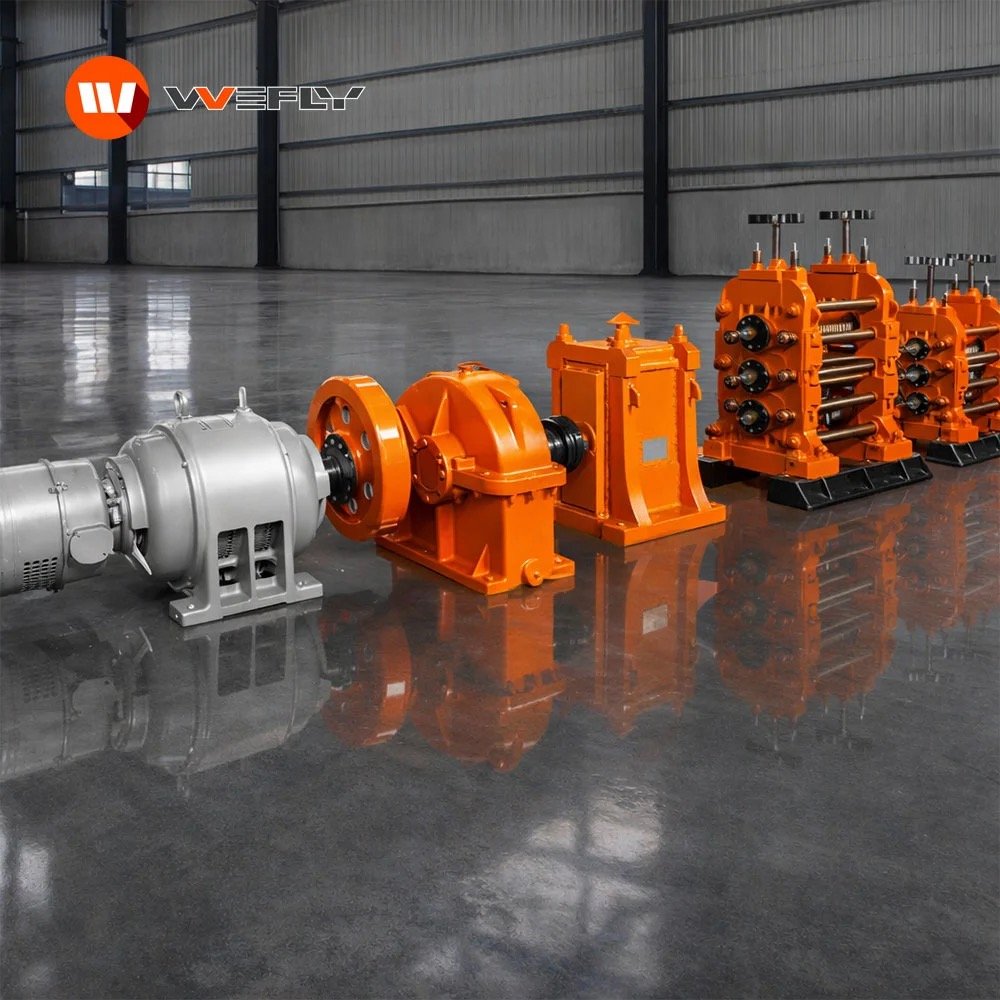
Modern steel plants need equipment that can deliver steady output, reliable quality, and better production efficiency. That is why a hot rolling steel rebar production line is widely used in steel mills and metal processing factories. By combining automatic control, continuous rolling, and durable roller materials, this kind of system helps manufacturers produce rebar, steel rods, angle steel, and other long steel products with more consistency and less wasted time. On WOLFU’s product page, this line is presented as an automatic horizontal rolling mill designed for high-volume steel bar and rod manufacturing.
Rebar remains one of the most important steel products in modern construction. World Steel Association materials describe rebar as a hot-rolled steel reinforcing product used to strengthen concrete in buildings, highways, and infrastructure. That practical demand is one reason many producers focus on rolling lines that can maintain stable dimensions, continuous throughput, and lower energy consumption.
What Is a Hot Rolling Steel Rebar Production Line?
A hot rolling steel rebar production line is a manufacturing system that processes hot steel billets into finished long products such as rebar, steel rods, and structural profiles. In a typical setup, billets enter the rolling section at elevated temperature and pass through a series of rolling stands. Each pass reduces the cross-section and gradually forms the final dimensions and shape of the product. Britannica notes that billets are standard feedstock for long products of small cross-section, while steel rolling is a core step in shaping finished steel materials.
In practical plant operation, the value of hot rolling lies in continuous throughput. A well-designed line can convert billets into finished bars with stable dimensions and repeatable mechanical performance. That is especially important for rebar production, where uniform size and dependable output are essential for construction supply chains. OSHA’s industry classifications also recognize hot rolling mills as a central part of steel manufacturing operations.
Why This Production Line Matters for Steel Plants
Higher Output with Continuous Rolling
One of the biggest advantages of a modern rebar rolling line is continuous rolling technology. WOLFU states that its automatic horizontal rolling mill uses continuous rolling to improve production efficiency and reduce labor intensity. The page also notes that the system can process steel billets or scrap-derived feed material into finished steel bars with high precision and uniform dimensions.
For steel plants, this matters because production rhythm affects everything from labor planning to delivery schedules. A line that runs smoothly with less interruption can support more tons per shift and better use of plant resources. On the WOLFU page, the production line is described as supporting annual productivity from 1,000 to 150,000 tons, depending on configuration and usage.
Better Energy Efficiency
Energy cost is a major factor in rolling operations. WOLFU highlights that this line can use the metallurgical heat of continuous casting billets and reduce energy consumption by approximately 30%. That benefit is especially meaningful in operations where upstream and downstream equipment are integrated and heat can be used more efficiently instead of being lost between processes.
That broader direction is consistent with worldsteel’s public guidance. The association states that the steel industry has achieved major long-term reductions in energy used per tonne of crude steel through process improvement and efficiency gains. While plant-level performance always depends on layout and operation, energy-saving design remains a major reason manufacturers upgrade rolling systems.
Stable Product Quality
Uniform product dimensions are essential in rebar and steel rod manufacturing. WOLFU’s page says the line can produce finished diameters from 6.5 mm to 32 mm, covering a wide range of common long-product applications. It also notes that the system is intended for rebar, steel rod, angle steel, channel steel, flat bars, and related products.
For buyers, that range matters because many factories do not want a line that only handles one narrow product type. A production line with flexible sizing can support broader order coverage and give steel plants more options when serving construction, fabrication, or infrastructure markets. Worldsteel’s rebar description reinforces the importance of this product category in structural reinforcement work.
What Makes the WOLFU Line Practical
The WOLFU Hot Rolling Steel Rebar Production Line is positioned as an automatic rolling mill for steel bars and rods. According to the product details, it runs on 380V, uses 240 KW power, weighs 4500 KG, and uses rollers made from nodular infinite cold hard steel with hardness up to 58 HRC. These details suggest a line built for industrial-duty rolling performance and extended service life.
The page also lists finished products including rebar, steel rod, and angle steel, and states that the system can support annual working hours from 2400 to 6000 hours. In plain terms, that means the line is intended for serious production use rather than light workshop work. For a steel mill or long-product manufacturer, that kind of durability and runtime capability is often more important than just headline speed alone.
Another useful point is integration. WOLFU emphasizes that the production line can work with continuous casting, helping simplify the full manufacturing process. Britannica’s steel references describe continuous casting as one of the dominant methods for solidifying liquid steel before further rolling, which helps explain why integrated casting-and-rolling setups are common in modern steel plants.
Main Products This Line Can Produce
Rebar
Rebar is the best-known output of this line. It is used to strengthen concrete in buildings, roads, bridges, and public infrastructure. Worldsteel specifically identifies rebar as a hot-rolled product for construction reinforcement. Because rebar is such a high-demand item, many mills prioritize rolling lines that can maintain steady dimension control and continuous output.
Steel Rod
Steel rods are used in fabrication, wire processing, machinery parts, and general industrial applications. WOLFU lists steel rods among the primary end products of the line, which makes the machine useful beyond standard rebar-only production. That flexibility can help plants reach more customers and reduce dependence on a single product type.
Angle Steel and Other Sections
The product page also states that the line can produce angle steel, channel steel, flat bars, and other structural profiles. Britannica explains that shapes such as channels and angles are rolled long products with irregular cross-sections, typically produced from blooms or billets in rolling mills. This wider product capability is valuable for factories supplying structural steel to construction and industrial projects.
Why Roller Material and Hardness Matter
Rolling performance depends heavily on roll durability. WOLFU specifies nodular infinite cold hard steel rollers with hardness up to 58 HRC. In a real production environment, harder and more durable rolls help reduce wear, maintain stable shaping performance, and support longer service intervals. This is especially important in continuous operation where roll wear can affect dimensional accuracy and maintenance costs.
For plant managers, roll life is not a small detail. It affects downtime, spare-parts planning, and product consistency. A line with robust rolling components often delivers better long-term value because it reduces interruptions and helps maintain stable product size over extended production runs. WOLFU directly positions durable rolling components as one of the product’s advantages.
What Buyers Should Check Before Choosing a Rolling Line
1. Product Range
Before buying, confirm what finished products the line can make. Some plants only need rebar, while others also need rods, angle steel, flat bars, or channel steel. WOLFU presents this line as a multi-product solution, which may be useful for plants serving several market segments.
2. Finished Diameter Range
Product diameter has a direct impact on equipment selection. This line supports finished diameters from 6.5 mm to 32 mm, which covers many common long-steel specifications. Buyers should compare that range with their current and future order requirements.
3. Capacity and Working Hours
It is also important to match the rolling line to the plant’s production target. WOLFU lists annual productivity from 1,000 to 150,000 tons and annual working hours from 2400 to 6000. These figures indicate that configurations can vary widely, so buyers should request a setup matched to their real operating plan.
4. Energy Integration
If a plant already uses continuous casting or plans to build a more integrated system, the energy-saving benefit may be stronger. WOLFU specifically links this line to continuous casting billet heat usage, and general steelmaking references show why integrated process flow is so important in modern production efficiency.
5. Supporting Equipment
A production line works best when supported by upstream and auxiliary systems. On the same WOLFU site, related equipment includes a Rebar Steel Melting and Continuous Casting Production Line, a Closed Water Cooling Tower, and other casting and furnace systems. Matching the rolling section with the right support equipment can improve reliability and overall plant efficiency.
Safety and Plant Planning
Rolling mills are high-energy industrial systems, so safety and layout planning matter. OSHA’s classifications of steel works and rolling mills reflect the industrial complexity of these operations, including hot material handling and heavy mechanical equipment. That means proper guarding, training, maintenance, and plant workflow design are essential in addition to machine selection.
A strong production line helps, but safe long-term operation still depends on inspection routines, operator training, roll maintenance, and disciplined process control. Buyers should treat support, maintenance access, and engineering guidance as part of the purchase decision, not as afterthoughts. This is especially true for lines intended for large annual output.
Final Thoughts
A hot rolling steel rebar production line is a practical investment for steel plants that want higher throughput, better product consistency, and improved energy efficiency. Rebar and long steel products remain essential in construction and infrastructure, and modern rolling lines help manufacturers meet that demand with more stable output. Public steel-industry references support the importance of rebar and the long-term value of energy-efficient process improvement, while WOLFU’s product page shows that this line is built for automatic operation, durable rolling performance, and broad product flexibility.
If your business needs a reliable solution for rebar, steel rod, angle steel, or other long steel products, the WOLFU Hot Rolling Steel Rebar Production Line is a strong option to consider. It combines automatic control, continuous rolling, durable roller materials, and a production range suited to modern steel manufacturing. Explore the product here: Hot Rolling Steel Rebar Production Line by WOLFU.