
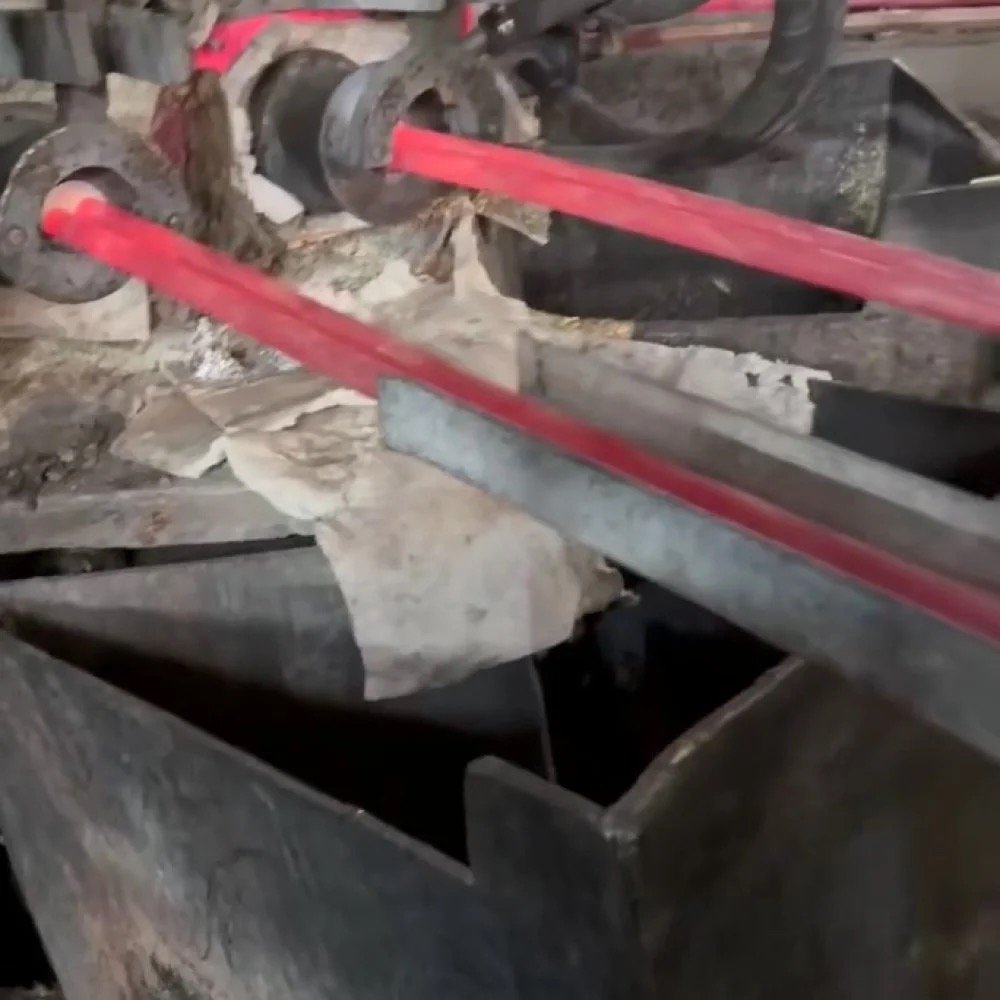
Why a Horizontal Copper Rod Continuous Casting Machine Improves Copper Rod Production Efficiency
A horizontal copper rod continuous casting machine is a smart solution for copper processing plants that need stable rod quality, efficient output, and continuous production performance. In copper manufacturing, product consistency matters just as much as output speed. That is why many producers choose continuous casting systems instead of more fragmented production methods. WOLFU presents this equipment as a complete system for melting copper cathodes and continuously producing bright copper rods with stable temperature control, high efficiency, low energy consumption, and automatic control support.
For buyers in copper rod and copper alloy production, a machine like this offers more than basic melting. According to the product page, the line supports copper rod, brass rod, and copper alloy products, with annual capacity from 3000 to 12000 tons, depending on the configuration. WOLFU also states that the system is designed for reliable industrial production and can be customized according to rod diameter, annual output, casting speed, raw material type, and workshop layout.
What Is a Horizontal Copper Rod Continuous Casting Machine?
A horizontal copper rod continuous casting machine is a production system that melts copper and continuously forms it into rod or bar products through a controlled casting process. On the WOLFU page, the system is described as a complete solution that includes an induction melting furnace, continuous casting machine, regulating wheel frame, tension device, twin-head take-up machine, water cooling system, electrical control system, feeding system, and temperature measuring system.
This kind of line is important because copper rod is a common starting material for many downstream copper products. The Copper Development Association notes that continuous casting and rolling now produce virtually all copper rod, largely because the process improves quality and lowers processing cost. That broader industry background helps explain why continuous casting equipment remains central in copper rod manufacturing.
Why Continuous Casting Matters in Copper Rod Production
Better Process Stability
One of the main benefits of a horizontal copper rod continuous casting machine is process stability. WOLFU explains that molten copper is kept at about 1150°C ±10°C in the holding furnace before entering the casting section. Stable temperature control is important because fluctuations can affect crystallization quality and final rod performance.
This type of control is especially useful in continuous industrial production. When molten copper stays within a tighter temperature range, the casting process becomes easier to manage and the final rod tends to be more consistent. WOLFU specifically highlights stable quality and high production efficiency as core advantages of the system.
Higher Production Efficiency
Efficiency is another major reason factories invest in continuous casting. WOLFU lists an output cycle of 4–6 secondsand annual production capacity of 3000–12000 tons. For a copper processing plant, this suggests the machine is intended for real industrial throughput rather than light workshop use.
The broader copper industry also supports the value of continuous production. CDA states that continuous casting provides benefits such as less impurity segregation, fewer surface oxide particles, fewer inclusions from roll contact, and lower overall processing costs. These are practical advantages for manufacturers trying to balance quality and production volume.
Lower Oxidation Risk During Production
Oxidation control is a serious issue in molten copper processing. WOLFU states that during melting, the molten copper can be protected from oxidation by charcoal or graphite covering before it enters the holding furnace and casting section. That step helps preserve copper quality and improve the consistency of the casting process.
For copper plants, this matters because oxidation can affect surface condition and downstream usability. A production line that includes both melting and holding control gives operators a more stable route from cathode melting to finished rod output. WOLFU positions this system exactly in that way: as a complete process solution from copper cathode melting to continuous rod casting and final collection.
Why the WOLFU Horizontal Copper Rod Continuous Casting Machine Is Practical
The WOLFU Horizontal Copper Rod Continuous Casting Machine with Melting Furnace is designed for the foundry and non-ferrous metal processing industry. According to the product page, it is suitable for copper cathode as raw material and can produce copper rod, brass rod, and copper alloy products as final output. The technical table lists 500–3200 KW customized power, 380V voltage, and a standard machine dimension of 2000 × 1000 × 1200 mm.
WOLFU also provides a more detailed specification table showing casting types 2, 4, and 6, casting speed of 60–700 mm/min, equipment power of 550 KW, production capacity of 4000 tons/year, maximum furnace operating temperature of 1300°C, and unit noise of ≤80 dB. These details suggest a configurable line designed for different copper and alloy casting requirements rather than a fixed single-output machine.
Another practical advantage is customization and automation. WOLFU says the line can support PLC programmable control, preset process parameters, and position feedback, while Siemens PLC and Siemens touch screen can be configured for better control accuracy and easier operation. For B2B buyers, that is useful because automation and process repeatability often affect labor cost, output stability, and ease of training.
How the Production Process Works
Step 1: Copper Cathode Melting
The first stage is melting the copper cathode in the induction melting furnace. WOLFU states that the line is mainly designed for copper cathode melting and continuous casting, although it can also be configured for brass, copper alloy, and selected non-ferrous casting applications.
Step 2: Holding Furnace Temperature Control
After melting, the copper liquid is transferred to the holding furnace. WOLFU says the holding furnace maintains the copper at about 1150°C ±10°C, which helps stabilize the molten metal before casting. This is an important part of quality control in continuous copper rod production.
Step 3: Horizontal Continuous Casting
Next, the molten copper enters the casting machine and is continuously crystallized through a water-cooled copper moldto form finished copper rods. WOLFU identifies this as the core continuous casting step that turns molten metal into bright, long copper rods with stable quality.
Step 4: Tension, Take-Up, and Final Collection
The system then uses the regulating wheel frame, tension device, and twin-head take-up machine to guide and collect the finished copper rod. This makes the line a more complete production unit, not just a casting machine alone. WOLFU explicitly describes the system as a full process solution from melting to final collection.
Main Applications of This Machine
Copper Rod Production
The most direct application is continuous production of bright copper rods. WOLFU describes the machine as an ideal solution for copper rod casting applications and notes that it is built for high production efficiency and stable product quality.
This aligns with broader copper industry practice. CDA notes that continuous casting and rolling produce virtually all copper rod, reinforcing the importance of continuous processes in modern rod manufacturing.
Brass Rod and Copper Alloy Production
WOLFU also lists brass rod and copper alloy products among the final products. That makes the equipment attractive for plants that serve multiple non-ferrous product categories and want more than a single-metal solution.
Copper Processing and Non-Ferrous Casting Plants
The product page says the system is suitable for the foundry and non-ferrous metal processing industry. This makes it useful for copper processing plants that need integrated melting, holding, casting, cooling, and take-up functions within one organized production line.
What Buyers Should Check Before Choosing a Copper Rod Casting Line
1. Raw Material Type
WOLFU states that the machine is mainly designed for copper cathode. Buyers should confirm whether their plant primarily uses cathode copper or needs a different configuration for brass, copper alloy, or other non-ferrous inputs.
2. Rod Size and Casting Specification
The line supports multiple casting specifications, including Φ12–Φ80, Φ120, Φ140, Φ180, and Φ200 mm. Buyers should compare their target rod diameter and product mix with the machine configuration before selection.
3. Capacity and Casting Speed
WOLFU lists 3000–12000 tons/year capacity, while the detailed table shows 4000 tons/year for one sample configuration and casting speed of 60–700 mm/min. Buyers should select the line according to actual production goals rather than only the maximum listed range.
4. Automation and Control Requirements
The line can be configured with PLC control, parameter presetting, position feedback, and Siemens control components. Buyers should decide whether they need a more manual arrangement or a more automated setup based on staffing and process requirements.
5. Service and Engineering Support
WOLFU says it provides installation, commissioning, operator training, free spare parts during warranty, lifetime technical support, online support, and field maintenance service when needed. For complex copper production lines, this level of service can be a major advantage during startup and long-term use.
Why Supporting Equipment Matters
A copper rod casting line performs best when it is integrated with the right auxiliary systems. On the same WOLFU site, related equipment includes the Medium Frequency Induction Melting Furnace, the Closed Water Cooling Tower, and the Horizontal Copper Rod Continuous Casting Machine with Melting Furnace itself as part of the continuous casting and rolling mill category. WOLFU also says it can provide complete process integration support, including melting furnace, holding furnace, take-up system, cooling system, and electrical control system.
That matters because copper rod quality does not depend on the casting section alone. Stable melting, controlled holding temperature, water cooling, and reliable collection all influence the final result. WOLFU’s product description clearly treats the machine as a full line solution, which is usually more valuable for B2B buyers than buying isolated equipment pieces one by one.
Final Thoughts
A horizontal copper rod continuous casting machine is a strong investment for copper processing plants that want better process stability, higher efficiency, and more consistent rod quality. WOLFU’s product page shows that this system is built for copper cathode melting and continuous production of bright copper rods, with configurable power, stable holding temperature, automation support, and full-line integration.
If your business needs a reliable solution for copper rod, brass rod, or copper alloy casting, the WOLFU Horizontal Copper Rod Continuous Casting Machine with Melting Furnace is a strong option to consider. It is designed to support efficient copper melting, controlled continuous casting, and long-term industrial production performance. Explore the product here: Horizontal Copper Rod Continuous Casting Machine by WOLFU.
Recommended Internal Links
- Horizontal Copper Rod Continuous Casting Machine with Melting Furnace
- Medium Frequency Induction Melting Furnace
- Closed Water Cooling Tower
- WOLFU Blog