
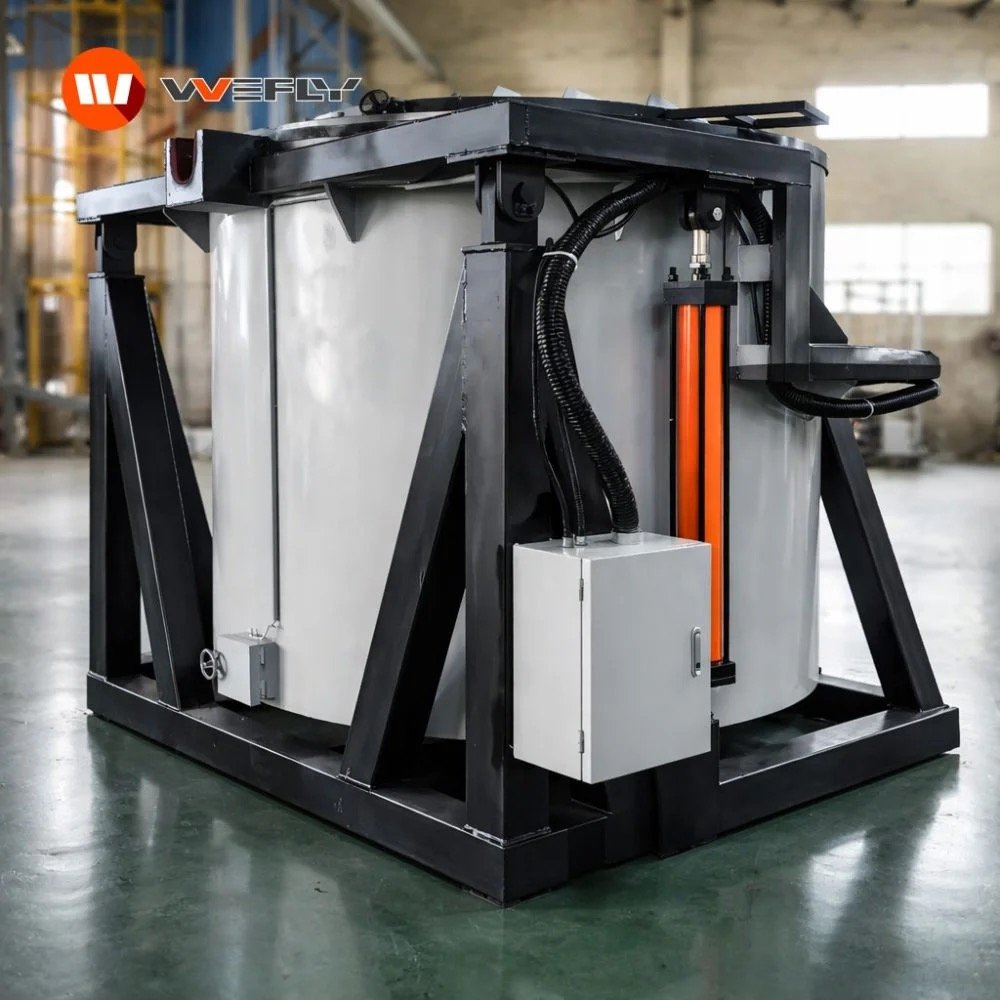
Crucible Melting Furnace for Precise Industrial Metal Melting
A crucible melting furnace is a practical and flexible solution for melting metals in foundries, workshops, laboratories, and small-to-medium industrial production lines. It is commonly used for aluminum, copper, brass, bronze, gold, silver, zinc, and various alloy materials.
Compared with large-scale melting systems, crucible furnaces are valued for their simple operation, compact structure, controlled melting process, and wide material compatibility. For manufacturers that need reliable batch melting, this type of furnace can support stable production and consistent metal quality.
WOLFU provides a professional crucible melting furnace designed for efficient industrial metal melting and practical production requirements.
What Is a Crucible Melting Furnace?
A crucible melting furnace is a furnace system that heats metal inside a heat-resistant crucible. The crucible holds the metal charge while the furnace generates heat around or within the material, depending on the heating method.
Crucible furnaces may use electric resistance heating, gas heating, or induction heating. In modern industrial applications, induction crucible furnaces are widely used because they offer faster heating speed, better energy efficiency, and cleaner operation.
The furnace is suitable for batch melting, alloy preparation, metal recycling, casting preparation, and precision melting applications.
How a Crucible Melting Furnace Works
Material Loading
Metal ingots, scrap materials, or alloy components are loaded into the crucible according to the required batch capacity.
Controlled Heating
The furnace heats the crucible and the metal charge until the material reaches its melting point. Operators can monitor temperature and adjust heating power based on the process requirement.
Melting and Holding
After the metal becomes fully molten, the furnace can hold the melt at a stable temperature before pouring or further processing.
Pouring and Casting
The molten metal is transferred into molds, casting systems, or downstream processing equipment to produce finished or semi-finished products.
Main Advantages of Crucible Melting Furnaces
Wide Metal Compatibility
Crucible melting furnaces can process many non-ferrous and precious metals, including aluminum, copper, brass, bronze, zinc, gold, and silver.
Flexible Batch Production
This furnace type is suitable for small and medium batch melting, making it useful for workshops, foundries, and custom metal processing operations.
Precise Temperature Control
Modern control systems help maintain stable melting temperatures, reducing overheating and improving final material quality.
Simple Operation
The structure is relatively straightforward, which makes operation and maintenance easier compared with more complex production systems.
Compact Layout
Many crucible furnaces require less installation space, making them suitable for facilities with limited floor area.
Common Applications
- Foundry Casting: Preparing molten metal for mold casting
- Jewelry Manufacturing: Melting gold, silver, and precious metal alloys
- Aluminum Processing: Melting aluminum scrap, ingots, and alloy materials
- Copper and Brass Production: Producing alloy melts for industrial components
- Laboratory Testing: Small-batch material experiments and alloy development
- Metal Recycling: Remelting reusable scrap into valuable raw materials
Why Choose WOLFU Crucible Melting Furnace?
WOLFU’s crucible melting furnace is designed for customers who need reliable, efficient, and flexible metal melting equipment.
The system can support industrial production, recycling operations, casting workshops, and small-scale foundry applications. With stable heating performance and practical design, it helps operators improve melting efficiency while maintaining consistent output quality.
WOLFU also provides related furnace solutions, including:
For more technical articles and industrial furnace insights, visit the WOLFU Industry Blog.
How to Choose the Right Crucible Melting Furnace
Melting Capacity
Select a furnace based on the weight of metal you need to melt per batch. Proper capacity selection helps avoid energy waste and production bottlenecks.
Metal Type
Different metals require different melting temperatures. Aluminum, copper, brass, zinc, and precious metals each need suitable furnace settings and crucible materials.
Heating Method
Induction heating is suitable for fast, clean, and efficient melting. Resistance or gas heating may be selected for specific budget or process requirements.
Temperature Control
Accurate temperature monitoring is important for alloy stability, casting quality, and repeatable production results.
Crucible Material
The crucible should match the molten metal type to prevent contamination, cracking, or premature wear.
Industry Perspective
Metal melting efficiency is increasingly important for modern manufacturing and recycling operations. According to the U.S. Department of Energy, improving industrial energy efficiency can help reduce operating costs and improve production sustainability.
For many small and medium production facilities, a crucible melting furnace offers a balanced option between flexibility, cost control, and production reliability.
Conclusion
A crucible melting furnace is a reliable and flexible choice for industrial metal melting, foundry casting, jewelry production, laboratory testing, and metal recycling.
With proper furnace selection, operators can achieve stable melting performance, better temperature control, and improved production efficiency.
If your business needs practical and dependable metal melting equipment, WOLFU provides industrial furnace solutions designed for modern production needs.
Explore WOLFU Crucible Melting Furnace and Request a Quote
FAQ
What is a crucible melting furnace used for?
A crucible melting furnace is used to melt metals such as aluminum, copper, brass, bronze, gold, silver, zinc, and alloys for casting, recycling, and production.
What metals can be melted in a crucible furnace?
Common materials include aluminum, copper, brass, bronze, zinc, lead, gold, silver, and many non-ferrous alloys.
How do I choose the right crucible melting furnace?
Choose based on melting capacity, metal type, temperature requirements, heating method, crucible material, and production volume.