
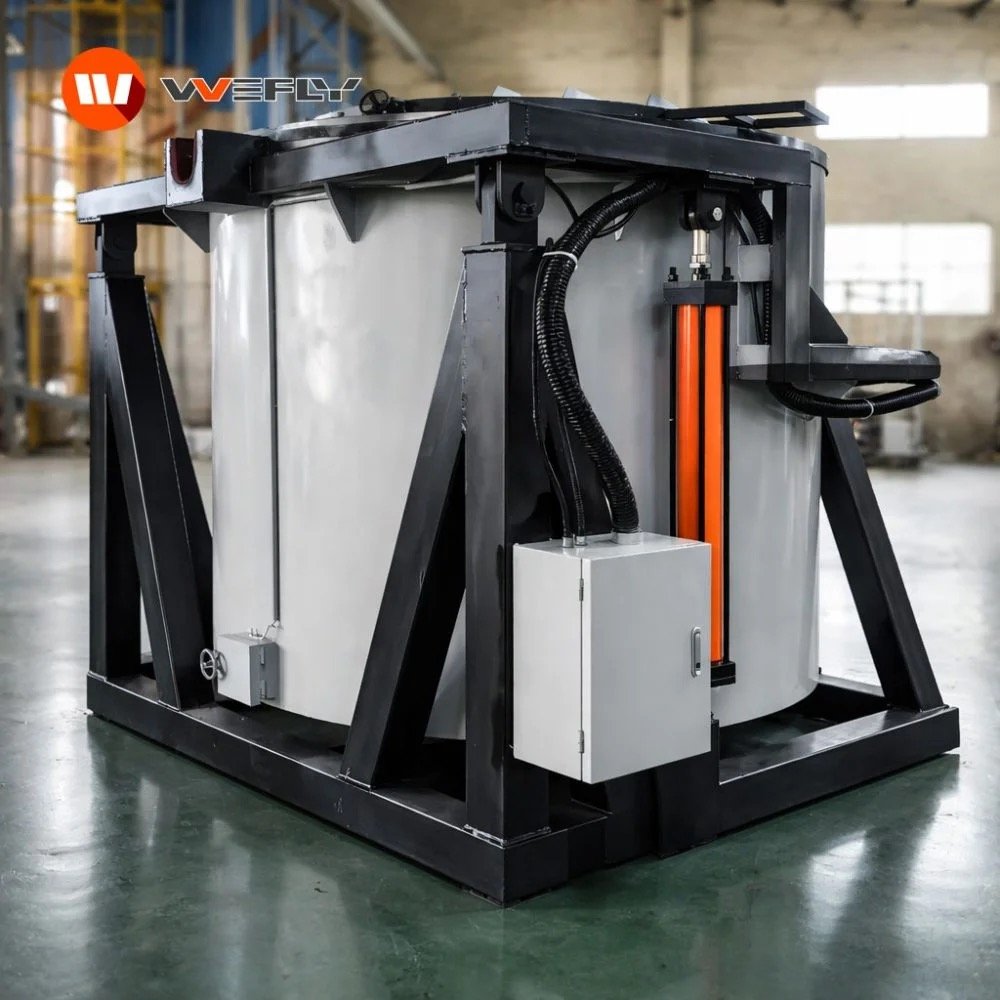
Why a Crucible Melting Furnace Is a Smart Choice for Non-Ferrous Metal Casting
A crucible melting furnace remains one of the most practical solutions for non-ferrous metal casting. For plants that melt aluminum, copper, brass, or zinc, the right furnace needs to offer stable heat, flexible capacity, and dependable operation. That is why many foundries and metal recycling businesses continue to use crucible furnaces for daily production. Your WOLFU product page presents this equipment as a gas- or oil-fired furnace designed for efficient smelting and holding of non-ferrous metals, with models ranging from 0.1 ton to 2 tons.
In real production, businesses often need more than raw heating power. They need a furnace that is easy to operate, simple to maintain, and adaptable to different plant conditions. WOLFU highlights stable temperature control, durable high-temperature structure, flexible capacity options, and suitability for aluminum casting plants, copper processing factories, and non-ferrous recycling facilities.
What Is a Crucible Melting Furnace?
A crucible melting furnace is a thermal melting system that heats metal inside a refractory crucible. The metal charge is placed in the crucible, heated by the surrounding combustion system, and then held at the required temperature until pouring or transfer. In practical foundry work, this setup is commonly used for non-ferrous metals because it is simple, reliable, and suitable for batch production. Your product page specifically positions this furnace for aluminum, copper, brass, zinc, and other non-ferrous metals.
Unlike induction furnaces, which heat metal through electromagnetic fields, a gas- or oil-fired crucible furnace uses combustion as the heat source. This can make it a practical option for factories that already have gas or fuel-oil support and prefer a straightforward furnace structure. WOLFU states that the furnace can operate using either gas or oil depending on the customer’s energy source and plant conditions.
Why Many Plants Still Choose Crucible Furnaces
Simple and Reliable Operation
One reason crucible furnaces remain popular is operational simplicity. Many plants do not need highly complex melting systems for every application. In non-ferrous casting, a furnace that can melt metal steadily and hold temperature reliably is often the better fit. WOLFU describes this furnace as easy to operate and maintain, which is important for factories that want stable day-to-day production without overly complicated controls.
This matters even more in small and medium foundries, where equipment downtime or difficult maintenance can affect delivery schedules. A practical furnace design can help reduce interruptions and make production easier to manage across multiple shifts. WOLFU also notes that it provides installation guidance, commissioning support, and long-term technical service.
Flexible Capacity for Different Production Needs
Not every plant needs the same furnace size. Some operations handle small-batch alloy work, while others run larger aluminum or copper melting jobs. That is why capacity flexibility is an important selling point. On your product page, WOLFU lists models from 0.1T up to 2T, with power ranging from 80KW to 1000KW depending on the configuration.
This wide model range makes the furnace useful for different business sizes. A smaller workshop may need a compact unit for aluminum or brass casting, while a larger plant may prefer a higher-capacity furnace for continuous melting and holding. Because the furnace is available in multiple sizes, buyers can choose a model that fits their output target more closely.
Stable Heating for Non-Ferrous Metal Casting
In non-ferrous melting, stable temperature control helps protect metal quality. Overheating can increase oxidation and metal loss, while poor temperature stability may affect pouring quality and casting results. WOLFU highlights stable temperature control as one of the key product benefits, along with an energy-efficient combustion heating system.
That kind of stability is especially useful for aluminum and brass casting, where clean melting and controlled holding temperature can support smoother downstream casting operations. The furnace is also described as suitable for smelting and holding, which means it is designed not only to melt the metal but also to keep it ready for production flow.
Why the WOLFU Crucible Melting Furnace Is Practical
The WOLFU Crucible Melting Furnace is designed for industrial users that need dependable non-ferrous metal melting. According to the product page, the furnace is intended for aluminum, copper, brass, and zinc, and is widely used in foundries, metal casting plants, and aluminum ingot production lines.
Another practical advantage is fuel flexibility. WOLFU states that the furnace can use either gas or oil combustion systems, which helps buyers match the equipment to local fuel conditions and plant utilities. In many real factories, that flexibility is useful because energy availability and operating costs vary by region.
The product page also emphasizes a durable high-temperature furnace body, advanced temperature control, and continuous melting performance. Those features matter because industrial users want steady output and a furnace structure that can handle repeated heating cycles. For many casting businesses, durability and ease of maintenance are just as important as heating speed.
Main Applications of a Crucible Melting Furnace
Aluminum Melting
Aluminum is one of the most common metals processed in crucible furnaces. It is widely used in ingot casting, foundry work, and recycling applications. WOLFU specifically mentions aluminum casting plants and aluminum ingot production lines as target applications for this furnace.
For aluminum operations, a crucible furnace can be a practical option because it offers flexible capacity and steady heating. This is useful for both primary casting and secondary aluminum recycling where operators need reliable batch melting.
Copper and Brass Melting
Copper and brass are also listed as suitable metals for this furnace. These materials are widely used in industrial castings, fittings, electrical applications, and metalworking. A stable crucible heating system can help these materials reach and maintain the required temperature for pouring or holding.
Plants that process brass or copper often need dependable temperature control and a furnace that can handle repeated batch work. WOLFU positions this furnace as a strong fit for copper processing factories and non-ferrous casting operations.
Zinc and Other Non-Ferrous Metals
The product page also includes zinc and other non-ferrous metals among suitable applications. This makes the furnace useful for manufacturers that handle more than one alloy family. A wider metal range can help plants serve different customers and reduce the need for highly specialized equipment for every separate job.
What Buyers Should Check Before Choosing a Crucible Furnace
1. Metal Type
The first step is to confirm what metals you melt most often. This WOLFU model is intended for non-ferrous metals such as aluminum, copper, brass, and zinc. Buyers should match the furnace design to their real production materials and temperature needs.
2. Capacity Range
Capacity affects production rhythm and cost. WOLFU offers models from 0.1T to 2T, which gives buyers room to choose based on batch size and daily throughput. A properly matched capacity can improve productivity and reduce unnecessary operating expense.
3. Fuel Availability
Because this is a gas- and oil-fired crucible melting furnace, buyers should consider local energy supply and operating cost. In some regions, gas may be the better choice. In others, oil may fit plant conditions more easily. WOLFU directly notes that the furnace can be configured based on the customer’s available energy source.
4. Temperature Control and Holding Performance
A furnace should not only melt metal. It should also hold it at a stable temperature when needed. WOLFU highlights stable temperature control and continuous melting operation, which are useful in production environments where timing and metal quality matter.
5. Service and Project Support
Equipment support matters just as much as equipment itself. WOLFU states that it provides complete project solutions including plant layout design, production line planning, factory testing, logistics, installation guidance, and long-term technical support. For B2B buyers, that kind of engineering support can make installation and commissioning much smoother.
Why Supporting Equipment Matters
A melting furnace works best when it is part of a complete production setup. On the same WOLFU site, related equipment includes a Medium Frequency Induction Melting Furnace, a Closed Water Cooling Tower, and an Aluminum Rod Continuous Casting Machine. For larger projects, matching the furnace with the right downstream or auxiliary equipment can improve plant efficiency and simplify operation.
That is especially important in aluminum ingot production or more integrated casting lines. Buyers often get better long-term value when they plan the full process rather than purchasing one machine in isolation. WOLFU’s service section clearly reflects this full-solution approach.
Safety and Good Furnace Practice
Melting non-ferrous metals always requires attention to heat, handling, and plant safety. The Aluminum Association’s molten-metal guidance emphasizes proper procedures, equipment practices, and risk reduction in melting, transferring, and casting operations. That makes temperature control, maintenance, and operator discipline important in any furnace environment.
In practical terms, buyers should consider refractory condition, burner performance, temperature monitoring, and operator training as part of routine operation. A reliable furnace helps, but safe and efficient performance also depends on good plant management. This is especially true for businesses handling aluminum and other molten non-ferrous metals on a daily basis.
Final Thoughts
A crucible melting furnace is still one of the most useful choices for non-ferrous metal casting because it offers stable heating, flexible capacity, simple operation, and broad application for aluminum, copper, brass, and zinc. For many foundries, recycling plants, and ingot production lines, that balance of practicality and performance makes it a very strong solution. WOLFU’s product page shows that this furnace is built for industrial melting with multiple capacity options, gas or oil fuel flexibility, and support for complete project implementation.
If your business needs a reliable melting solution for aluminum, copper, brass, or zinc, the WOLFU Crucible Melting Furnace is a strong option to consider. It is designed for efficient smelting and holding, easy maintenance, and steady production performance. Explore the product here: Crucible Melting Furnace by WOLFU.