
Waste Solar Panel Recycling Solutions: The Core Technology of Solar Panel Pyrolysis Recycling and The WOLFU Solution
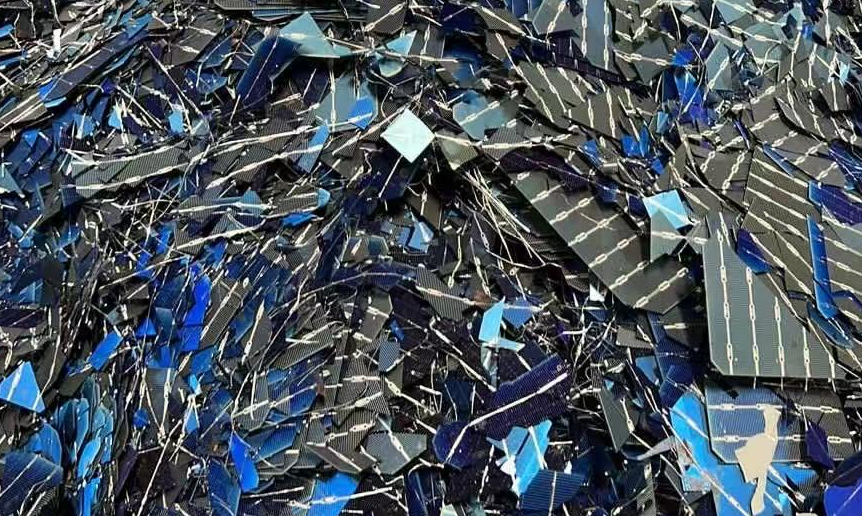
As hundreds of millions of retired solar panels enter the recycling chain, pyrolysis technology — especially the thermal cracking and separation of the EVA encapsulant film — is becoming the key factor that decides recycling efficiency and profitability. This article looks at how different countries are handling solar panel recycling, breaks down the science behind pyrolysis recycling in plain terms, and introduces how The WOLFU PV pyrolysis furnace performs in real projects.
The Reality
As mentioned earlier, the solar industry has gone through explosive growth over the past two decades, and now its first generation of panels is gradually reaching the end of its service life.
But retired solar panels are not waste. A standard panel contains about 65% glass, 18% aluminum frame, 3.5% silicon wafers, plus valuable metals such as silver and copper. A single 1 m × 2 m panel can contain 6–8 grams of silver. That is why solar panel recycling will become an important part of “urban mining.”
https://wolfu-industry.com/solar-panel-recycling-market-wolfu/
How Different Countries Recycle Solar Panels
As of the first quarter of 2026, 43 countries and regions worldwide had introduced dedicated regulations for solar panel waste, and 13 of them had set up Extended Producer Responsibility (EPR) schemes. However, countries are moving at very different speeds and taking different paths.
| Country/Region | Policy framework | Recovery requirements | Industry status |
| European Union | WEEE Directive + Circular Economy Act (effective 2026) | 85% collection rate and 80% material recovery rate; 85% panel recycling rate by 2027 | 42.1% of global market share in 2025 ; recycling capacity of about 170,000 tons/year. |
| China | National standard “Specifications for the Management of PV Module Recycling” (effective January 2026) | Recovery rate of no less than 85% | 3.7 GW retired in 2025; holds 41.5%–45% of the world’s related patents; exported USD 470 million worth of recycling equipment, about 62% of the global total |
| United States | No federal regulation; each state manages its own | No unified mandatory standard | 18.8% of global market share in 2025; an estimated 20 million tons of solar waste could end up in landfills between 2025 and 2050 |
| Japan | JIS standards + Extended Producer Responsibility | Target of over 80% recovery | Net exporter of recycling equipment; strong technological advantages in pyrolysis and hydrometallurgy |
Why Is Pyrolysis the Core Technology for Solar Panel Recycling Solutions
The hard part of recycling a solar panel is not removing the aluminum frame or separating the glass — those jobs can be done with mechanical methods. The real technical bottleneck is the EVA encapsulant film.
In the laminated structure of a crystalline-silicon panel, the EVA film acts like glue, bonding the cover glass, solar cells and backsheet firmly together. This bonding is designed to survive 25 years of sun, wind and rain. But at the end of a panel’s life, it becomes the biggest obstacle: without removing the EVA, the glass, silicon and metals simply cannot be separated from one another. Pyrolysis is currently the most effective way to remove EVA in solar panel recycling solutions.
The Science Behind EVA Pyrolysis
Recent research reveals the complete picture of EVA pyrolysis. EVA pyrolysis is not a single reaction — it happens in three clearly distinct stages:
| Temperature range | Stage | What happens |
| 60–280°C | Melting stage | The EVA melts, producing some acetic acid and its derivatives; the poly(vinyl acetate) chain segments separate into a different phase |
| 280–430°C | First weight-loss stage | The ester groups are converted and released as acetic acid; decarboxylation produces volatiles, mostly completed between 350–430°C |
| 430–530°C | Second weight-loss stage | Mainly olefins are released; weight loss is about 77%; the EVA main chain breaks down |
Based on this mechanism, researchers proposed a three-step pyrolysis strategy. In the end, the EVA is completely broken down into gaseous products that escape, while the glass, silicon and metals remain behind as solids.
The Complete Pyrolysis Recycling Process
Industrial solar panel recycling solutions is not a single operation; it is a production line made up of several connected stages. A typical process looks like this:
| Step | Operation | What happens |
| 1. Frame removal | Mechanical removal | The aluminum frame and junction box are taken off with mechanical tools |
| 2. Crushing / pre-treatment | Crushing | The laminated structure is shredded to increase the surface area |
| 3. Pyrolysis de-bonding | Heating | The EVA is pyrolyzed, the organic material cracks into gas |
| 4. Physical sorting | Sorting | Density sorting and optical sorting separate the glass, silicon and metals |
| 5. Hydrometallurgical purification | Chemical leaching | Chemical leaching recovers valuable metals such as silver and copper |
Among these, step 3 — pyrolysis de-bonding — is the heart and the bottleneck of the whole line. It decides whether the later sorting steps can run smoothly, and it directly affects the purity of the valuable metals recovered. Industry studies show that a combined process of pyrolysis plus hydrometallurgy can keep silver recovery purity steadily above 99.7%, while cutting overall processing costs by 32% compared with purely chemical methods.
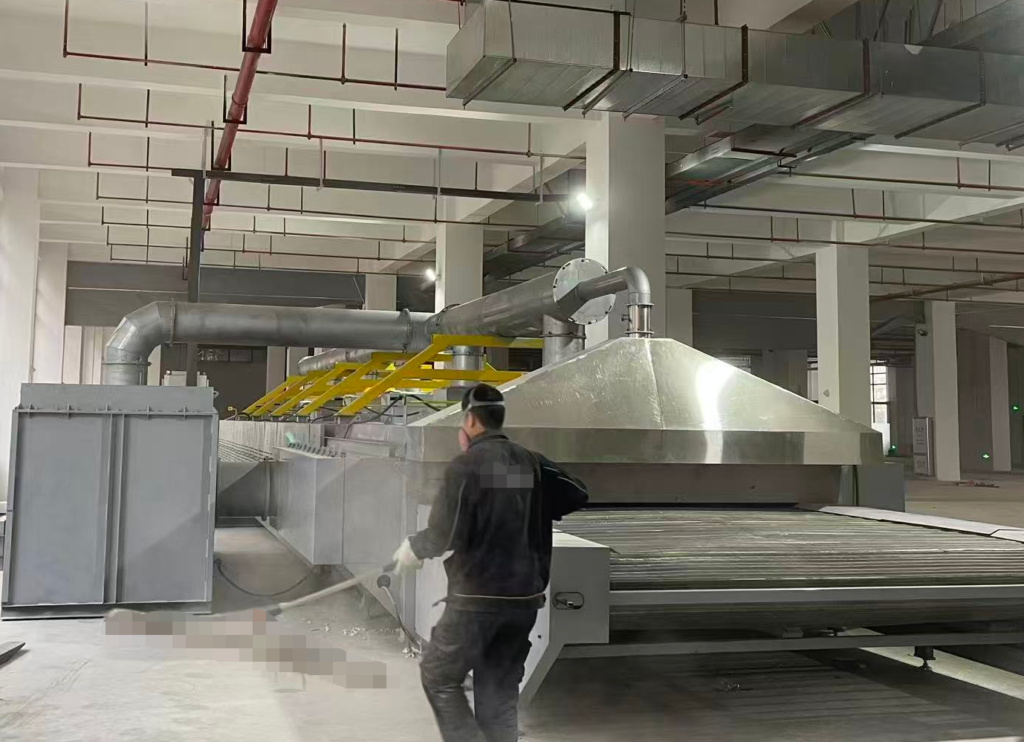
Core Advantages of the WOLFU Solar Panel Recycling Solutions
- Precise temperature control: segmented heating zones match the three-stage EVA pyrolysis mechanism (280°C / 430°C / 530°C).
- Atmosphere management: The fluorine-containing backsheet is first weakened at low temperature and peeled off for separate removal.
- Exhaust gas purification: a multi-stage off-gas treatment system.
- Continuous production: supports continuous feeding and discharge; a single unit’s throughput fits the needs of large-scale recycling bases.
- Low energy consumption: cutting overall energy use by more than 25% compared with traditional batch pyrolysis furnaces.
Outlook
Global solar panel recycling capacity is expanding fast: 223,000 tons/year at the end of 2025, expected to grow to 317,000 tons/year in 2026. However, the actual operating rate is only 58% — the mismatch between capacity ramp-up and the pace of feedstock supply is still a prominent problem.
Wolfu will keep building its business around the PV pyrolysis furnace, continuously improving the efficiency and emission control of pyrolysis, and providing efficient, low-energy, stable and reliable pyrolysis equipment to support the global solar circular economy.
Get a Quote for WOLFU Solar PV Panel Recycling Plant
Related WOLFU Solutions
For aluminum frame removal before full PV recycling, review:
WOLFU Solar Panel Aluminum Frame Removing Machine
For high-capacity PV module recycling, review:
WOLFU Solar Panel Recycling Line
For photovoltaic silicon processing after recovery, review:
WOLFU Industrial Silicon Melting Induction Furnace
Why Choose WOLFU?
WOLFU provides solar panel recycling solutions, battery recycling lines, metal melting furnaces, aluminum casting systems, and customized industrial recycling solutions.
For solar PV panel recycling projects, WOLFU can recommend suitable equipment based on panel type, target capacity, workshop layout, automation level, and final material recovery goals.
FAQ
What materials can this solar panel recycling solutions recover?
It can recover glass, metal, silicone powder, and plastic from used photovoltaic panels.
What is the processing capacity?
The processing capacity is 200 kg/h.
Is this production line fully automatic?
Yes. It is a fully automatic production line designed to reduce manual labor and support stable operation.
What are the core components?
The core components include motor and PLC.
What projects is this recycling plant suitable for?
It is suitable for decommissioned PV power stations, waste solar panel recycling plants, solar farm replacement projects, and industrial PV waste disposal facilities.
Rất đáng đọc, cảm ơn tác giả. Công ty Letco cung cấp dịch vụ du học Hàn Quốc trọn gói, tư vấn tận tâm và minh bạch chi phí. Tìm hiểu tại letco.vn.
关于我们的产品你想了解什么?