
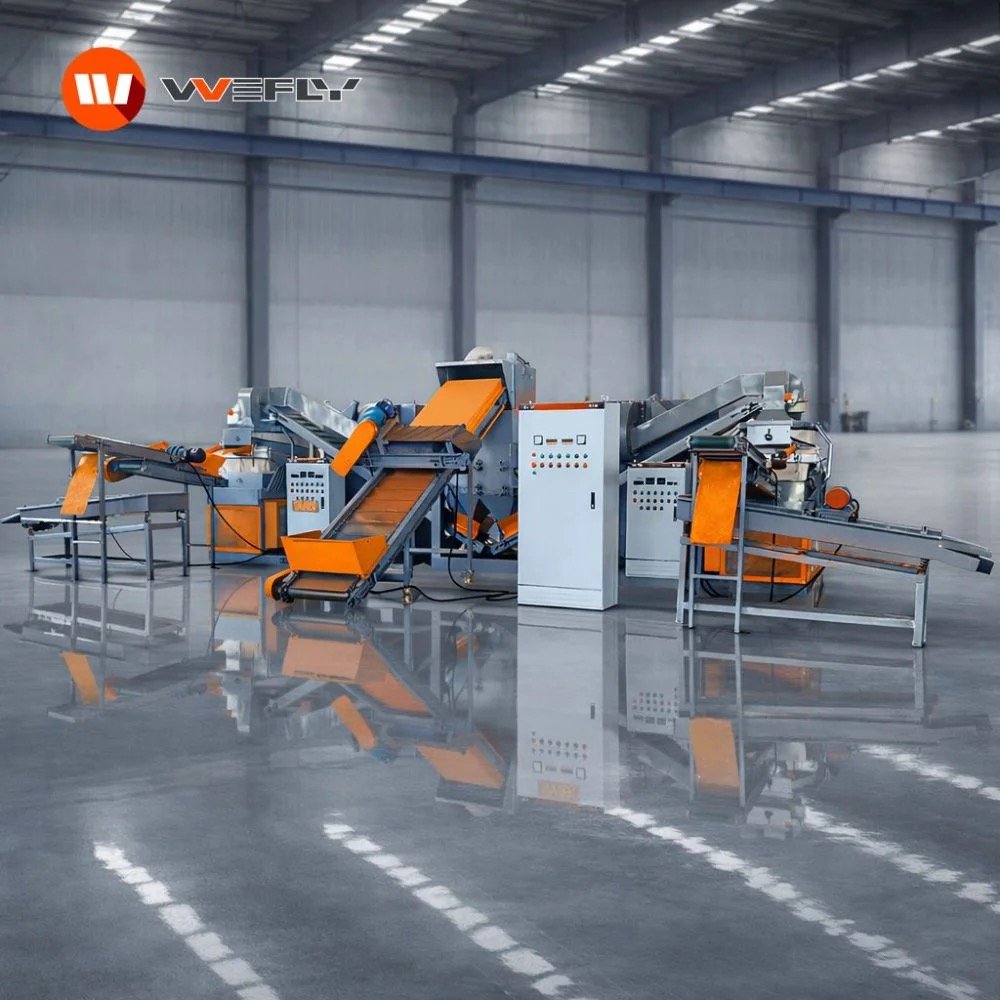
Scrap Copper Wire Recycling Separator Machine Guide
A scrap copper wire recycling separator machine is designed to recover valuable copper granules from waste electrical cables. It combines crushing, granulating, airflow separation, and vibration sorting in one production process.
For recycling businesses, cable waste is more than discarded material. Household wires, communication cables, automotive wiring harnesses, and industrial power cables can contain reusable copper and plastic. With suitable equipment, these materials can be separated efficiently and prepared for resale or further processing.
For detailed machine specifications, review the WOLFU Scrap Copper Wire Recycling Separator Machine.
Key Technical Parameters
The WOLFU copper cable granulator is designed for industrial recycling workshops and metal recovery plants.
| Parameter | Specification |
|---|---|
| Machine Type | Copper Wire Recycling Separator |
| Application | Scrap cable wire recycling |
| Wire Processing Range | 0.1–30 mm |
| Processing Capacity | 300–800 kg/h |
| Power | 45–75 kW |
| Voltage | 380V / 50Hz |
| Machine Weight | 4500–5000 kg |
| Warranty | 1 year |
| Final Materials | Copper granules and plastic particles |
Actual capacity may vary depending on cable type, copper content, wire diameter, feeding speed, and material cleanliness.
How Does a Copper Wire Recycling Separator Work?
The recycling process includes several automated steps.
1. Feeding
Waste cables are fed into the machine through a feeding hopper or conveyor. Before processing, operators should remove unsuitable materials and check whether the cable waste contains excessive contamination.
2. Crushing
The crusher cuts the cables into smaller pieces. This prepares the material for further granulation and improves separation efficiency.
3. Granulating
The cable pieces are processed into fine copper and plastic particles. Uniform granulation helps the system separate materials more accurately.
4. Airflow Separation
Copper and plastic have different densities. The machine uses airflow gravity separation to divide the heavier copper granules from the lighter plastic insulation particles.
5. Final Collection
The separated copper granules and plastic particles are collected independently. These materials can be reused, sold, or transferred to downstream processing equipment.
Main Advantages
High Copper Recovery Purity
The machine can produce copper granules with a purity of up to 99% or higher. Clean output helps recycling businesses improve the commercial value of recovered materials.
Integrated Automatic Operation
The system combines crushing, granulating, airflow separation, and sorting. This reduces unnecessary handling between separate machines and supports a more organized workflow.
Suitable for Different Cable Types
The machine can process several common waste-cable categories.
| Cable Type | Typical Source |
|---|---|
| Household electrical wires | Residential renovation and electrical waste |
| Automotive wiring harnesses | Vehicle dismantling and repair facilities |
| Communication cables | Telecom and network replacement projects |
| Industrial power cables | Factories, construction sites, and utility projects |
| Mixed scrap copper wires | Recycling centers and metal collection businesses |
Dust-Control Support
Cable crushing and granulating can generate dust. A suitable collection system helps maintain a cleaner workshop and reduces unnecessary material loss.
Compact Industrial Structure
The integrated equipment layout is suitable for recycling plants that need stable production while controlling workshop space and maintenance requirements.
Where Can the Machine Be Used?
A scrap copper wire recycling separator machine can be used in:
- Scrap metal recycling plants
- Electronic-waste recycling facilities
- Cable recycling workshops
- Copper recovery factories
- Vehicle dismantling businesses
- Industrial waste-processing centers
For buyers planning a broader copper-recycling project, review the WOLFU Waste Copper Recycling Production Line Solutions.
What Are the Final Products?
The machine produces two recyclable materials.
Copper Granules
Recovered copper particles can be sold as recycled material or transferred to downstream smelting equipment. For industrial copper melting applications, buyers may also review the WOLFU Air Blast Furnace for Copper Smelting.
Plastic Particles
Separated insulation particles can be collected independently. Their final use depends on plastic type, cleanliness, and local recycling requirements.
The ability to recover both copper and plastic helps recycling businesses reduce waste and improve material utilization.
How to Select the Right Configuration
Confirm the Cable Type
Cable composition directly affects processing efficiency. Buyers should identify the main source of waste cable, average wire diameter, copper content, and contamination level.
Estimate Hourly Capacity
A small workshop and a large recycling facility have different throughput requirements. The selected configuration should match daily material volume and working hours.
Check Workshop Conditions
Before installation, confirm the available voltage, floor space, ventilation, dust-collection arrangement, feeding method, and material-storage area.
Consider Downstream Processing
Some buyers only need copper granules for resale. Others plan to melt recovered copper for further production. The separator machine should be selected as part of the complete recycling workflow.
For more information about copper melting equipment, read: High-Efficiency Air Blast Furnace for Copper Smelting: Reliable Industrial Solution.
Maintenance and Operating Considerations
Routine inspection helps keep the separator machine stable. Operators should check the crusher blades, airflow system, vibration-sorting components, electrical connections, dust collector, and material outlets.
Waste cables should be sorted before feeding. Wet materials, heavily contaminated waste, and unsuitable metal components may affect production efficiency and final purity.
Operators should also follow the equipment manual and receive proper training before starting production.
Conclusion
A scrap copper wire recycling separator machine provides an efficient way to recover copper granules and plastic particles from waste cables. Its integrated crushing, granulating, airflow separation, and sorting process can help recycling businesses improve material recovery and streamline workshop operations.
The correct machine configuration depends on cable type, wire diameter, hourly capacity, workshop conditions, and downstream processing requirements.
Planning a cable recycling project?
Review the machine details and contact the WOLFU engineering team for a customized recommendation:
Request a Quote for the WOLFU Scrap Copper Wire Recycling Separator Machine
Frequently Asked Questions
What materials can this machine process?
The machine can process household electrical wires, automotive wiring harnesses, communication cables, industrial power cables, and mixed scrap copper wires.
What is the processing capacity?
The reference capacity is 300–800 kg/h. Actual output depends on cable type, wire diameter, feeding speed, and material conditions.
What materials are recovered after separation?
The machine produces copper granules and plastic particles that can be collected separately for reuse or further processing.