
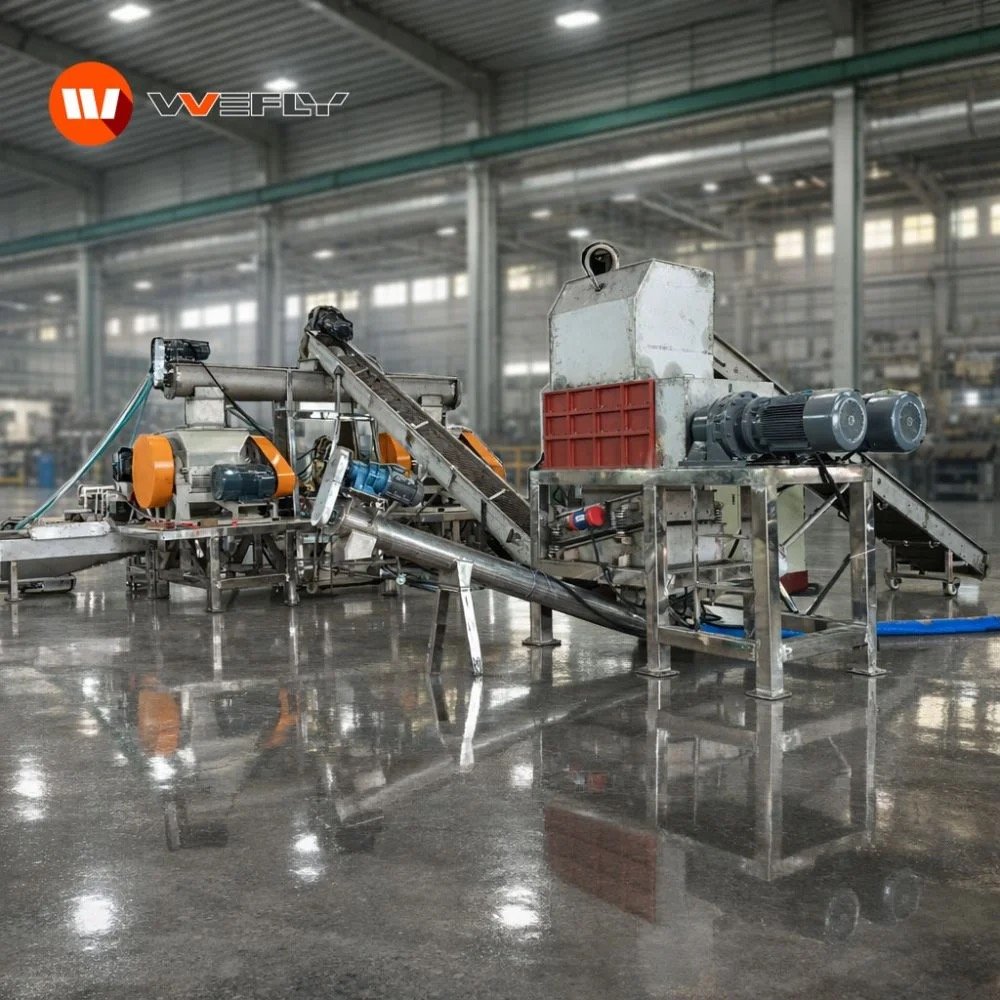
Automated Lead Acid Battery Recycling Machine Guide
A Lead Acid Battery Recycling Machine helps recycling plants recover valuable lead, plastic, and lead mud from used car batteries, truck batteries, storage batteries, and other scrap lead-acid batteries.
Instead of relying on manual dismantling, a complete automated line combines battery breaking, separation, plastic washing, lead drying, lead melting, and ingot casting in one production workflow.
🔵 View WOLFU Lead Acid Battery Recycling Machine
Key Specifications
| Feature | Specification | Benefit |
|---|---|---|
| Capacity | 1–5 T/H | Suitable for industrial recycling plants |
| Lead Recovery Rate | 97%–99% | Improves recycling value |
| Plastic Recovery | Above 98% | Reduces mixed waste |
| Acid Recovery | Above 95% | Supports cleaner processing |
| Total Power | 102–160 kW | Matches different production capacities |
| Operators | Approximately 3 workers | Reduces labor requirements |
How the Recycling Line Works
Step 1: Battery Breaking
Used batteries enter the breaking and shredding system. This opens the battery structure and prepares the materials for separation.
Step 2: Material Separation
The line separates lead, plastic, and lead mud through crushing, conveying, screening, and metal separation processes.
Step 3: Plastic Washing
The recovered plastic is washed and collected for downstream recycling or resale.
Step 4: Lead Drying and Melting
The recovered lead material is dried and transferred to the melting system.
Step 5: Lead Ingot Production
Molten lead is cast into lead ingots, creating a standardized product that is easier to store, transport, and sell.
Main Advantages
Complete Automated Workflow
The system combines breaking, separation, plastic washing, lead drying, lead melting, and ingot production in one line.
High Recovery Efficiency
Lead recovery can reach 97%–99%, while plastic recovery can exceed 98%. This helps recycling plants improve resource utilization.
Wide Battery Compatibility
The machine can process used car batteries, truck batteries, storage batteries, and other scrap lead-acid batteries.
Acid Collection Support
The line supports waste acid collection and can be configured with additional acid treatment equipment according to project requirements.
Low Labor Requirement
The production line can operate with approximately three workers, reducing manual work and improving plant efficiency.
Suitable Applications
- Waste battery management companies
- Lead-acid battery recycling plants
- Scrap metal recovery facilities
- Environmental protection projects
- Lead ingot production plants
Related WOLFU Solutions
🔵 Related Solution: Lithium Battery Recycling Plant
🔵 Related Solution: Scrap Copper Wire Recycling Machine
🔵 Read More: Lead Acid Battery Recycling Line for Lead Recovery
Why Choose WOLFU?
WOLFU provides customized battery recycling solutions based on plant capacity, workshop layout, battery type, and final product requirements.
The company can also provide layout suggestions, installation guidance, operator training, machinery test reports, video outgoing inspections, and technical support.
Conclusion
A Lead Acid Battery Recycling Machine helps recycling companies recover lead, plastic, and lead mud from scrap batteries through an integrated automated process.
With a capacity of 1–5 T/H, lead recovery of up to 97%–99%, plastic recovery above 98%, and integrated lead ingot production, the WOLFU line is suitable for industrial recycling projects.
🔵 Get a Quote for WOLFU Lead Acid Battery Recycling Machine
FAQ
What materials can the recycling line recover?
The line can recover lead, plastic, and lead mud from used lead-acid batteries.
What types of batteries can the machine process?
It can process used car batteries, truck batteries, storage batteries, and other scrap lead-acid batteries.
Can the production capacity be customized?
Yes. WOLFU can customize the line according to plant layout, raw material type, and capacity requirements from 1 to 5 tons per hour.