
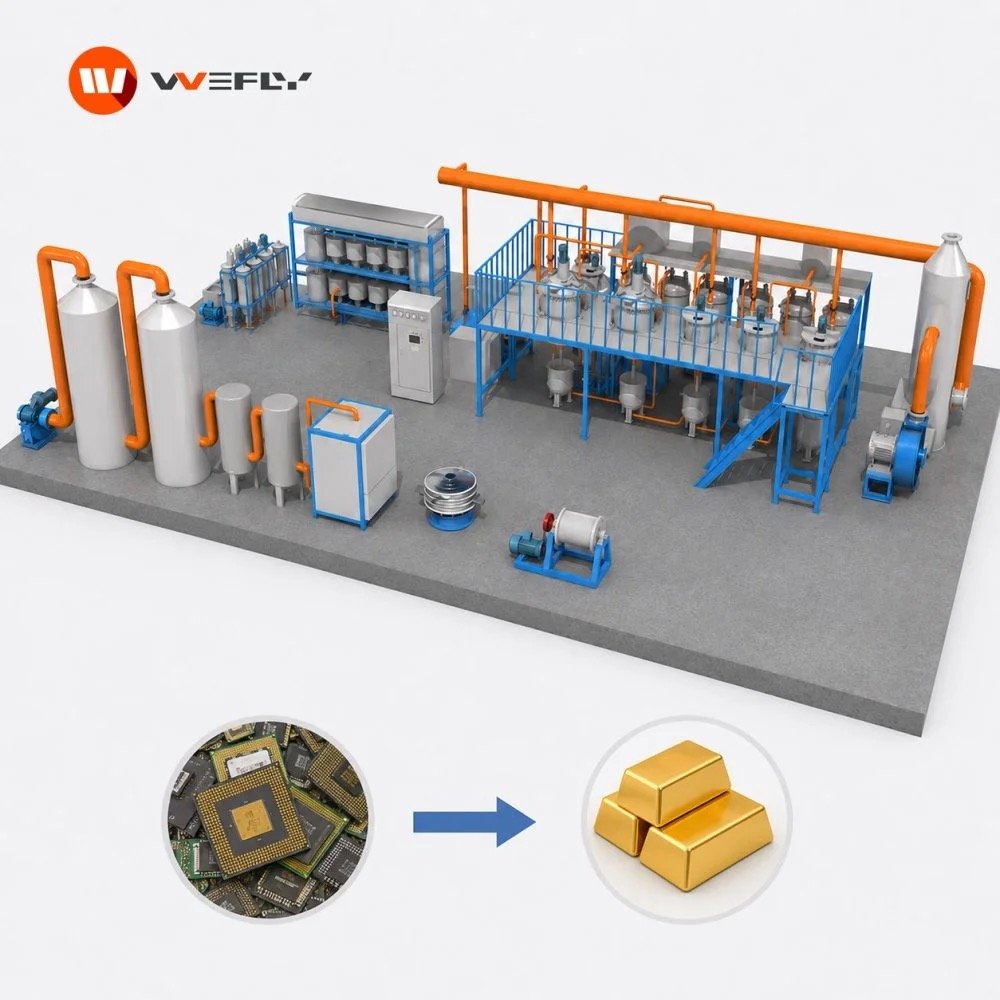
Precious Metal Refining Plant for E-Waste Gold Recovery
A precious metal refining plant is designed to recover valuable metals from electronic waste and industrial residues. CPUs, RAM modules, PCB boards, IC chips, memory cards, and anode mud may contain recoverable gold, silver, palladium, platinum, and copper.
For recycling companies, the key is selecting a refining system that matches the raw material, processing capacity, recovery target, and downstream workflow.
What Materials Can Be Processed?
Electronic waste contains plastics, ceramics, base metals, and precious metals. Before refining begins, the material should be sorted and prepared according to its composition.
| Raw Material | Potential Recoverable Metals | Typical Application |
|---|---|---|
| CPUs and ceramic processors | Gold, silver, palladium, copper | Electronic component recycling |
| RAM and memory cards | Gold and copper | Gold-plated connector recovery |
| PCB boards | Gold, silver, palladium, copper | Industrial e-waste treatment |
| IC chips and MLCC components | Palladium, silver, gold | Precious metal separation |
| Anode mud and metal residues | Gold, silver, platinum-group metals | Industrial refining projects |
How Does the Refining Process Work?
The system combines material preparation, carbonization, grinding, chemical leaching, separation, and purification.
A PLC control system helps manage the workflow and reduce manual operation. The WOLFU plant uses a cyanogen-free hydrometallurgical process, providing a more controlled solution for precious metal recovery.
For a broader overview, read:
Precious Metal Refining Plant for Efficient Metal Recovery
Available Processing Capacities
The correct plant size depends on the daily volume of electronic waste, raw material composition, and required output.
| Model | Processing Capacity | Power | Recommended Application |
| Model 100 | 100 kg/day | 27 kW | Small and medium-sized recycling projects |
| Model 300 | 300 kg/day | 34.8 kW | Industrial e-waste recovery operations |
Main Advantages
| Feature | Benefit |
| PLC control | Improves workflow consistency and reduces manual operation |
| Multiple raw materials | Processes CPUs, RAM, PCB boards, IC chips, and other e-waste |
| High recovery potential | Helps recover valuable metals from complex electronic scrap |
| Cyanogen-free process | Supports a safer and more responsible workflow |
| Flexible configuration | Matches different feedstocks and production targets |
How to Choose the Right Equipment
1. Confirm the Raw Material
Identify whether the main feedstock is CPU scrap, PCB boards, RAM, IC chips, or mixed electronic waste.
Different materials require different preparation and separation steps.
2. Estimate Daily Processing Volume
Select the plant capacity according to the amount of material processed each day.
Avoid choosing an oversized system if the available feedstock is limited.
3. Define the Recovery Target
Determine whether the project requires gold recovery only or the separation of silver, palladium, platinum, and copper as well.
4. Add Supporting Melting Equipment
After refining, recovered metals may require melting and casting.
For small-batch precious metal melting, review the:
WOLFU 1–10 kg Gold Melting Furnace
For larger metal melting projects, review the:
WOLFU Medium Frequency Induction Melting Furnace
Conclusion
A precious metal refining plant helps electronic waste recyclers recover valuable metals from CPUs, PCB boards, RAM modules, IC chips, and industrial residues.
The correct system should match the feedstock, daily processing volume, recovery goals, and downstream melting requirements.
Planning an e-waste gold recovery project?
Review the equipment specifications and contact our engineering team for a customized solution:
Request a Quote for the WOLFU Precious Metal Refining Plant
FAQ
What materials can a precious metal refining plant process?
The plant can process CPUs, RAM modules, PCB boards, IC chips, memory cards, MLCC components, anode mud, and other materials containing precious metals.
Which metals can be recovered?
The system can recover gold, silver, palladium, platinum, and copper, depending on the raw material composition.
What plant capacities are available?
WOLFU provides 100 kg/day and 300 kg/day configurations for different recycling requirements.