
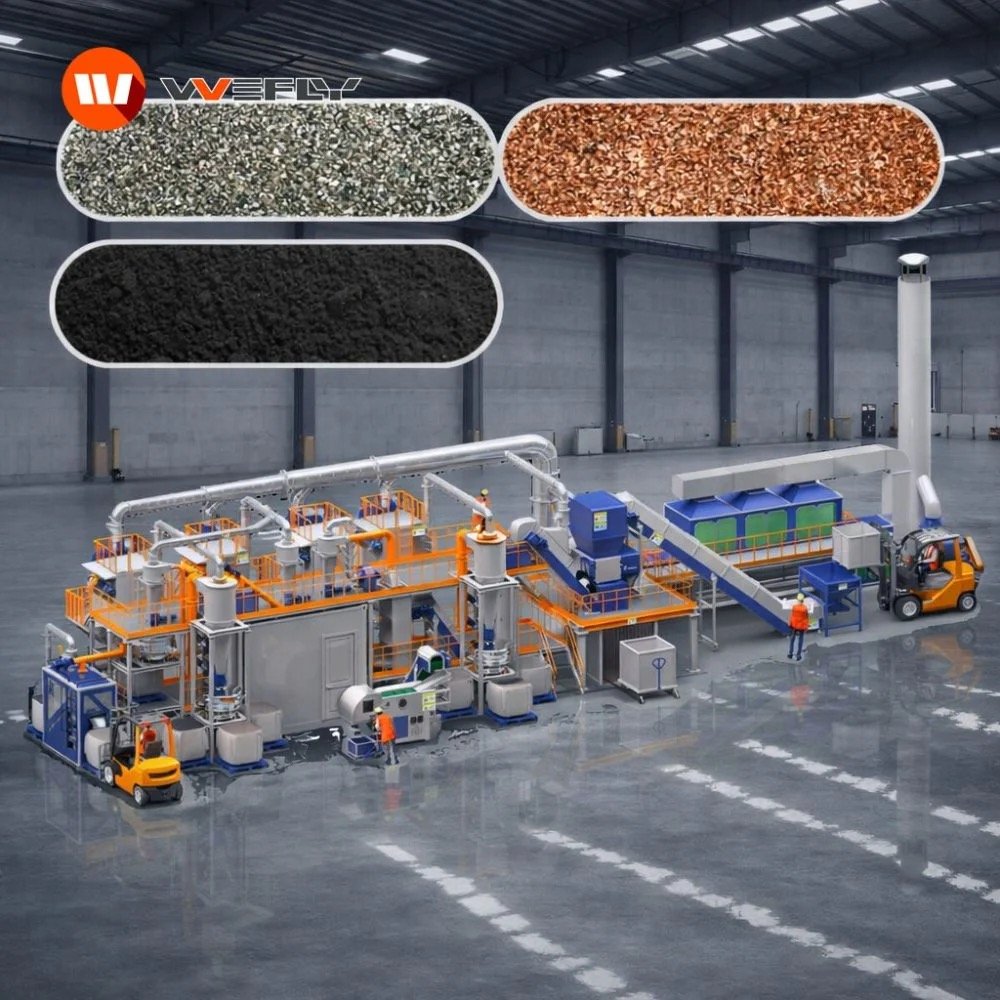
Lithium Battery Recycling Plant for Black Mass Recovery
A Lithium Battery Recycling Plant is becoming an essential solution for recycling companies, battery manufacturers, electric vehicle supply chains, and electronic waste processors. As lithium-ion batteries are widely used in electric vehicles, energy storage systems, mobile phones, laptops, power tools, and consumer electronics, the amount of retired battery waste is increasing quickly.
Waste lithium-ion batteries contain valuable materials such as black mass, copper, aluminum, steel shells, plastics, cathode materials, and anode materials. If these materials are not handled correctly, they may create safety, environmental, and resource waste problems. If they are processed properly, they can become valuable secondary resources for the battery and metal industries.
The WOLFU Lithium-ion Battery Recycling Plant is designed to recover valuable materials from waste lithium-ion batteries through a physical crushing and separation process. It integrates crushing, grinding, magnetic separation, screening, gravity separation, airflow separation, and dust collection into a complete industrial recycling line.
What Is a Lithium Battery Recycling Plant?
A lithium battery recycling plant is an industrial processing system used to separate and recover valuable materials from waste lithium-ion batteries. Instead of treating used batteries as ordinary waste, the plant breaks them down into recoverable material streams.
The main goal is to recover black mass, copper granules, aluminum granules, steel shells, separator plastics, and other recyclable materials. Black mass is especially important because it contains valuable battery electrode materials from cathode and anode layers.
The recycling line uses mechanical and physical separation methods. These include shredding, crushing, grinding, screening, magnetic separation, gravity separation, and airflow separation. This makes the system suitable for industrial users that want stable recovery efficiency without relying on chemical processing at the front-end separation stage.
For recycling businesses, this type of equipment can improve material recovery, reduce manual handling, improve workshop cleanliness, and create a more organized recycling process for different lithium battery waste streams.
Why Lithium Battery Recycling Is Important
Lithium-ion batteries are used in many fast-growing industries. Electric vehicles, renewable energy storage, portable electronics, and industrial power systems all depend on lithium battery technology. As these products reach the end of their service life, recycling becomes necessary.
Battery waste is not simple waste. It contains metals, electrode materials, plastics, and other components that can be recovered and reused. A well-designed lithium battery recycling plant helps reduce resource loss and supports a more circular battery supply chain.
Recycling also helps reduce the environmental pressure caused by improper disposal. Used lithium batteries may contain active materials and residual energy, so they require controlled processing and proper safety management.
For industrial recycling companies, battery recycling is also a business opportunity. Recovered black mass, copper, and aluminum can become valuable outputs when processed with the right equipment and quality control.
How the WOLFU Lithium Battery Recycling Plant Works
Step 1: Battery Material Feeding
The process begins by feeding waste lithium-ion batteries or battery-related materials into the recycling line. Suitable materials include cylindrical lithium batteries, prismatic lithium batteries, pouch lithium batteries, mobile phone batteries, battery shells, cathode materials, anode materials, and other lithium-ion battery waste.
Before feeding, operators should classify materials and remove unsuitable impurities. Depending on the battery type and local safety rules, pre-treatment may be needed before crushing. Proper feeding improves safety, machine stability, and separation efficiency.
Step 2: Shredding
The shredder cuts battery materials into smaller fragments. This step opens the battery structure and prepares the material for secondary crushing.
Stable shredding is important because lithium battery materials are complex. They may include metal shells, foils, plastics, separator films, electrode powder, and other mixed components.
Step 3: Hammer Crushing
After shredding, the material enters a hammer crusher for further size reduction. Secondary crushing helps break the battery fragments into smaller pieces so that different materials can be separated more effectively.
This stage helps release copper foil, aluminum foil, black mass, steel shell pieces, and plastics from the battery structure.
Step 4: Grinding
The grinding machine processes the crushed materials into finer particles. This improves material liberation and prepares the feedstock for screening and separation.
Grinding must be controlled carefully. If the particles are too coarse, separation may be incomplete. If they are too fine, dust and material loss may increase.
Step 5: Screening and Classification
Screening separates materials by particle size. A grading screen helps classify processed material into suitable fractions before further separation.
Correct screening improves downstream performance because airflow separation, gravity separation, and magnetic separation work better when particle size is controlled.
Step 6: Magnetic Separation
Magnetic separation removes magnetic metals such as steel shells and selected nickel-containing materials. This step helps clean the material stream before non-ferrous separation.
Removing magnetic metals also protects downstream equipment and improves the quality of final recovered products.
Step 7: Gravity and Airflow Separation
Gravity separation separates materials based on density differences. Airflow separation separates light and heavy materials through controlled air movement.
Together, these technologies help separate black mass, copper granules, aluminum granules, separator plastics, and plastic particles. Proper adjustment is essential for high recovery efficiency and clean final output.
Step 8: Dust Collection and Negative Pressure Control
Lithium battery recycling can generate fine powder and dust. The WOLFU recycling plant is equipped with dust collection equipment and operates under negative pressure to help prevent dust leakage.
This design supports cleaner operation, better material recovery, and improved workshop management. For industrial recycling plants, dust control is a key part of safe and stable production.
Key Advantages of the WOLFU Lithium Battery Recycling Plant
High Material Recovery Efficiency
The WOLFU lithium battery recycling plant is designed to achieve high recovery efficiency. According to the product technical standards, aluminum recovery rate and black powder recovery rate can both reach more than 98%.
High recovery efficiency matters because small losses can become significant in large-scale recycling operations. Better recovery means more valuable output and less waste.
Industrial Capacity Options
WOLFU provides standard plant configurations with 500 kg/h and 1000 kg/h processing capacity. These options are suitable for recycling companies with different production volumes and investment plans.
The WOLFU-LDC-500 model is designed with a plant size of 40 m × 11 m × 8 m and total power of 361 kW. The WOLFU-LDC-1000 model is designed with a plant size of 50 m × 12 m × 8 m and total power of 442 kW.
Physical Separation Process
The recycling line mainly uses physical separation technologies. These include crushing, magnetic separation, screening, grinding, gravity separation, and air separation.
This process is suitable for front-end material separation and recovery. It helps produce recyclable outputs such as black mass, copper, aluminum, steel shells, and plastics.
Negative Pressure Dust Control
Dust control is critical in lithium battery recycling. The WOLFU system operates under negative pressure and is equipped with dust collection equipment to reduce dust leakage during production.
This design helps maintain a cleaner working environment and supports more stable industrial operation.
Fully Automated Operation
The recycling plant integrates multiple machines into a continuous production line. Automated operation can reduce manual handling, improve process stability, and make daily production easier to manage.
For recycling companies, automation also helps reduce labor intensity and supports more consistent output quality.
Stable Industrial Structure
Battery recycling equipment must handle mixed materials, metal foils, plastics, powder, and shells. WOLFU uses a heavy-duty industrial design to support long-term operation.
A stable structure is important because downtime can reduce production efficiency and increase maintenance cost.
What Materials Can the Plant Process?
The WOLFU lithium battery recycling plant can process many types of lithium-ion battery materials. These include cylindrical batteries, prismatic batteries, pouch batteries, mobile phone batteries, battery shells, cathode materials, anode materials, and other lithium-ion battery waste.
This broad material range is useful for recycling businesses that receive different battery types from consumer electronics, electric vehicles, energy storage systems, power tools, and industrial battery sources.
However, actual processing performance depends on material composition, battery type, moisture content, residual energy condition, feeding uniformity, and system configuration. For stable operation, customers should evaluate the battery material before selecting a line configuration.
Final Recovered Materials
Black Mass
Black mass is one of the most important recovered materials from lithium battery recycling. It contains valuable electrode materials from the cathode and anode layers.
After front-end mechanical separation, black mass may be sent to downstream refining or material recovery processes depending on the customer’s business model.
Copper Granules
Copper mainly comes from copper foil and battery conductive components. Recovered copper granules can be sold, refined, or reused in the metal recycling supply chain.
Aluminum Granules
Aluminum is commonly found in battery cases, current collectors, and related structures. The WOLFU system is designed to recover aluminum with high efficiency.
Steel Shells and Plastics
Steel shells, separator plastics, and plastic particles can also be collected as separate material streams. Proper separation helps reduce waste and improve the value of the recycling process.
Who Needs a Lithium Battery Recycling Plant?
This equipment is suitable for battery recycling companies that process used lithium-ion batteries at an industrial scale. It is also suitable for electronic waste recycling plants that handle battery waste from mobile phones, laptops, tablets, and other electronic devices.
Electric vehicle battery recycling companies can use this system as part of a larger battery dismantling and recovery process. Energy storage system recycling companies can also benefit from a complete crushing and separation line.
Battery manufacturers may use similar recycling systems to process production scrap, defective cells, electrode waste, or battery material residues. This helps recover valuable materials and reduce production waste.
How to Choose the Right Lithium Battery Recycling Line
The first factor is battery type. Cylindrical, prismatic, pouch, mobile phone, and mixed lithium battery waste may require different feeding and processing configurations.
The second factor is capacity. If your plant handles moderate volumes, a 500 kg/h line may be suitable. If your business requires higher output, a 1000 kg/h configuration may be more practical.
The third factor is recovered material target. Some customers focus mainly on black mass recovery, while others also want cleaner copper, aluminum, steel, and plastic separation.
The fourth factor is workshop layout. Lithium battery recycling lines require enough space for feeding, crushing, screening, separation, dust collection, electrical control, material storage, and maintenance access.
The fifth factor is safety and environmental control. Negative pressure operation, dust collection, operator training, and regular maintenance should be included in the project plan.
Related WOLFU Recycling Solutions
For customers building a broader recycling business, WOLFU also provides the Lead Acid Battery Recycling Machine, which is designed for recycling waste lead-acid batteries and recovering valuable battery materials.
For metal recovery from electrical waste, the Scrap Copper Wire Recycling Separator Machine can recover high-purity copper and plastic particles from waste cables.
You can also read WOLFU’s related blog article, Solar Panel Recycling Line for End-of-Life PV Module Recovery, to learn how industrial recycling lines help recover valuable materials from renewable energy waste.
Why Choose WOLFU?
WOLFU provides industrial recycling equipment, metal processing systems, battery recycling lines, and customized engineering support. For lithium battery recycling projects, customers usually need more than a machine. They need a complete processing plan.
WOLFU can support equipment selection, plant layout planning, capacity matching, installation guidance, commissioning, operator training, troubleshooting, and long-term technical service.
The company’s lithium battery recycling plant is designed for high recovery efficiency, automated operation, physical separation, negative pressure dust control, and stable industrial use.
For companies that want to recover black mass, copper, aluminum, steel shells, and plastics from waste lithium-ion batteries, WOLFU can provide a customized recycling line based on material type, capacity target, and workshop conditions.
Conclusion
A Lithium Battery Recycling Plant helps turn waste lithium-ion batteries into valuable recovered materials such as black mass, copper granules, aluminum granules, steel shells, separator plastics, and plastic particles. It supports resource recovery, industrial recycling efficiency, and better waste battery management.
By using shredding, crushing, grinding, screening, magnetic separation, gravity separation, airflow separation, and negative pressure dust collection, the WOLFU system provides a complete physical recycling solution for lithium-ion battery waste.
If your company needs a reliable lithium-ion battery recycling line for cylindrical batteries, prismatic batteries, pouch batteries, mobile phone batteries, cathode materials, anode materials, or mixed battery waste, WOLFU can recommend a suitable configuration.
CTA: Contact WOLFU today to request a customized quotation for the Lithium Battery Recycling Plant.
FAQ
What materials can a lithium battery recycling plant process?
It can process cylindrical lithium batteries, prismatic lithium batteries, pouch lithium batteries, mobile phone batteries, battery shells, cathode materials, anode materials, and other lithium-ion battery waste.
What materials can be recovered from lithium-ion batteries?
The recycling line can recover black mass, copper granules, aluminum granules, steel shells, separator plastics, and plastic particles. The final output may vary depending on the type and condition of the input battery materials.
What is the standard capacity of the WOLFU lithium battery recycling plant?
WOLFU provides standard configurations with 500 kg/h and 1000 kg/h processing capacity. The final capacity can be selected according to the customer’s material volume, plant size, and production requirements.