
PV Solar Panel Modules Recycling: The Equipment and Technology Trends
PV solar panel modules recycling
PV solar panel modules recycling has moved to a genuine engineering discipline, and the lines built today determine whether this becomes feedstock or landfill.
Five years ago, the industry asked whether modules could be recycled at all. Today, plant operators, EPC contractors and waste processors ask sharper questions: which delamination, which sorting architecture, which recovery route — and at what energy cost per tonne. This article breaks down the technology landscape as PV solar panel modules recycling lines manufacturer WOLFU sees it.
View WOLFU PV Solar Panel Modules Recycling Machine
Where the Industry Stands in 2026
- PV waste recycling is converted from an option into an obligation.
- Fiber-glass laminate waste classifications are tightening, pushing operators toward lines that recover clean, single-stream fractions rather than mixed shredder residue.
- Utility-scale repowering projects are generating bulk volumes of intact-but-early panels — a feedstock that rewards gentle disassembly over brute crushing.
In short: the market is no longer short of panels to recycle. It is short of equipment that recycles them profitably — and that is precisely the problem WOLFU engineers its lines to solve.
Why Delamination Is the Technical Bottleneck
Roughly 85% of PV solar panel module’s materials are glass, aluminum frame, copper cable and junction box. The hard part is the 15% locked inside the EVA that bonds cells to glass and backsheet. Every serious advance in PV solar panel modules recycling equipment of the last decade is ultimately a different answer to the same question: how do you break that bond without destroying the value on either side of it?
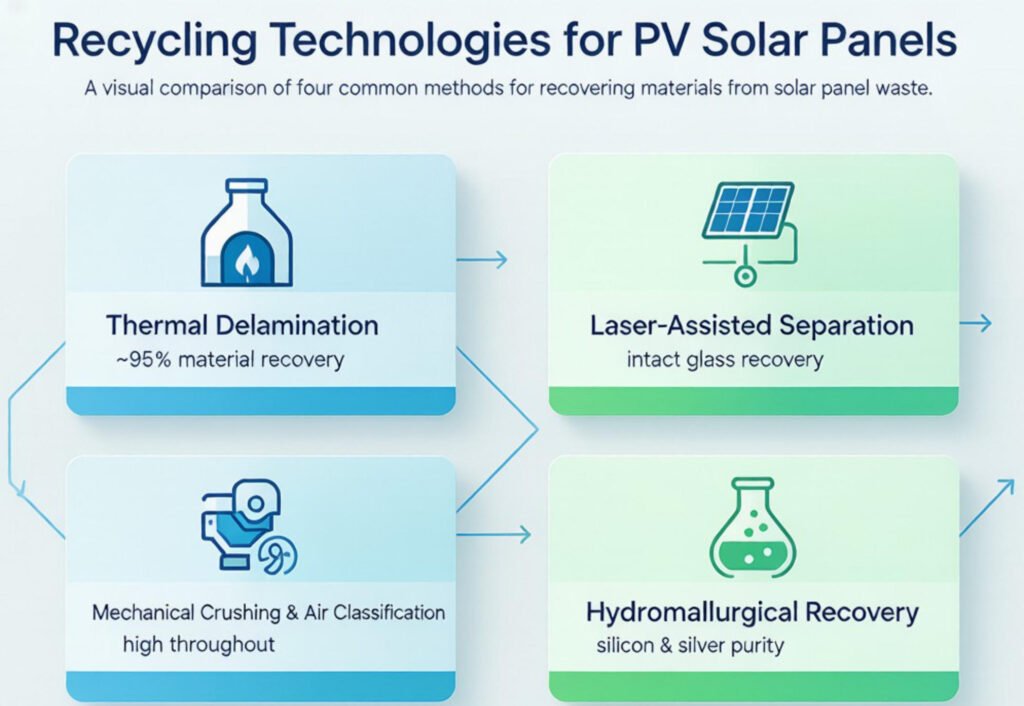
That framing explains the four technology camps below, and why hybrid lines increasingly combine them.
Trend 1 — High-Yield Thermal Delamination Goes Mainstream
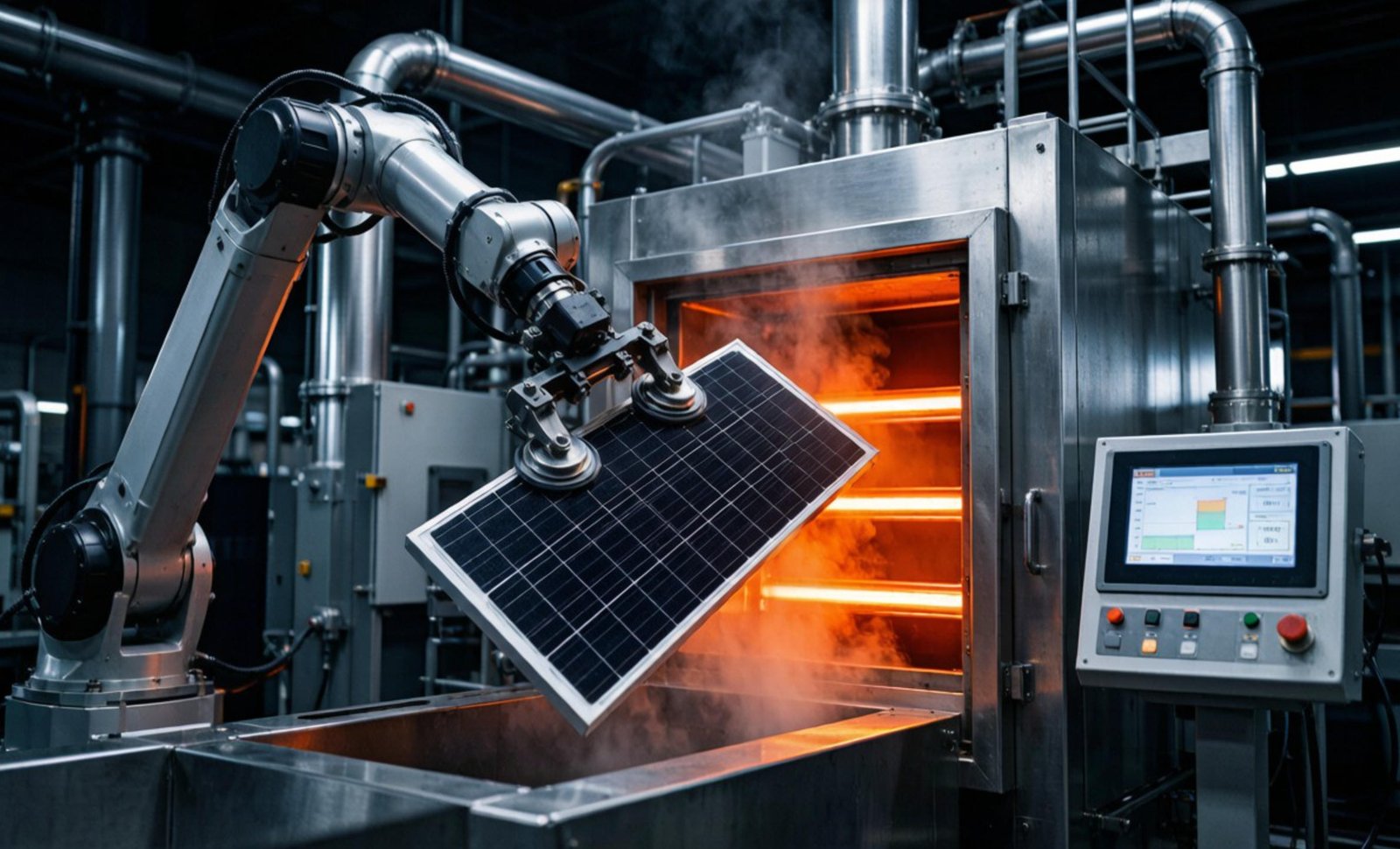
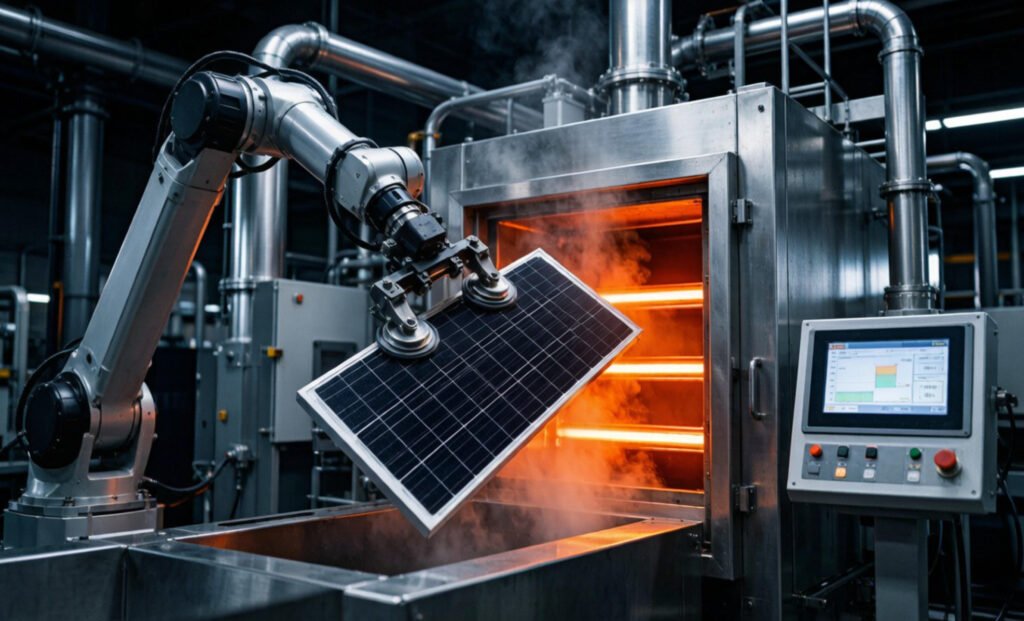
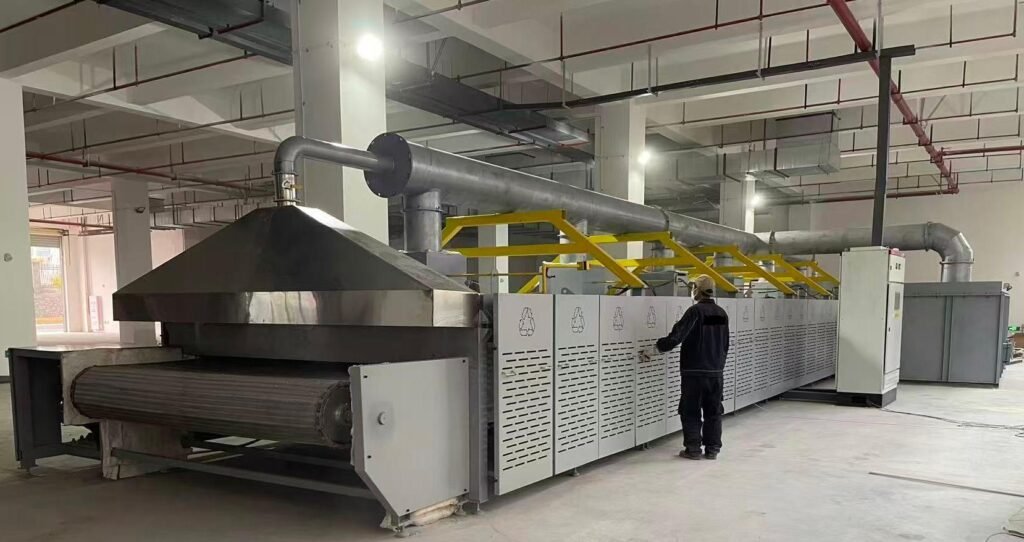
Conveyor furnaces and infrared heating chambers now debond EVA at controlled temperatures while keeping glass intact and reusable. Modern systems recover over 95% of module mass as clean fractions and cut cycle times to minutes per module.
Trend 2 — Laser-Assisted Separation for High-Value Feedstock
Laser systems ablate the polymer interlayer with minimal thermal stress, enabling intact glass recovery and preparing cell strips for precious-metal refining. Throughput is lower and capex higher than thermal routes, but for premium feedstock — undamaged glass, silver-rich cells — the economics can justify the premium.
Trend 3 — AI Vision Sorting and Robotic Handling
Feedstock is heterogeneous: monocrystalline, polycrystalline, bifocal glass-glass, thin film, frameless. AI-driven vision systems now classify incoming modules by type and condition in milliseconds, routing intact panels to testing and reuse, delamination-suitable modules to the furnace line, and damaged ones to mechanical crushing.
Trend 4 — Hydrometallurgical Silicon and Silver Recovery
Mechanical separation alone leaves silicon powder mixed with metals and glass fines. Integrating hydrometallurgical steps — etching, leaching and purification — lifts silicon to solar-grade or metallurgical-grade purity and recovers silver, the single most valuable trace metal.
New Module Chemistries Are Changing the Playbook
Due to different encapsulants, thinner glass, lead-containing solder alternatives and new backsheet materials, PV solar panel modules recycling lines designed solely around 2010-era Al-BSF modules will struggle. Equipment buyers should ask one hard question of any vendor: how does your line adapt when module chemistry changes? WOLFU is studying the answer — this is also the key of equipment competition in next five years.
How to Evaluate PV Solar Panel Modules Recycling Equipment: A Technical Checklist
- WOLFU’s engineering team applies the following checklist when scoping a client line — use it whoever you buy from:
- Mass balance: verified recovery percentages per fraction (glass, Al, Si, Cu, Ag) .
- Energy intensity: kWh per tonne processed.
- Automation depth: vision sorting, robotic handling, and remote diagnostics.
- Modularity: can throughput be added in stages?
- Serviceability: spare-part lead times, remote monitoring, operator training programs.
FAQ
Q: Can silver and silicon be recovered profitably?
A: Yes. Silver content of roughly 6-8 grams per panel plus rising silicon prices make integrated hydrometallurgical recovery an increasingly standard line component.
Q: What happens to thin-film CdTe panels?
A: They require dedicated chemical routes with closed-loop cadmium handling and should be segregated at the intake sorting stage.
Q: How much does a PV recycling line cost?
A: Scope drives price: a 1 tph pilot line and a 10 tph industrial system differ by an order of magnitude. Most equipment makers, WOLFU included, configure quotations around a client’s feedstock and target fractions.
Conclusion
PV solar panel modules recycling is becoming a technology-defined industry. Delamination chemistry, AI-driven sorting, integrated metal recovery and modular line design now decide who converts the coming waste wave into value. For operators and investors, the equipment choice is the strategy.
WOLFU designs and manufactures complete PV module recycling lines — and publishes these technology breakdowns to help the industry build better plants. Bring WOLFU your feedstock analysis and target fractions, and our engineering team will propose a line configuration tailored to your panels.