
WOLFU Continuous PV Pyrolysis Furnace: Complete Solution from Crushing to Sorting
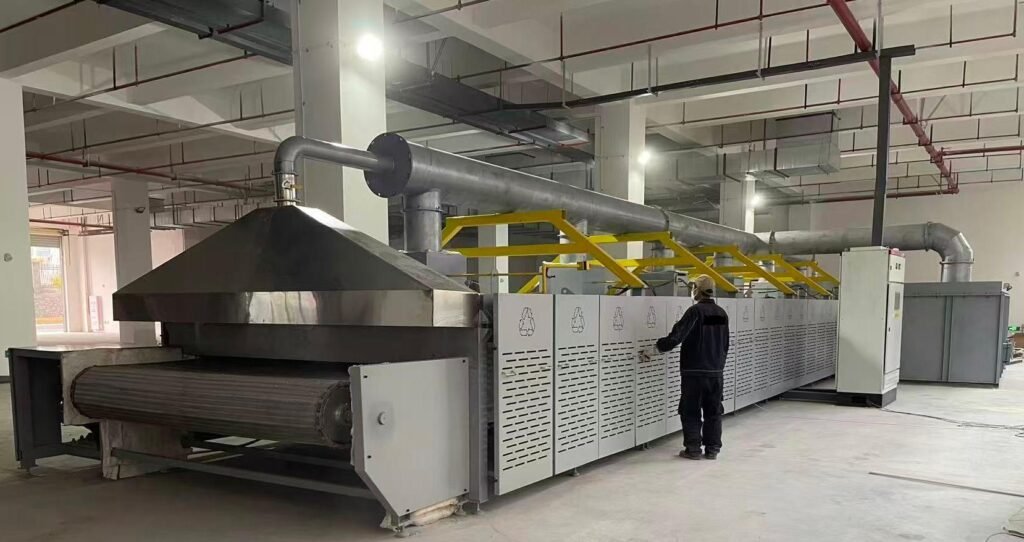
Continuous PV Pyrolysis Furnace
Background Information
A large-scale retired PV recycling enterprise, with an annual processing capacity of ≥ 30,000 tons, was facing three major challenges with existing equipment:
- EVA residue: EVA removal < 92%, reducing downstream hydrometallurgical recovery rates.
- Capacity: Limited batch furnace capacity, cannot cover the growing volume of retired PV panel.
- Emission instability: Exhaust emissions cannot pass environmental compliance inspection.
Wolfu’s solution: WDL-T Series Continuous Mesh Belt Pyrolysis Furnace + Pre-processing Line + Multi-sorting Line + Sealed Exhaust Purification System.
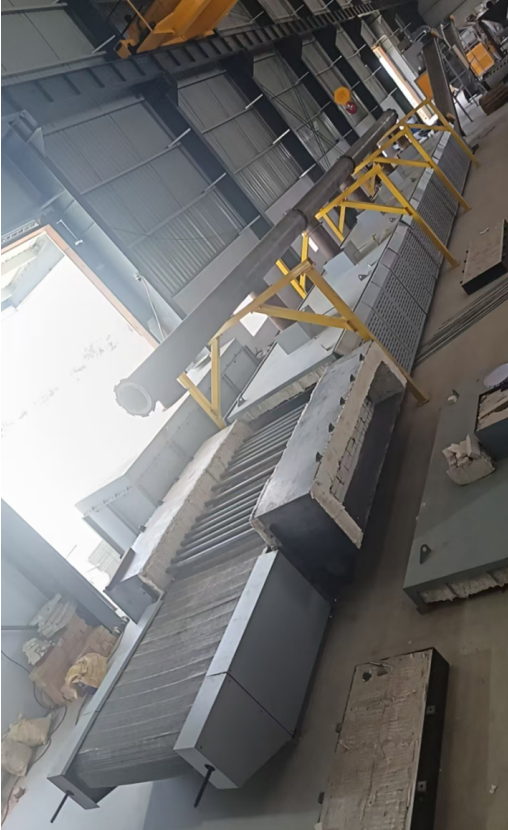
WOLFU Continuous PV Pyrolysis Furnace
Why Continuous PV Pyrolysis Furnace
From Crushing to Recycled Silicon Wafer
- Frame Removal: Robotic arm dismantles aluminum frames; aluminum can be melted directly.
- Crushing: Cutting + crushing → 30–80 mm.
- Backsheet Peeling: Sorting → remove TPT/TPE from backsheets.
- Loading: Thickness 60 mm, uniformity ≥ 95%.
- Pyrolysis (PV Pyrolysis Furnace): Mesh belt transfer at constant speed through 5 temperature zones, remove EVA thoroughly.
- Slow Cooling + Discharge: Discharge temperature ≤ 80 °C, silicon wafer recovery rate ≥ 95%.
- Sorting: Multi-layer screening + magnetic separation (copper ribbon) + air-flow sorting (silicon / glass).
- Exhaust Purification: Ensuring compliant emissions throughout the process.
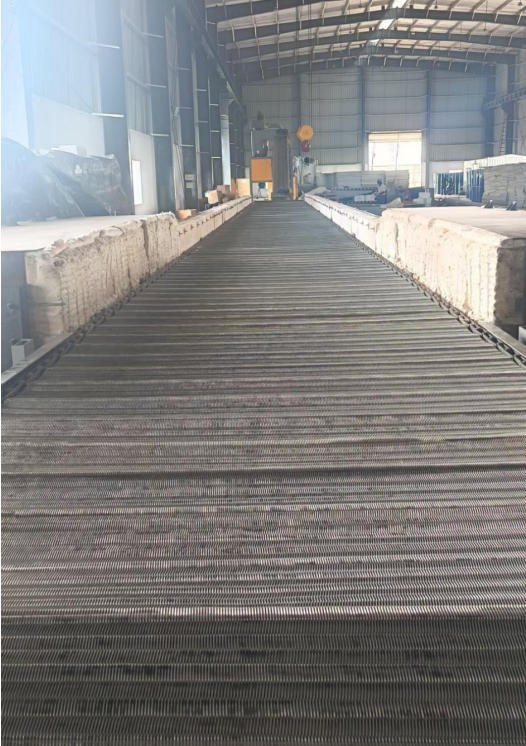
WOLFU WDL-T Series Continuous PV Pyrolysis Furnace
WDL-T Series PV Pyrolysis Furnace
▲ Diamond mesh holes + edge curling reinforcement — no material leakage, no belt deviation.
| Item | Parameter | Notes |
| Model | WDL-T Series | WOLFU PV-dedicated mesh belt furnace |
| Max Temperature | 1100 °C / ≤ 1050 °C | Long-term operation |
| Pyrolysis Setting | 450–520 °C (multi-stage) | Pre-burn → Pyrolysis → Slow cooling |
| Temperature Zones | 5 zones | Independent PID per zone, precise control |
| Rated Heating Power | 200 kW | Three-phase 380 V supply |
| Mesh Belt Material | High-temp alloy + pickled passivation | Fluoride-resistant, anti-EVA corrosion |
| Belt Width × Thickness | 1500 × 2.0 mm | Edge curling, prevents wafer drop |
| Mesh Hole Diameter | 5 mm | Ventilating, heat-permeable, no jamming |
| Belt Line Speed | 1.5–3.0 m/min (VFD) | Residence time 25–40 min per batch |
| Heating Element | Ceramic fiber heating plate | Fast ramp, low energy consumption |
| Furnace Lining | High-purity alumina fiber | Outer wall ≤ room temp + 22 °C |
| Control System | PLC + touchscreen | Remote IoT integration supported |
Whole – Line Performance
1000 kg/h Single-line capacity | 99.2% EVA removal rate | 95.3% Glass recovery rate | ≥ 95% Wafer recovery rate |
62.8% Silicon purity (post-sorting) | 93.5% Copper purity (post-magnetic) | ≥ 97% Aluminum frame recycling | 300 kW·h/t Whole-line energy consumption |
Conclusion
From this 1,000 kg/h complete line, WOLFU has proven that manufacturing PV pyrolysis furnaces is not about adding a product line — it is about comprehensively delivering our existing industrial furnace capabilities: temperature control + atmosphere management + mesh belt + automation + waste heat recovery + regulatory compliance
If you are selecting a furnace for retired PV panels, WOLFU provide full-process support — from process consultation, equipment selection, installation & commissioning, operator training, to lifetime maintenance.
Why Choose WOLFU?
When investing in a PV panel recycling line, the pyrolysis furnace is the heart of the entire operation. A good designed furnace means complete EVA removal, high recovery silicon wafers, low energy comsumption, and passed environmental audits. That is why recyclers across Southeast Asia, Central Asia, and beyond trust WOLFU to deliver the furnace that keeps their line running 24/7.
FAQ
What is a PV pyrolysis furnace, and how does it work?
A PV pyrolysis furnace thermally decomposes the EVA (ethylene-vinyl acetate) encapsulant layer that bonds solar panel glass, silicon cells, and backsheet together. The furnace heats crushed PV module fragments to 450–520 °C, EVA undergoes thermal decomposition and leaves behind clean, separable solid materials: silicon wafers, glass particles, copper ribbons. WOLFU WDL-T uses a continuous mesh-belt design, meaning material is fed onto a moving belt that travels through 5 temperature zones, emerging fully processed at the other end.
What is the difference between pyrolysis and chemical delamination?
Pyrolysis uses heat to thermally decompose EVA — no solvents and liquid waste, and the solid outputs are dry and immediately sortable.
Chemical delamination uses organic solvents or acids to dissolve EVA at lower temperatures, but generates large volumes of toxic liquid waste requiring expensive treatment.
Pyrolysis is faster, cleaner, and more scalable for industrial operations. WOLFU recommends thermal pyrolysis as the primary delamination method.
What about panels with fluoropolymer backsheets (TPT/TPE)?
Fluoropolymer backsheets (TPT, TPE, PVF) require a two-stage thermal process: Stage 1 decomposes the fluoropolymer layer, and Stage 2 removes the EVA.
WOLFU continuous PV pyrolysis furnace handles this automatically through its multi-zone temperature profile— this is a key reason recyclers choose WOLFU.
What capacity options are available?
WOLFU provide multiple sizes to match your processing volume:
- WDL-T-100: 400–600 kg/h, suitable for pilot plants or small recyclers
- WDL-T-150: 800–1,000 kg/h, most popular model for commercial operations
- WDL-T-200: 1,200–1,500 kg/h, for large-scale recycling facilities
- WDL-T-300: 2,000–2,500 kg/h, for mega-scale plants
Multiple lines can run in parallel for even higher throughput.
How do I know which model is right for my facility?
Sizing depends on three factors:
(1) your annual tonnage of retired PV panels
(2) available floor space
(3) budget.
WOLFU offer a free feasibility consultation — send us your annual volume, panel types, and site dimensions, and we will recommend the optimal configuration with a detailed ROI calculation.
What is the lead time from order to commissioning?
Standard models: 8–10 weeks for manufacturing + 3–4 weeks for shipping (depending on destination) + 3–4 weeks for installation and commissioning. Total: approximately 14–18 weeks from order confirmation to operational status. We maintain inventory of critical components (heating elements, mesh belts, control systems) to minimize delays.
How is the furnace shipped, and what about installation in my country?
The furnace is shipped in modules (furnace body sections, mesh belt, control cabinet, exhaust system) in standard 40-foot containers. A WDL-T-150 line typically requires 3–4 containers. WOLFU technicians travel to your site for assembly, installation, and commissioning — this takes 3–4 weeks on-site. For Belt and Road Initiative countries, we can ship via China-Europe Railway.