
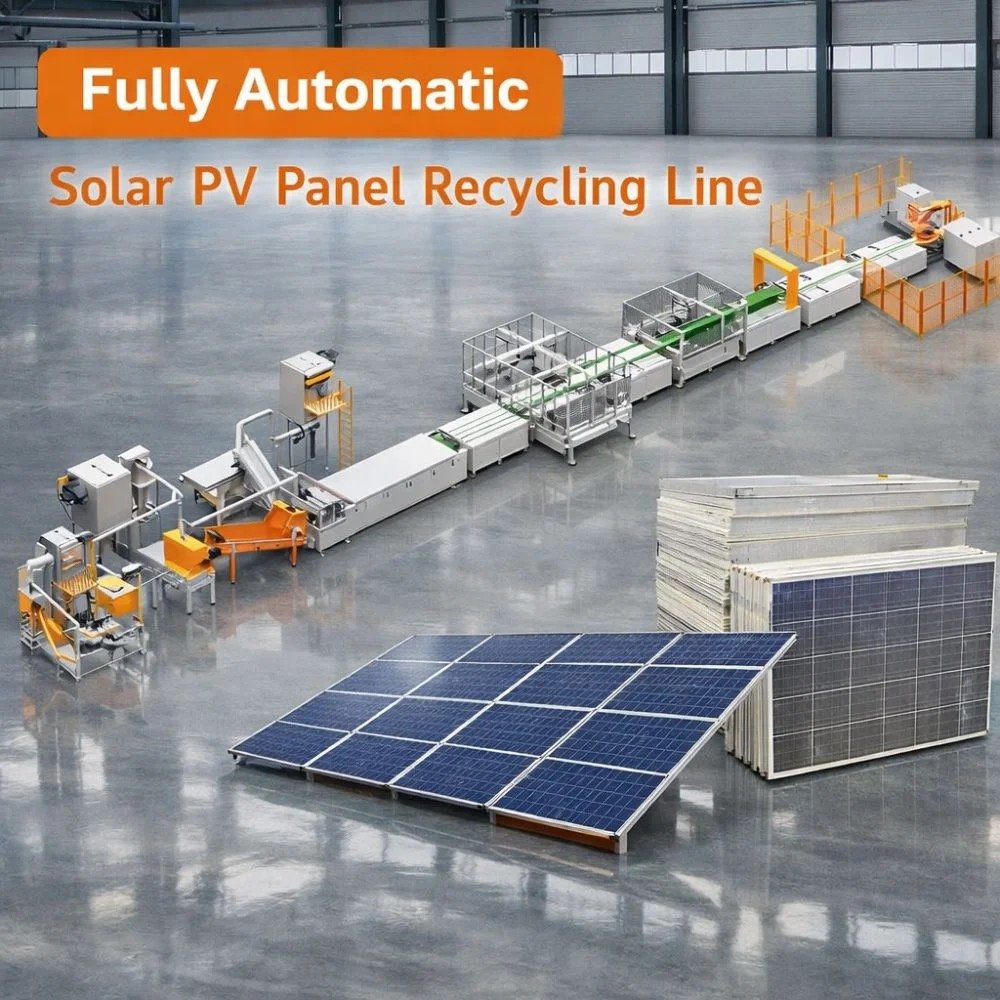
Solar Panel Recycling Line for Clean PV Module Recovery
A Solar Panel Recycling Line is becoming an important solution for companies that handle end-of-life, damaged, or defective photovoltaic modules. As solar energy continues to grow around the world, more PV panels will eventually reach the end of their working life. Without proper recycling, large volumes of glass, aluminum, copper, silicon, plastics, and junction boxes may be wasted instead of reused.
Solar panels are designed for long-term outdoor use, but they do not last forever. Many modules are retired after long service life, damaged during transportation, replaced during solar farm upgrades, or removed from projects because of defects or efficiency loss. These panels still contain valuable recoverable materials. A complete recycling system helps turn this waste stream into reusable resources.
The WOLFU solar PV panel recycling plant is designed for physical recycling of waste solar panels. Through pre-processing, dismantling, crushing, grinding, airflow separation, electrostatic separation, and dust collection, the line recovers materials such as junction boxes, aluminum frames, glass, metals, silicon powder, and plastics.
Why Solar Panel Recycling Is Becoming More Important
Solar power is one of the fastest-growing renewable energy sectors. This growth also creates a future recycling challenge. According to the IEA-PVPS and IRENA end-of-life PV panel report, global PV panel waste could reach tens of millions of tonnes by 2050. The same report also notes that recovered materials from end-of-life PV panels could represent significant economic value if recycling systems are properly developed.
In the United States, the EPA notes that solar panel recycling commonly includes steps such as frame and junction box removal, crushing, shredding, and milling. These processes can recover materials including glass, aluminum, and copper. This makes recycling a practical way to reduce landfill pressure and recover materials for reuse in manufacturing and industrial supply chains.
For recycling companies, waste management businesses, solar farm operators, and PV manufacturers, a solar panel recycling system is not only an environmental investment. It can also support a new business model based on material recovery, resource reuse, and circular economy development.
For technical background on PV recycling and end-of-life management, you can review this non-commercial resource from the U.S. Environmental Protection Agency: EPA Solar Panel Recycling.
What Materials Can Be Recovered from Waste Solar Panels?
A typical crystalline silicon solar panel contains multiple layers and material types. These materials are bonded together for durability, weather resistance, and long-term electrical performance. The recycling challenge is to separate them efficiently.
A professional solar panel recycling line can recover several useful material streams:
- Junction boxes: Removed during pre-processing and collected separately.
- Aluminum frames: Dismantled from the panel edges and prepared for metal recycling.
- Glass: Separated from the module structure and recovered as a major material stream.
- Copper and other metals: Separated after crushing, grinding, and physical separation.
- Silicon powder: Recovered from the inner PV cell material after further processing.
- Plastics and polymer materials: Separated from metal and mineral materials during the recycling process.
Because solar panels contain a high percentage of glass and aluminum by weight, recovering these materials can make a strong contribution to total recycling volume. More advanced processing can also improve recovery of metals and silicon-based material.
How a Solar Panel Recycling Line Works
Pre-Processing and Dismantling
The first stage is pre-processing. This step prepares the waste PV panel for deeper material separation. The junction box is removed, the aluminum frame is dismantled, rubber edge materials are removed, and the glass layer is separated from the internal panel structure.
This stage is important because direct crushing without proper pre-processing may reduce recovery quality. Separating large and valuable components first helps improve the efficiency of the following crushing and separation stages.
Crushing and Size Reduction
After pre-processing, the remaining panel material is transported into the crushing system. In the WOLFU process, a double-shaft shredder first reduces the material into smaller strips. Then a blade cutting crusher further reduces the size into smaller pieces. After that, a grinding machine processes the material into finer particles.
Size reduction is necessary because metals, silicon, plastics, and other materials must be separated from each other. Smaller and more consistent particle size supports better airflow separation and electrostatic separation results.
Airflow Vibration Separation
Airflow vibration separation uses differences in material density and movement behavior to separate useful material streams. This step helps separate copper and other heavier materials from lighter non-metal materials.
For solar panel recycling, this stage is useful because the crushed material mixture may include glass particles, metal particles, silicon powder, and polymer materials. A controlled airflow and vibration process improves separation accuracy.
Electrostatic Separation
Electrostatic separation is used to further separate metals from non-metals. After crushing and grinding, some metal particles may still remain mixed with non-metal materials. Electrostatic separation helps improve metal recovery and supports a cleaner final output.
This step is especially important for recyclers that want to improve the value of recovered material streams. Cleaner output can make downstream handling and resale easier.
Dust Collection and Environmental Control
Recycling solar panels can generate dust during crushing and grinding. A dust collection system helps capture dust and improve the working environment. It also supports cleaner plant operation and better environmental management.
WOLFU integrates dust collection into the recycling process to reduce dust pollution and support safer, cleaner operation.
Technical Parameters of the WOLFU Solar PV Panel Recycling Plant
The WOLFU solar PV panel recycling plant is designed for industrial recycling businesses and waste treatment projects. The standard model listed on the solution page is HN-SP-1500.
- Model: HN-SP-1500
- Motor Power: 315 KW
- Capacity: 1500–2000 kg/h
- Dimension: 36 × 8 × 5 m
- Weight: 11 tons
- Raw Materials: waste solar PV panels, end-of-life modules, damaged solar panels, defective production panels
- Final Products: junction boxes, aluminum frames, glass, metal, silicon powder, and plastic
These parameters make the line suitable for companies that need continuous processing capacity rather than small manual dismantling. For exact project design, buyers should confirm module type, input volume, workshop layout, local electrical conditions, labor arrangement, and final material requirements.
Main Advantages of the WOLFU Solar Panel Recycling Line
Complete Physical Recycling Process
The WOLFU system uses a complete physical recycling workflow instead of relying on only one crushing step. The process includes dismantling, crushing, grinding, airflow vibration separation, electrostatic separation, and dust collection. This helps improve total recovery performance and supports a more organized recycling operation.
Multi-Material Recovery
Waste solar panels contain several reusable materials. The line can recover junction boxes, aluminum frames, glass, metals, silicon powder, and plastics. This helps recycling companies create value from multiple output streams instead of treating panels as simple waste.
Suitable for Different Waste PV Sources
The line can process end-of-life solar panels, damaged solar panels, defective PV modules from production, and waste panels from installation or dismantling projects. This makes it useful for recycling plants, solar project service providers, renewable energy waste treatment centers, and industrial recyclers.
Cleaner Operation with Dust Collection
Dust control matters in industrial recycling. The integrated dust collection system helps reduce dust generated during crushing and grinding. This supports a cleaner working environment and improves the professional level of the recycling plant.
Business-Oriented Plant Design
A recycling line must fit the real production site. Capacity, plant layout, power supply, feeding method, output collection, and maintenance access all affect daily operation. WOLFU can provide engineering support to help customers plan a practical recycling system according to their project needs.
Who Needs a Solar Panel Recycling Line?
A solar panel recycling line is suitable for companies and projects that regularly handle waste or retired photovoltaic modules. As more solar farms reach later operating stages, the demand for PV module recycling will continue to grow.
- Solar panel recycling plants: For companies focused on recovering materials from waste PV modules.
- Renewable energy waste treatment centers: For facilities handling different types of clean energy waste.
- PV manufacturers: For recycling defective panels, production scrap, and rejected modules.
- Solar farm dismantling projects: For large-scale module replacement and end-of-life management.
- E-waste and industrial recycling businesses: For companies expanding into photovoltaic waste recovery.
For these users, the key is not only buying equipment. A successful recycling project also requires input material planning, process design, plant layout, labor arrangement, environmental control, and downstream material sales channels.
How to Choose the Right PV Module Recycling Equipment
Confirm the Type of Solar Panels
Different solar panels may have different structures, dimensions, and material compositions. Before choosing equipment, buyers should confirm whether the input panels are crystalline silicon modules, damaged panels, end-of-life modules, or defective production panels.
Estimate Daily Processing Volume
Processing capacity should match the actual supply of waste panels. If the line is too small, it may limit project growth. If it is too large, it may increase investment cost and reduce utilization. The WOLFU HN-SP-1500 line has a listed capacity of 1500–2000 kg/h, which is suitable for industrial-scale operation.
Review Plant Space and Layout
A complete recycling line requires enough space for feeding, dismantling, crushing, grinding, separation, dust collection, final material collection, and maintenance access. The listed dimension of the WOLFU model is 36 × 8 × 5 m, so buyers should check workshop space before final design.
Check Power and Installation Conditions
The listed motor power is 315 KW. Before purchase, the buyer should confirm local power supply, installation foundation, cable routing, safety protection, and operating environment. These details can affect installation cost and production stability.
Evaluate After-Sales Support
Recycling equipment needs installation guidance, operator training, spare parts support, and troubleshooting service. WOLFU provides customized solutions and engineering support for industrial recycling projects, helping customers build a more practical recycling workflow.
Recommended WOLFU Recycling and Industrial Equipment Solutions
For companies planning to enter photovoltaic recycling, the WOLFU Solar Panel Recycling Line is designed for end-of-life, damaged, and waste solar panels. It helps recover aluminum frames, glass, junction boxes, metals, silicon powder, and plastics through a complete physical recycling process.
If your business also handles other recycling streams, you can review the WOLFU Lithium Battery Recycling Line and the WOLFU Waste Copper Recycling Production Line. These related solutions can support companies that want to build a broader recycling equipment portfolio.
For supporting metallurgical processing equipment, you may also visit the WOLFU Vacuum Induction Melting Furnace. To read more WOLFU technical content, visit the blog article: Medium Frequency Induction Melting Furnace in Real Metal Melting Production.
Why Choose WOLFU?
WOLFU is a manufacturer of recycling production lines and metallurgical equipment. The company provides complete industrial solutions including battery recycling lines, solar panel recycling systems, metal melting furnaces, aluminum casting systems, and supporting equipment.
For a solar recycling project, equipment selection should be based on more than capacity. Buyers need to consider material recovery goals, plant space, automation level, dust control, maintenance access, spare parts supply, and engineering support. WOLFU can help customers evaluate these requirements and develop a more suitable project solution.
The WOLFU solar panel recycling line is designed for practical industrial use. It supports high-volume processing, multi-material recovery, cleaner operation, and complete recycling workflow planning. For companies handling large quantities of waste PV panels, it provides a direct path from end-of-life modules to reusable material streams.
Conclusion
A Solar Panel Recycling Line is a practical investment for companies preparing for the growing volume of end-of-life photovoltaic modules. By recovering glass, aluminum, copper, silicon powder, plastics, and junction boxes, recyclers can reduce waste, improve resource reuse, and create value from retired solar panels.
As solar energy continues to expand, the need for professional PV module recycling equipment will become stronger. A complete system with pre-processing, crushing, grinding, airflow separation, electrostatic separation, and dust collection can help recycling businesses build a cleaner and more efficient operation.
Request a Custom Solar Panel Recycling Solution
Looking for a complete solar panel recycling line for end-of-life PV modules? Contact WOLFU to discuss your input material, plant capacity, workshop layout, and material recovery goals.View the WOLFU Solar Panel Recycling Line
FAQ
What materials can a solar panel recycling line recover?
A solar panel recycling line can recover junction boxes, aluminum frames, glass, metals, silicon powder, and plastics from waste or end-of-life photovoltaic modules.
What types of solar panels can the WOLFU line process?
The WOLFU line is designed for waste solar PV panels, end-of-life photovoltaic modules, damaged solar panels, and defective PV panels from production or installation.
How does the line separate metals from non-metals?
After pre-processing, crushing, and grinding, the system uses airflow vibration separation and electrostatic separation to separate copper and other metals from non-metal materials.