
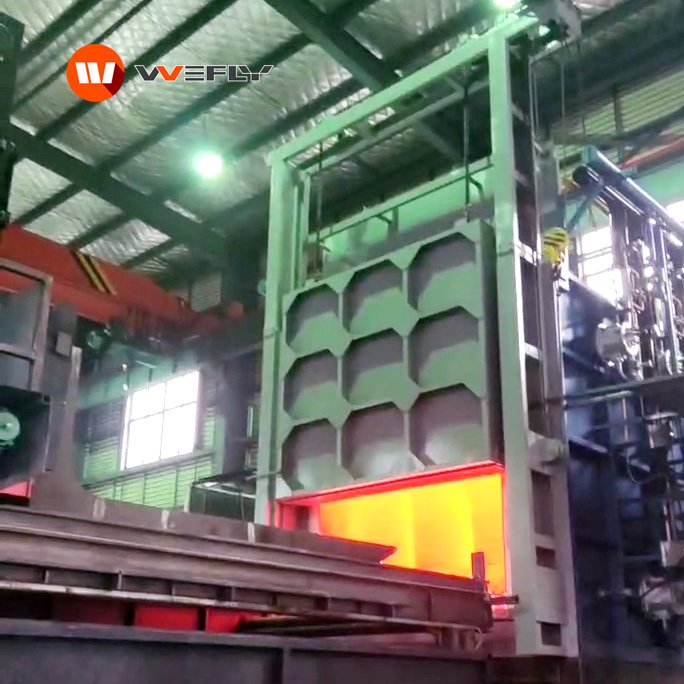
Trolley Annealing Furnace for Stable Industrial Heat Treatment
A Trolley Annealing Furnace is an important piece of equipment for factories that need stable heat treatment for large, heavy, or batch-type metal workpieces. In many industrial production lines, metal parts are not ready for final use immediately after casting, forging, welding, or machining. They often need controlled heating and cooling to reduce internal stress, improve machinability, and make the material more stable.
For manufacturers working with steel, stainless steel, high manganese steel, rolls, steel balls, and other heavy metal components, the right furnace can make a major difference in production quality. A trolley-type design is especially practical because the workpieces can be loaded outside the furnace and moved into the heating chamber on a trolley. This makes the operation easier, safer, and more suitable for heavy-duty industrial use.
This article explains how a trolley annealing furnace works, where it is commonly used, what benefits it offers, and how to choose a suitable furnace for your factory. It also introduces the WOLFU trolley annealing furnace as a practical solution for industrial heat treatment applications.
What Is a Trolley Annealing Furnace?
A trolley annealing furnace is an industrial heat treatment furnace with a movable car-bottom or trolley structure. The trolley carries metal workpieces into the furnace chamber for heating and can be moved out after the heat treatment cycle is complete. This structure is different from small box furnaces because it is designed for larger loads and heavier workpieces.
The furnace is typically used for annealing, tempering, and normalizing. These processes help improve the physical properties of metal materials. Annealing can soften metal, reduce hardness, improve ductility, and relieve internal stress. Tempering can improve toughness after hardening. Normalizing can help refine the grain structure and improve overall material uniformity.
In simple terms, a trolley annealing furnace helps factories control how metal changes under heat. The process includes heating the workpiece to a set temperature, holding it for a certain period, and then cooling it according to the required process. Good temperature control is essential because uneven heating can lead to inconsistent hardness, deformation, or poor performance.
Why Heat Treatment Is Important for Industrial Metal Parts
Metal parts often go through intense manufacturing processes before they become finished products. Casting, forging, welding, and machining can all create internal stress inside the material. These stresses may not be visible from the outside, but they can cause cracking, warping, poor machining results, or service failure later.
Annealing is one of the most common ways to solve these problems. By using controlled heat, the material becomes more stable and easier to process. For example, a steel part that is too hard may be difficult to machine. After annealing, the material may become softer and easier to cut, drill, or shape.
Heat treatment also helps manufacturers improve production consistency. When different batches of parts have similar hardness and internal structure, the factory can reduce waste, improve inspection results, and deliver more reliable products to customers.
For technical background on heat treatment principles, manufacturers can refer to this non-commercial resource from the National Institute of Standards and Technology: NIST Heat Treatment and Properties of Iron and Steel.
Main Benefits of a Trolley Type Furnace
Easy Loading for Heavy Workpieces
One of the biggest advantages of a trolley-type furnace is easier loading and unloading. Large metal parts are difficult to move inside a fixed furnace chamber. With a trolley system, workers can place the parts on the trolley outside the furnace, check the loading position, and then move the trolley into the chamber.
This design is useful for heavy workpieces such as steel rolls, steel balls, large castings, high manganese steel parts, stainless steel components, and other industrial parts. It can also improve workshop efficiency because loading preparation can be done in a more open and accessible area.
Stable Heating for Better Process Control
Stable heating is essential in annealing and other heat treatment processes. If the furnace temperature is not stable, the workpiece may not reach the required treatment condition. This can lead to uneven hardness, poor stress relief, or inconsistent product quality.
A well-designed trolley annealing furnace uses a controlled heating system and proper chamber structure to help maintain a more uniform temperature environment. This supports better process repeatability, especially for batch production.
Energy-Saving Insulation
Industrial furnaces consume significant energy, so insulation quality matters. Good insulation reduces heat loss, helps maintain the target temperature, and supports lower operating costs. It also helps the furnace work more steadily during long heating cycles.
The WOLFU trolley annealing furnace uses ultra-light refractory fiber and insulation materials. This design helps reduce energy consumption while supporting stable thermal performance.
Automated Operation with PLC Control
Modern factories need repeatable and manageable processes. PLC control allows operators to manage the furnace operation more precisely than manual control. It helps control heating, holding, and other process stages according to production requirements.
For factories that process many batches, automation can reduce human error and improve consistency. It also makes the furnace easier to operate for trained workers.
Custom Capacity for Different Production Lines
Not every factory needs the same furnace size. Some production lines process smaller batches, while others need large-capacity equipment for heavy workpieces. A customized furnace can better match the real size, weight, and production rhythm of the factory.
WOLFU can provide trolley annealing furnace solutions with different capacities, including 5 ton, 10 ton, 20 ton, 50 ton, and other customized options. This helps buyers choose equipment based on actual production needs instead of using a standard size that may not fit the project.
Typical Applications of a Trolley Annealing Furnace
A trolley annealing furnace is widely used in industries that process large or heavy metal workpieces. It is suitable for annealing, tempering, and normalizing applications in metallurgy, machinery manufacturing, automotive parts production, aerospace component processing, and steel production.
- Metallurgy: Heat treatment for steel, alloy parts, and heavy industrial components.
- Machinery manufacturing: Stress relief and softening treatment for large mechanical parts.
- Automotive industry: Heat treatment for shafts, gears, structural components, and wear-resistant parts.
- Aerospace industry: Controlled thermal processing for components that need stable material properties.
- Steel processing: Annealing and tempering for rolls, steel balls, manganese steel, and stainless steel parts.
These applications require reliable temperature control and practical handling. The trolley structure makes the furnace suitable for workpieces that are too large or too heavy for small chamber furnaces.
How to Choose the Right Trolley Annealing Furnace
Confirm Workpiece Size and Weight
Before choosing a furnace, manufacturers should measure the largest workpiece size and calculate the maximum batch weight. The furnace chamber and trolley must be designed to safely support the load. If the workpiece is long, wide, or unusually shaped, custom chamber dimensions may be required.
Define the Heat Treatment Process
Different materials need different heat treatment curves. The required temperature, holding time, and cooling method depend on the material type and final performance target. A furnace used for annealing may need different settings than one used mainly for tempering or normalizing.
Check Voltage and Power Conditions
Industrial heat treatment equipment requires a stable power supply. The WOLFU trolley annealing furnace can support voltage options such as 380V or 660V, depending on the project. Before purchasing, buyers should confirm the available factory power conditions and installation requirements.
Review Furnace Material and Heating Structure
Furnace chamber materials, heating elements, and insulation structure all affect performance and service life. WOLFU uses a 2520 stainless steel chamber with 6 mm thickness, along with U-shaped high-resistance alloy heating strips arranged around the furnace. This design supports durability and stable heating performance.
Consider Supplier Service and Technical Support
A furnace is not a simple plug-in machine. It requires correct installation, process setup, operator training, maintenance planning, and spare parts support. Choosing a supplier with technical service can help reduce risk during installation and long-term use.
WOLFU provides technical consultation, installation support, remote video troubleshooting, spare parts supply, maintenance service, and operator training. This is useful for factories that need a complete industrial furnace solution rather than only a machine.
Recommended WOLFU Furnace Solutions
For manufacturers that need reliable heat treatment for large metal workpieces, theWOLFU Trolley Annealing Furnace is designed for annealing, tempering, and normalizing processes. It is suitable for high manganese steel, stainless steel, 45 steel, rolls, steel balls, and other industrial parts.
If your production also involves metal melting or metallurgical processing, you may also review the WOLFU Vacuum Induction Melting Furnace. This can be useful for factories that need multiple furnace systems for different production stages.
For more related equipment, visit the Industrial Annealing Furnace category page. You can also read the related WOLFU blog: Annealing Furnace Solutions for Precision Metal Heat Treatment.
Why Choose WOLFU?
WOLFU focuses on industrial equipment for recycling, metallurgy, melting, casting, and heat treatment applications. The company provides equipment solutions for customers who need practical machinery, technical support, and custom project planning.
For heat treatment buyers, customization is often important. A standard furnace may not fit the production line, workpiece size, voltage condition, or process requirement. WOLFU can help evaluate these factors and provide a more suitable furnace design based on actual factory needs.
The WOLFU trolley annealing furnace combines heavy-duty structure, energy-saving insulation, automated operation, and custom capacity. It is designed for factories that need practical, stable, and scalable heat treatment equipment.
Conclusion
A Trolley Annealing Furnace is a reliable solution for factories that need stable heat treatment for large and heavy metal workpieces. It supports easier loading, better process control, energy-saving operation, and customized production capacity. For manufacturers working with steel rolls, steel balls, manganese steel parts, stainless steel components, and other industrial workpieces, the right furnace can improve product quality and reduce production problems.
If your factory needs a custom industrial heat treatment solution, WOLFU can help you evaluate furnace capacity, chamber size, voltage requirements, and process conditions.
Request a Custom Furnace Solution
Looking for a reliable trolley annealing furnace for your production line? Contact WOLFU to discuss your workpiece size, material type, batch weight, and heat treatment requirements.View the WOLFU Trolley Annealing Furnace
FAQ
What is a trolley annealing furnace used for?
A trolley annealing furnace is used for heat treatment of large or heavy metal workpieces. It can support annealing, tempering, and normalizing processes for steel, stainless steel, high manganese steel, rolls, steel balls, and other industrial parts.
Why choose a trolley-type furnace instead of a box furnace?
A trolley-type furnace is better for large and heavy workpieces because the parts can be loaded outside the furnace chamber and moved in on a trolley. This makes loading and unloading easier and more suitable for industrial batch production.
Can WOLFU customize the furnace capacity?
Yes. WOLFU can customize furnace capacity according to project needs, including 5 ton, 10 ton, 20 ton, 50 ton, and other customized designs.