
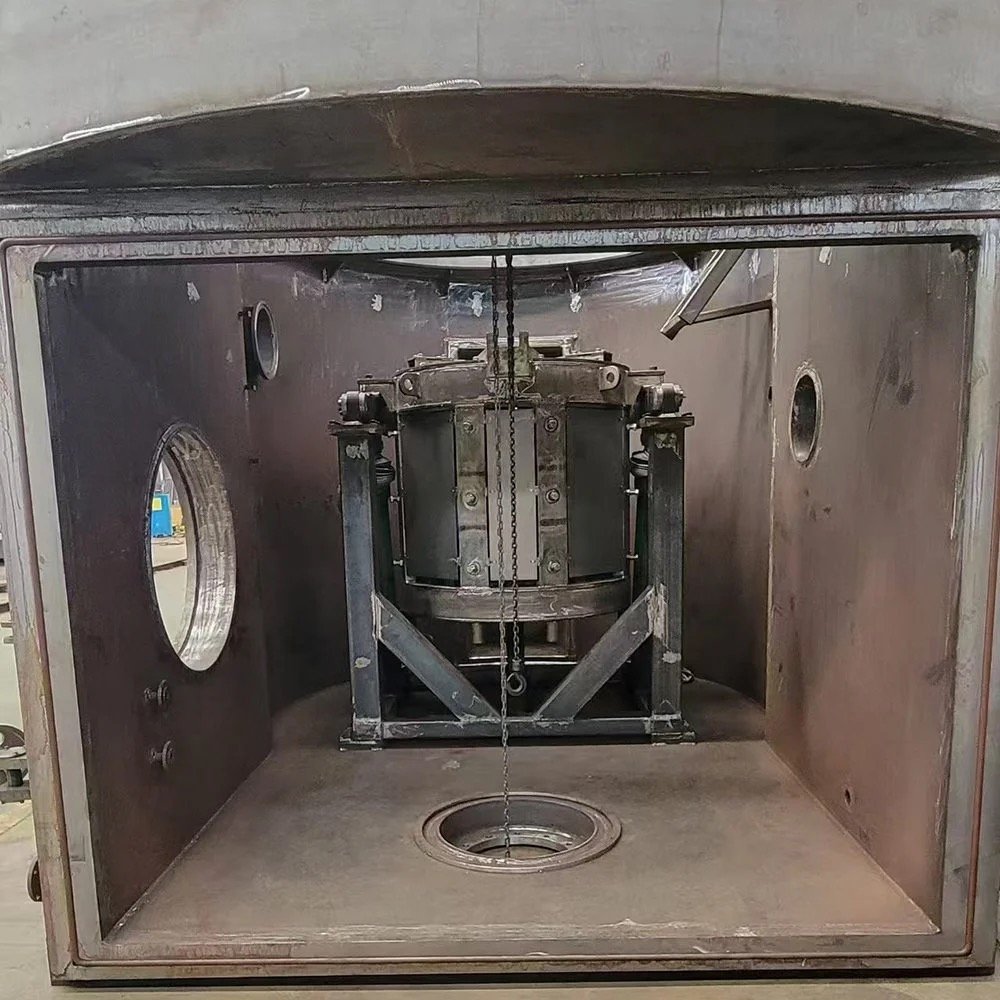
Why a Vacuum Induction Melting Furnace Is a Smart Choice for Controlled Metal Smelting
A vacuum induction melting furnace is a practical solution for industrial users that need cleaner melting conditions, stable thermal performance, and more controlled smelting of ores and metal materials. WOLFU presents this furnace as a system for copper ore, iron ore, antimony ore, lead ore, and other metal material smelting, with vacuum induction melting technology, PLC control, and working temperature up to 1800°C. The product page also states that the furnace is suitable for ore smelting, metal recovery, downstream casting, refining, and alloy preparation projects.
In many metallurgical applications, heating power alone is not enough. Plants also need stable operation, accurate temperature control, and reduced outside contamination during smelting. WOLFU specifically says that the melting chamber operates under vacuum conditions to help reduce outside contamination and support more controlled smelting of ore materials and metal feedstock. ASM International’s induction melting reference also notes that induction melting has found wide acceptance in metal-producing and metal-processing industries, reinforcing the value of induction-based systems in controlled industrial melting.
What Is a Vacuum Induction Melting Furnace?
A vacuum induction melting furnace is an induction furnace that heats metal or ore-bearing material through electromagnetic induction while the melting process takes place in a controlled vacuum environment. On the WOLFU product page, the furnace is described as using an induction copper coil as the heating element and electromagnetic induction melting smelting as the working theory. The system is positioned as a practical choice for industrial ore smelting and controlled metal melting.
The vacuum environment matters because it helps reduce unwanted exposure to outside air during high-temperature processing. WOLFU states that this supports cleaner smelting conditions and more stable process performance. In the FAQ section, the same product page also describes one advantage of vacuum induction melting as reduced contamination from air and improved melting cleanliness for higher-purity molten metal in demanding applications.
Why Vacuum Induction Melting Matters in Metallurgical Processing
Cleaner Smelting Conditions
One of the biggest benefits of a vacuum induction melting furnace is cleaner smelting. WOLFU explains that under vacuum conditions, the melting chamber helps reduce outside contamination and supports more controlled smelting of ore materials and metal feedstock. This is useful for projects where melting cleanliness affects downstream refining, alloy preparation, or metal recovery.
That benefit also fits the broader role of induction melting in industry. ASM International notes that induction melting is widely used in metal production and processing, which supports the relevance of induction-based systems when manufacturers need stable and controllable heating. When vacuum conditions are added to that process, the result is a more protected smelting environment for demanding metallurgical work.
High-Temperature Performance
Industrial ore and metal smelting often requires high thermal capability. WOLFU lists a working temperature of 1800°C, which makes this furnace suitable for high-temperature smelting and melting operations. The page also states that the furnace can be used for various mineral raw materials and metal materials, including copper ore, iron ore, antimony ore, lead ore, and selected recycled or alloy feedstock.
High-temperature stability matters because many industrial projects depend on steady melting conditions rather than short bursts of heat. WOLFU also highlights stable water cooling, flexible capacity configuration, and accurate PLC-based process management, all of which support long-term temperature control.
Better Process Control
Another important advantage is process control. WOLFU says the furnace is equipped with a PLC control system for easier operation and more accurate process management. In industrial smelting, process control can directly affect temperature consistency, batch stability, and the quality of molten metal for the next stage of production.
For buyers, this is an important practical point. A furnace that can be adjusted and monitored more accurately is often easier to integrate into production planning. WOLFU also says the system can be customized according to raw material type, smelting capacity, frequency range, power demand, and workshop layout, which makes it more flexible for different metallurgical projects.
Why the WOLFU Vacuum Induction Melting Furnace Is Practical
The WOLFU Vacuum Induction Melting Furnace is designed for industrial smelting projects that need vacuum protection and induction-based heating. According to the product page, the furnace supports 100 kg/h capacity, 1–500 kg melting capacity, 50–2000 KW power supply, 380 V voltage, and a water cooling system. The page also notes that the chamber size can be customized to match project needs.
WOLFU presents the system as a solution not only for ore smelting but also for metal recovery, alloy preparation, refining, and downstream casting. That gives the furnace broader value for buyers who are planning full metallurgical workflows instead of just one isolated melting step. The product page further notes that matching vacuum, cooling, and control systems can be configured to form a more complete smelting solution.
Another practical advantage is support. WOLFU says it provides customized furnace configuration, process-oriented solution support, PLC control support, cooling and vacuum matching, pre-shipment inspection, and after-sales service assistance. For B2B buyers, these services are important because they reduce the risk of selecting the wrong furnace layout or incomplete project configuration.
Main Applications of This Furnace
Copper Ore Smelting
WOLFU directly lists copper ore among the main applications of this furnace. In these projects, the goal is often to achieve stable high-temperature smelting under more controlled conditions so the resulting molten metal can move into recovery, casting, or refining steps. The page positions the furnace specifically for copper-related metallurgical work.
Iron Ore and Metal Material Smelting
The product page also lists iron ore and other metal materials among suitable applications. This makes the furnace useful for industrial metallurgical users that process different feed materials and need a controlled vacuum smelting environment rather than an open, less protected furnace setup.
Antimony Ore and Lead Ore Processing
WOLFU additionally highlights antimony ore and lead ore smelting. That matters because these materials can require controlled handling and stable process conditions. WOLFU describes the furnace as suitable for ore processing and metal recovery projects where improved smelting quality and process stability are important.
Alloy and Recycled Metal Feedstock
Beyond ores, WOLFU states that the furnace can also process selected alloy or recycled metal feedstock. This makes the machine useful for projects that combine primary raw materials with metal recovery or secondary processing. In the FAQ, the page also refers to applications involving titanium alloy, nickel base superalloy, and other special metal or high-purity alloy melting, which suggests that the vacuum-induction concept is also relevant to higher-grade alloy work.
What Buyers Should Check Before Choosing a Vacuum Induction Melting Furnace
1. Raw Material Type
The first thing to check is what material you plan to process. WOLFU lists copper ore, iron ore, antimony ore, lead ore, and selected alloy or recycled metal materials. Buyers should make sure the furnace configuration matches the thermal behavior and process requirements of the real feedstock.
2. Temperature and Power Range
WOLFU lists 1800°C working temperature and 50–2000 KW power supply. Buyers should compare these figures with the required melting temperature, expected production speed, and project scale. For higher-temperature or larger-batch projects, power range and furnace design become especially important.
3. Capacity Requirements
The product page lists both 100 kg/h capacity and 1–500 kg melting capacity, while the FAQ mentions standard capacity options from 5 kg to 1500 kg depending on the model. Buyers should therefore confirm the exact batch or hourly output they need instead of relying only on one headline number.
4. Chamber Size and Customization
WOLFU says the chamber size can be customized according to material size, batch volume, and process requirements. This is important because the right chamber layout affects charging, thermal distribution, and compatibility with the rest of the plant.
5. Cooling, Vacuum, and Control Matching
The furnace is designed to work with vacuum, water cooling, and PLC control. WOLFU also says it can configure matching vacuum and cooling systems according to project size and process conditions. Buyers should evaluate these support systems together rather than treating the furnace body as a stand-alone machine.
Why Supporting Equipment Matters
A vacuum induction melting furnace performs best when it works as part of a complete system. On the same WOLFU site, related equipment includes the Closed Water Cooling Tower, the Vacuum Controlled Atmosphere Quenching Furnace, and other vacuum furnace products. WOLFU also states on the product page that the furnace can be integrated with supporting vacuum, cooling, and control systems to form a more complete smelting solution.
This matters because furnace performance depends on more than the heating chamber itself. Vacuum stability, water cooling, control precision, and layout compatibility all influence actual production results. WOLFU’s support section clearly reflects this system-based approach, which is usually more valuable for industrial buyers than purchasing a furnace without engineering matching.
Final Thoughts
A vacuum induction melting furnace is a smart investment for metallurgical projects that need controlled smelting, cleaner melting conditions, and high-temperature performance. WOLFU’s product page shows that this furnace is built for copper ore, iron ore, antimony ore, lead ore, and metal material smelting, with vacuum induction melting technology, PLC control, 1800°C working temperature, 1–500 kg melting capacity, and support for complete vacuum and cooling system matching.
If your business needs a reliable solution for ore smelting, metal recovery, alloy preparation, or controlled industrial melting, the WOLFU Vacuum Induction Melting Furnace is a strong option to consider. It is designed for cleaner smelting, flexible configuration, and stable industrial operation. Explore the product here: Vacuum Induction Melting Furnace by WOLFU.
Recommended Internal Links
- Vacuum Induction Melting Furnace
- Vacuum Controlled Atmosphere Quenching Furnace
- Closed Water Cooling Tower
- WOLFU Blog