
Why a Vacuum Controlled Atmosphere Quenching Furnace Is Essential for Precision Heat Treatment
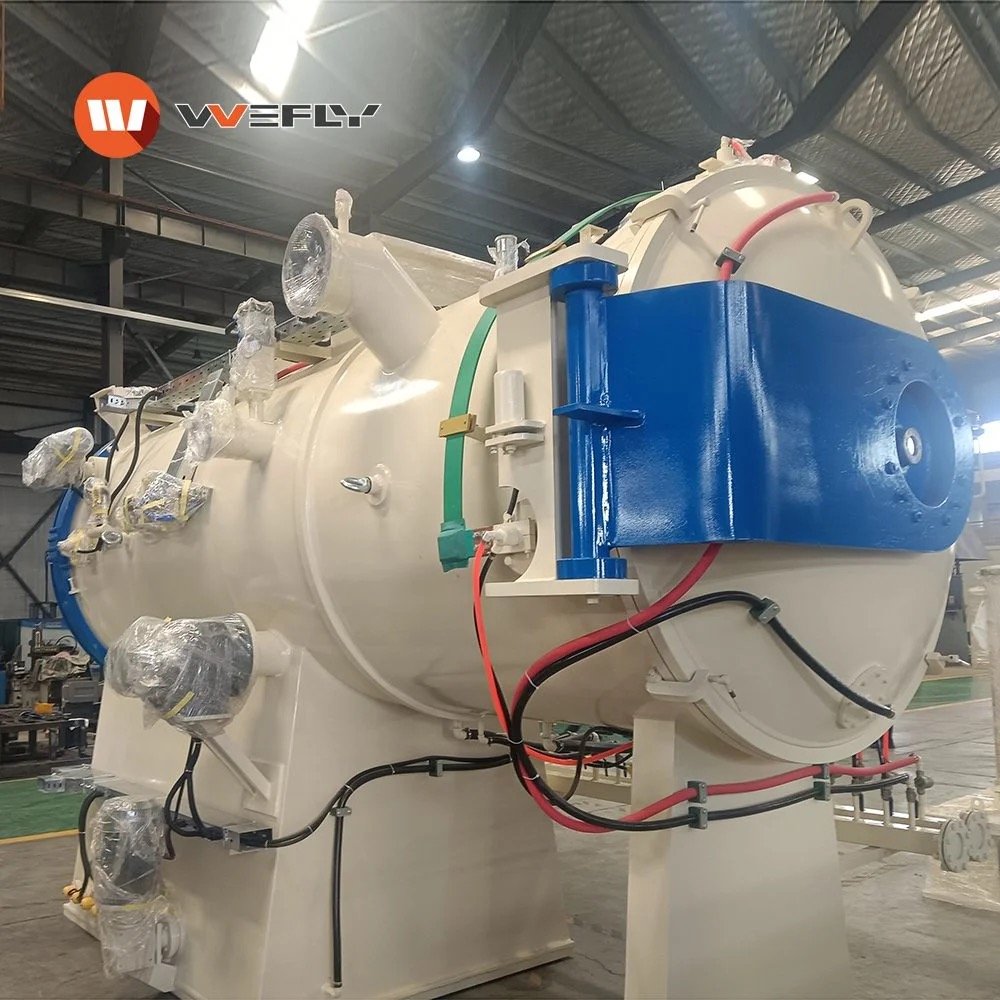
A vacuum controlled atmosphere quenching furnace is one of the most practical choices for precision heat treatment when manufacturers need accurate temperature control, stable vacuum performance, and uniform cooling. WOLFU presents this furnace as a solution for quenching, annealing, tempering, brazing, and related thermal processes, especially in demanding sectors such as aerospace, aviation, automotive, electronics, and machinery manufacturing. The product page emphasizes accurate temperature control, long service life, and customizable chamber configurations for industrial use.
In modern heat treatment, heating alone is not enough. The real value comes from how well the furnace controls atmosphere, vacuum, pressure, and cooling behavior through the full cycle. WOLFU states that this furnace combines a graphite heating chamber, vacuum system, cooling system, and control system, while ASM International notes that gas quenching in vacuum furnaces is commonly performed at elevated pressures and typically uses gases such as nitrogen and argon. Together, these features make this kind of furnace a strong solution for high-end heat treatment projects that need stable and repeatable results.
What Is a Vacuum Controlled Atmosphere Quenching Furnace?
A vacuum controlled atmosphere quenching furnace is a heat treatment furnace that performs heating and quenching under controlled vacuum and gas conditions. On the WOLFU page, the furnace is described as a single-chamber horizontal vacuum controlled atmosphere quenching furnace designed for precision heat treatment projects that require high vacuum performance and uniform gas cooling. The listed furnace type is a resistance furnace with graphite heater elements and either PID automatic control or PLC control.
This kind of equipment is important because many precision parts require a cleaner and more controlled thermal environment than open-air heat treatment can provide. WOLFU lists an ultimate vacuum level of 4×10⁻¹ Pa, a working vacuum level of 4 Pa, and a pressure rise rate of ≤3 Pa/h, all of which indicate that vacuum stability is a central part of the system design. ASM’s gas-quenching references also explain that vacuum gas quenching is commonly associated with high-pressure gas cooling, reinforcing the role of controlled atmosphere and pressure in this type of furnace.
Why Vacuum Gas Quenching Matters in Precision Heat Treatment
Cleaner and More Controlled Heat Treatment
One of the main reasons manufacturers choose a vacuum controlled atmosphere quenching furnace is process control. WOLFU states that the furnace is built for accurate temperature control, stable vacuum performance, and uniform gas cooling, which are key requirements in precision heat treatment. The product page lists a working temperature in vacuum of 500–1250°C and a maximum furnace temperature of 1320°C, allowing the system to support a wide range of thermal processes.
This matters because precision heat treatment depends on repeatability. If the furnace temperature, atmosphere, or cooling behavior varies too much, part quality can also vary. WOLFU further states that the furnace supports programmable auto single-zone temperature control and can run in full-automatic or manual mode, giving operators more flexibility in controlling process stability.
Uniform Gas Cooling
Cooling performance is one of the most important functions of this type of furnace. WOLFU explains that during gas quenching, high-purity nitrogen or argon is introduced and distributed through multiple graphite spray nozzles inside the heating chamber. The page also notes that the system uses a high-pressure blower, copper heat exchanger, and duct deflector structure to achieve uniform cooling of the workpiece.
That fits the broader technical logic described by ASM International. ASM notes that gas quenching is typically performed at elevated pressures and is often called high-pressure gas quenching, with common gases including nitrogenand argon. In other words, WOLFU’s furnace design follows established vacuum gas-quenching practice by combining controlled atmosphere with pressurized cooling gas.
Faster Cooling for High-End Applications
WOLFU gives a concrete cooling-performance figure: under standard conditions, the system can cool the load from 1200°C to 300°C in about 5 minutes, depending on setup and cooling pressure. The product page also lists max inner pressure ≤6 bar, cooling fan power 45 kW, and a cooling gas purity requirement above 99.99%. These parameters suggest the furnace is built not just for heating, but for aggressive and controlled gas quenching in demanding applications.
This is especially relevant in industries where cooling rate strongly affects final part properties. ASM’s gas-quenching references emphasize that gas flow, pressure, and heat removal are central to cooling performance in vacuum furnaces. That makes WOLFU’s focus on gas type, blower structure, pressure capability, and fast cooling speed especially important for buyers comparing systems.
Why the WOLFU Vacuum Controlled Atmosphere Quenching Furnace Is Practical
The WOLFU Vacuum Controlled Atmosphere Quenching Furnace is designed for industrial users that need precision heat treatment performance along with flexible customization. According to the product page, the furnace has a standard chamber size of 450×300×300 mm, a max loading capacity of 80 kg including tooling, and a single-chamber horizontal structure. WOLFU also says other chamber sizes can be customized according to project requirements.
The product page lists several model sizes, including BR-QCL-334, BR-QCL-446, BR-QCL-557, and BR-QCL-669, with capacities ranging from 80 kg to 500 kg and temperature uniformity listed as ±5°C. That gives buyers a clearer picture of how the furnace family can be matched to different heat treatment scales. WOLFU also states that the system can be customized according to chamber size, loading capacity, temperature range, cooling requirements, and process demands.
Another practical advantage is operational flexibility. WOLFU says the furnace supports PID automatic control or PLC control, and its control system can be configured for full-automatic or manual operation, with air cooling or natural cooling modes as part of the overall process logic. For industrial buyers, this is useful because it allows the furnace to fit different plant workflows and operator preferences.
Main Applications of This Furnace
Vacuum Quenching
The primary use is quenching. WOLFU directly states that this furnace is designed for vacuum controlled atmosphere quenching and lists quenching as the main usage in the technical parameters. The gas-cooling section also explains how high-purity nitrogen or argon is distributed for uniform quenching performance.
This aligns with ASM’s description of gas quenching in vacuum furnaces. ASM identifies gas quenching as a process usually performed at elevated pressures and widely associated with modern vacuum heat treatment systems.
Annealing and Tempering
WOLFU’s FAQ states that the furnace can also be used for annealing and tempering in addition to quenching. This gives the system more value for factories that need one furnace for multiple heat treatment cycles rather than separate dedicated equipment for each process.
For buyers, that flexibility matters because many industrial heat treatment projects include more than one thermal step. A furnace that can support multiple controlled-atmosphere vacuum processes can simplify plant planning and improve equipment utilization.
Brazing and High-End Thermal Processing
WOLFU also lists brazing and “other controlled atmosphere vacuum heat treatment processes” among the suitable applications. The page says the furnace is widely used in aerospace, aviation, automotive, electronics, machinery manufacturing, and other high-end industrial fields. That application range suggests it is intended for more than general workshop use.
What Buyers Should Check Before Choosing a Vacuum Gas Quenching Furnace
1. Temperature Range
The first thing to check is whether the furnace temperature range fits your process. WOLFU lists 1250°C working temperature, 1320°C max temperature, and 500–1250°C working temperature in vacuum. Buyers should compare these figures against the real heat treatment cycles they plan to run.
2. Vacuum Performance
Vacuum stability is another key factor. WOLFU lists an ultimate vacuum of 4×10⁻¹ Pa, a working vacuum of 4 Pa, and pumping speed to working vacuum ≤20 min. If the process depends on clean and stable vacuum conditions, these figures matter directly.
3. Cooling Gas and Pressure Requirements
This furnace uses N₂ or Ar with purity over 99.99% and supports partial pressure range 10–800 Pa plus max inner pressure ≤6 bar. Buyers should make sure their plant can provide the right gas supply, purity level, and supporting utility conditions. ASM’s references also reinforce that gas type and pressure are essential in vacuum gas quenching.
4. Chamber Size and Load Capacity
WOLFU lists a standard chamber size of 450×300×300 mm and 80 kg standard max loading capacity, while other models reach 500 kg capacity. Buyers should match the chamber to their real workpiece size, tooling, and batch strategy.
5. Maintenance and Service Support
For long-term use, service support matters as much as the furnace itself. WOLFU states that it offers customized furnace design, technical solution support, installation and commissioning guidance, online support, video technical support, spare parts supply, and field service when necessary. Ipsen’s maintenance guidance also notes that vacuum furnaces require attention to hot-zone condition, connections, cleanliness, and the effects of gas-quench pressure on furnace wear, which supports the importance of long-term maintenance planning.
Why Supporting Equipment Matters
A vacuum quenching furnace performs best when it works with the right supporting systems. On the same WOLFU site, related equipment includes the Industrial Vacuum Induction Melting Furnace and other vacuum furnace solutions. The WOLFU product page also makes clear that this furnace depends on a complete combination of vacuum system, cooling system, heating system, auxiliary system, and control system.
This matters because furnace performance does not depend on the chamber alone. Vacuum stability, gas handling, cooling-water conditions, compressed air, and control-system tuning all affect the final heat treatment result. WOLFU lists utility conditions such as cooling water inlet temperature 20–32°C, cooling water pressure 0.2–0.3 MPa, and compressed air pressure 0.4–0.6 MPa, showing that successful operation depends on full system matching.
Final Thoughts
A vacuum controlled atmosphere quenching furnace is a strong investment for manufacturers that need precision heat treatment, stable vacuum performance, and uniform gas cooling. WOLFU’s product page shows that this furnace is designed for quenching, annealing, tempering, and brazing, with up to 1320°C temperature capability, vacuum performance down to 4×10⁻¹ Pa, high-purity nitrogen or argon gas cooling, and cooling from 1200°C to 300°C in about 5 minutes under standard conditions.
If your business needs a reliable solution for controlled-atmosphere vacuum heat treatment, the WOLFU High Temperature Vacuum Controlled Atmosphere Quenching Furnace is a strong option to consider. It is built for precise temperature control, customizable chamber design, uniform gas quenching, and long-term industrial performance. Explore the product here: Vacuum Controlled Atmosphere Quenching Furnace by WOLFU.