
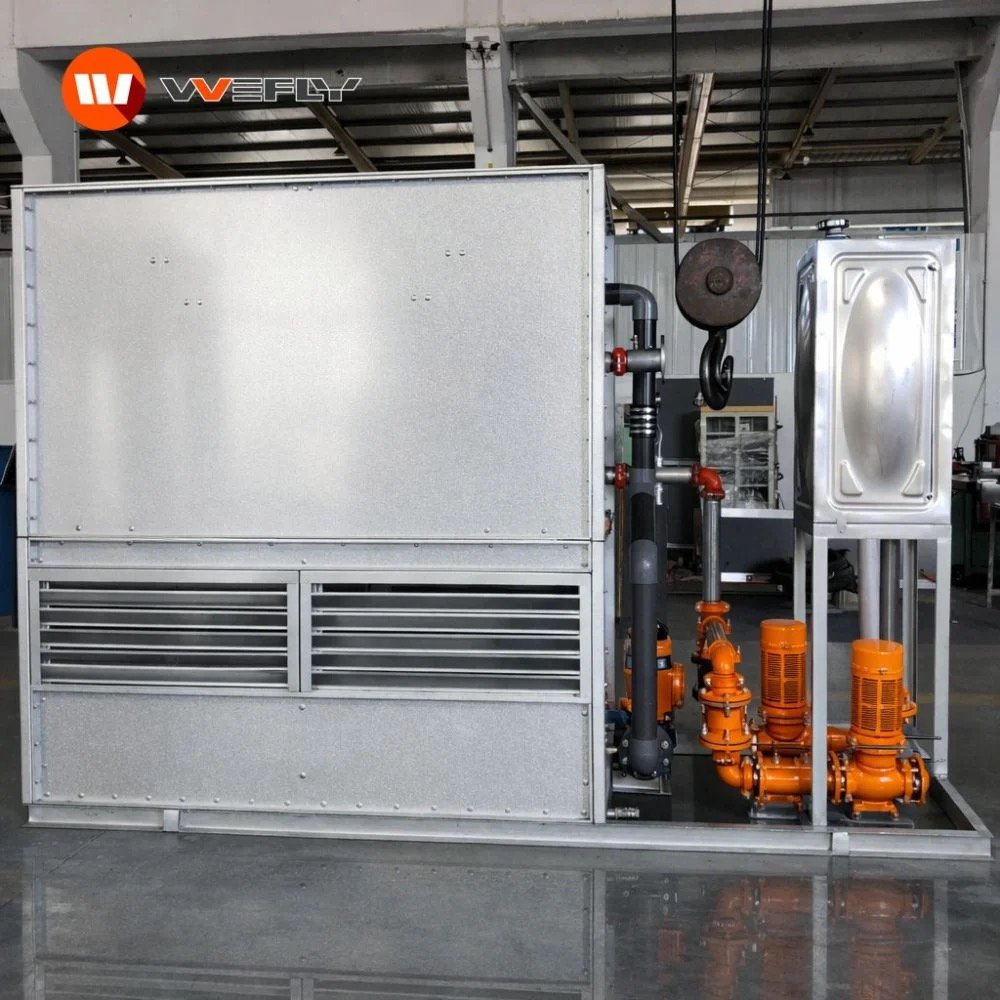
Why a Closed Water Cooling Tower Is Essential for Stable Industrial Cooling
A closed water cooling tower is an important part of many industrial production lines. In high-temperature applications such as induction furnaces, metal melting systems, and casting equipment, stable cooling is just as important as heating performance. Without a reliable cooling system, equipment efficiency can drop, maintenance problems can increase, and continuous production can become harder to maintain. WOLFU’s product page presents this model as a Closed Water Cooling Tower 10T designed for induction furnaces, heating elements, and other industrial equipment that require dependable heat dissipation.
For many factories, the goal is not only cooling capacity. They also need lower water use, less scaling, easier maintenance, and a compact system that fits into an industrial layout. WOLFU states that this cooling tower uses a closed-loop circulation structure with demineralized water, helping prevent contamination and scaling while maintaining stable cooling performance. The product page also highlights low water consumption, low maintenance, and energy-saving design, which are major priorities in modern industrial plants.
What Is a Closed Water Cooling Tower?
A closed water cooling tower is a cooling system in which the process fluid circulates in a sealed loop rather than being directly exposed to the outside air. In practical terms, this helps protect the cooling medium from contamination while improving system cleanliness and stability. WOLFU describes its unit as a closed-loop water circulation system that prevents the cooling medium from contacting air, which helps reduce scaling and maintain cooling efficiency.
This matters because water quality affects cooling performance over time. If cooling water is exposed to contamination or mineral buildup, system efficiency can decline and maintenance demands can rise. WOLFU specifically recommends demineralized water for stable performance and scale prevention. ASHRAE materials also show that cooling towers and closed-circuit coolers are commonly managed with efficiency and water-control requirements, reflecting how important water quality and operational control are in these systems.
Why Closed-Loop Cooling Matters in Industrial Production
Stable Cooling for High-Temperature Equipment
In industrial metal processing, cooling systems support more than comfort or general temperature control. They protect critical equipment that must run continuously under heavy thermal load. WOLFU says this cooling tower is designed for induction furnaces, melting furnaces, heating elements, aluminum casting lines, and other high-temperature industrial applications. That means the system is intended to help maintain stable performance in environments where heat management directly affects uptime and equipment life.
For plants using induction furnaces, stable cooling is especially important because overheating can affect key components and reduce reliability. A dedicated cooling tower helps remove heat from the circulating medium and supports consistent machine operation over long shifts. WOLFU positions this unit as a reliable cooling solution for continuous industrial production, which is exactly what many furnace and casting operations require.
Reduced Scaling and Cleaner Water Circulation
One of the biggest advantages of a closed water cooling tower is reduced scaling. When the cooling medium stays inside a closed circuit and does not contact open air, there is less opportunity for contamination and mineral-related problems. WOLFU highlights this directly, noting that the system uses demineralized water that does not contact air, helping prevent scaling and maintain higher cooling efficiency.
This is a practical benefit, not just a technical detail. In industrial plants, scaling can reduce heat-transfer efficiency, increase maintenance frequency, and shorten the service life of cooling-related components. A system designed to reduce scaling helps factories maintain more stable operation and lower long-term servicing demands. That is one reason closed-circuit cooling systems are attractive in furnace and casting applications.
Lower Water Consumption
Water use is another major concern in industrial cooling. WOLFU states that its system has low water consumption and includes a water collector to capture spray water and fog, helping minimize waste. The page also describes the overall design as energy-saving and suitable for continuous industrial production.
That direction is consistent with broader engineering guidance. ASHRAE notes that cooling tower systems can use far less water than once-through systems and reduce the ecological effect of heated-water discharge. For plants seeking better water management, a properly selected cooling tower can support both operational efficiency and resource control.
Why the WOLFU Closed Water Cooling Tower Is Practical
The WOLFU Closed Water Cooling Tower is designed as a compact industrial cooling solution for furnace and casting systems. According to the product page, the 10T model operates at 380V with 4 KW total power, 11.7 m³/h circulating water volume, 11750 m³/h air volume, and 2 circulation pumps. It uses cross-flow cooling and has a listed noise level of 35–39 dB, which suggests a quieter and more controlled operating profile compared with many large industrial systems.
The system dimensions are listed as 2200 × 1050 × 2600 mm, with a weight of 510 KG. WOLFU also highlights the tower’s compact structure and easy installation, which make it easier to fit into different plant layouts. For many buyers, a compact design is valuable because industrial floor space is often limited, especially in retrofits or upgrades to existing production lines.
Another practical point is maintenance. WOLFU says the cooling tower has low maintenance requirements, fewer wear parts, and reliable operation with lower failure rates. In real factory conditions, these features matter because every cooling system failure can affect furnace performance, disrupt production, and raise repair cost. A low-maintenance design often creates better long-term value than a system that looks good on paper but is harder to keep running.
Main Applications of a Closed Water Cooling Tower
Induction Furnace Cooling
One of the main uses of this system is induction furnace cooling. WOLFU specifically states that the tower is mainly used for induction furnaces, melting furnaces, and industrial heating equipment. In these applications, stable cooling helps protect the furnace power system and related components while supporting steady thermal performance.
This is why cooling support is commonly treated as part of the full furnace solution rather than an optional add-on. A reliable cooling tower helps reduce thermal stress and supports more stable operation over long production cycles.
Metal Melting and Casting Lines
The product page also states that the cooling tower is widely used in metal melting furnaces, aluminum casting production lines, and other high-temperature industrial applications. This makes it a practical fit for plants that need coordinated cooling across multiple pieces of thermal equipment.
In these environments, temperature stability is critical not only for one machine but for the consistency of the whole line. A dedicated closed-loop cooling system can support more predictable operation and help the line run more smoothly from melting through casting.
Industrial Heating Equipment
Beyond furnaces, WOLFU also lists heating elements and other industrial equipment among the target uses. That expands the value of the system for factories with multiple heat-generating processes that need a shared or dedicated cooling solution. The compact design and easy installation also make it suitable for a range of industrial environments.
What Buyers Should Check Before Choosing a Closed Water Cooling Tower
1. Cooling Load and Water Volume
The first thing buyers should check is whether the cooling tower matches the equipment heat load. WOLFU lists a circulating water volume of 11.7 m³/h and a 10T model size, which gives a starting point for evaluating compatibility with furnace or casting equipment. The system should be selected based on actual heat-removal needs, not just general equipment size.
2. Water Quality Requirements
Water quality matters in any cooling system. WOLFU recommends demineralized water to ensure stable performance and reduce scaling. Buyers should consider whether their plant can provide the recommended water treatment and circulation conditions. Closed-loop performance is strongest when the water medium stays clean and well managed.
3. Installation Space
This tower uses a compact design, but buyers still need to confirm available floor space and integration points. WOLFU lists the system dimensions clearly, which makes layout planning easier during equipment selection and plant design.
4. Efficiency and Operating Cost
Cooling equipment should not only function well. It should also support lower operating cost over time. WOLFU highlights energy saving, low water consumption, and intelligent control as product benefits. ASHRAE standards also reflect that cooling towers and closed-circuit coolers are selected with minimum efficiency expectations in mind, which reinforces the importance of performance, not just basic cooling ability.
5. Supplier Support
WOLFU states that it provides installation guidance, commissioning support, and one-year warranty service. For industrial buyers, support is a meaningful part of the purchase decision because cooling systems must integrate reliably with furnaces, casting lines, or other heat-generating equipment. Good technical support can shorten installation time and reduce startup risk.
Why Supporting Equipment Matters
A cooling tower delivers the most value when it works as part of a full industrial system. On the same WOLFU site, related equipment includes the Induction Melting Furnace, the Aluminum Rod Continuous Casting Machine, and other melting and casting systems. WOLFU’s product page specifically positions the cooling tower as supporting induction furnaces, melting furnaces, and casting lines, which shows that it is intended as part of a broader production solution.
This is important because cooling should be planned together with the thermal equipment it supports. A well-matched cooling system helps protect production stability, extend equipment life, and improve the consistency of the whole process line. In many plants, that makes the cooling tower a core utility system rather than just an accessory.
Final Thoughts
A closed water cooling tower is a smart investment for factories that need stable industrial cooling, lower water consumption, and cleaner closed-loop operation. It plays a key role in supporting induction furnaces, melting systems, casting lines, and other high-temperature industrial equipment. WOLFU’s product page shows that this 10T closed water cooling tower is built for compact installation, low maintenance, closed-loop demineralized water circulation, and stable cooling performance.
If your business needs a reliable cooling solution for an induction furnace, aluminum casting line, or industrial heating system, the WOLFU Closed Water Cooling Tower is a strong option to consider. It is designed to reduce scaling, save water, and support long-term continuous production. Explore the product here: Closed Water Cooling Tower by WOLFU.
Recommended Internal Links
- Closed Water Cooling Tower
- Induction Melting Furnace
- Aluminum Rod Continuous Casting Machine
- WOLFU Blog