
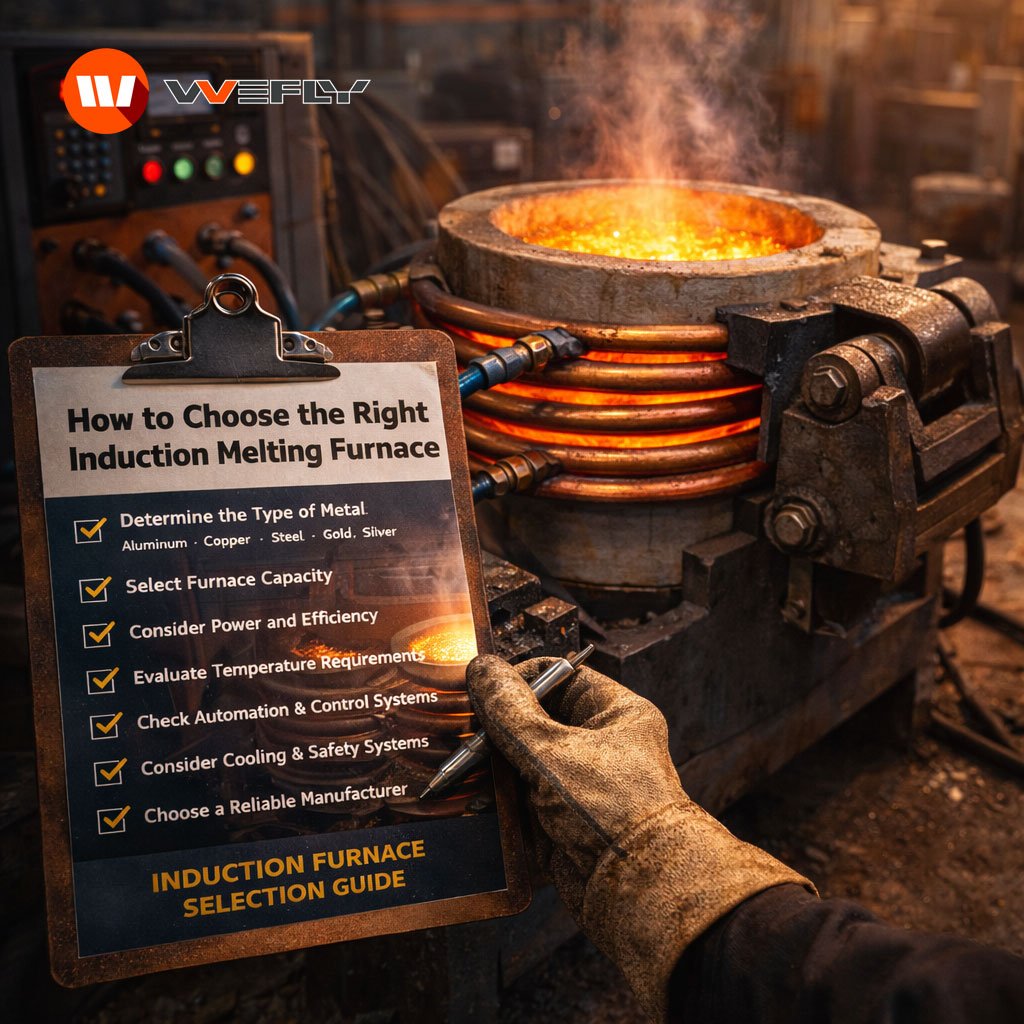
How to Choose the Right Induction Melting Furnace
Choosing the right induction melting furnace is essential for improving production efficiency, reducing energy costs, and ensuring high-quality metal output. Induction furnaces are widely used in metal recycling, foundries, and precious metal processing because they provide fast heating, precise temperature control, and clean operation. However, selecting the correct furnace requires careful consideration of several technical and operational factors.
1. Determine the Type of Metal You Will Melt
The first step in choosing an induction furnace is identifying the type of metal you plan to process. Different metals have different melting temperatures and electrical properties, which affect furnace design and power requirements.
- Aluminum and aluminum scrap
- Copper and brass
- Steel and iron
- Gold and silver
- Zinc and other non-ferrous metals
Induction melting furnaces are capable of melting many conductive metals, including aluminum, copper, steel, and precious metals. :contentReference[oaicite:0]{index=0}
2. Select the Appropriate Furnace Capacity
Capacity is one of the most important factors when selecting a furnace. Induction furnaces are available in sizes ranging from small laboratory units of a few kilograms to large industrial furnaces capable of melting several tons of metal. :contentReference[oaicite:1]{index=1}
When choosing capacity, consider:
- Your daily production volume
- Batch size requirements
- Future production expansion
- Available factory space
If your production requires melting large amounts of metal continuously, a high-capacity furnace will increase efficiency and reduce operating costs.
3. Consider Power and Energy Efficiency
The power rating of the induction furnace determines how quickly metal can melt. Higher power levels allow faster melting rates and higher production output.
Modern induction furnaces are highly energy efficient because heat is generated directly inside the metal through electromagnetic induction. This minimizes energy loss and improves thermal efficiency. :contentReference[oaicite:2]{index=2}
- Higher power → faster melting
- Better efficiency → lower energy consumption
- Reduced production time
4. Evaluate Temperature Requirements
Different metals require different melting temperatures. For example:
- Aluminum: ~660°C
- Copper: ~1085°C
- Steel: ~1370-1500°C
- Gold: ~1064°C
The furnace you select must be capable of reaching and maintaining the temperature required for your specific metal while maintaining precise temperature control.
5. Check Automation and Control Systems
Modern induction melting systems often include advanced control systems such as PLC control panels, digital temperature monitoring, and automatic pouring systems.
These features help:
- Improve melting precision
- Reduce operator workload
- Increase safety
- Improve production consistency
6. Consider Cooling and Safety Systems
Induction furnaces typically require water-cooling systems to prevent overheating of the induction coil and electrical components. Proper cooling and safety systems ensure stable long-term operation and reduce maintenance costs.
Important safety features include:
- Water cooling protection
- Over-temperature alarms
- Automatic shutdown systems
- Emergency stop controls
7. Choose a Reliable Furnace Manufacturer
Selecting a reliable furnace manufacturer is just as important as choosing the right technical specifications. A good manufacturer can provide:
- Custom furnace design
- Installation and commissioning
- Technical support
- After-sales service
Working with experienced suppliers helps ensure long-term reliability and performance.
Conclusion
Choosing the right induction melting furnace requires evaluating multiple factors including metal type, furnace capacity, power rating, temperature requirements, and automation level. By carefully assessing these elements, manufacturers can select a furnace that improves efficiency, reduces operating costs, and ensures consistent metal quality.
As metal recycling and industrial manufacturing continue to grow, induction melting technology remains one of the most efficient and environmentally friendly solutions for modern metal processing.
FAQ
What metals can be melted in an induction furnace?
Induction furnaces can melt aluminum, copper, steel, iron, gold, silver, and many other conductive metals.
How do I determine the right furnace capacity?
The correct capacity depends on your production volume, batch size, and future expansion needs.
Are induction melting furnaces energy efficient?
Yes. Induction furnaces generate heat directly inside the metal, which minimizes energy loss and improves efficiency compared with traditional fuel furnaces.