Technical Parameters
| Model | HN-SP-1500 |
| Motor Power | 315 KW |
| Capacity | 1500–2000 kg/h |
| Dimension (L × W × H) | 36 × 8 × 5 m |
| Weight | 11 Ton |
Solar PV Panel Recycling Plant
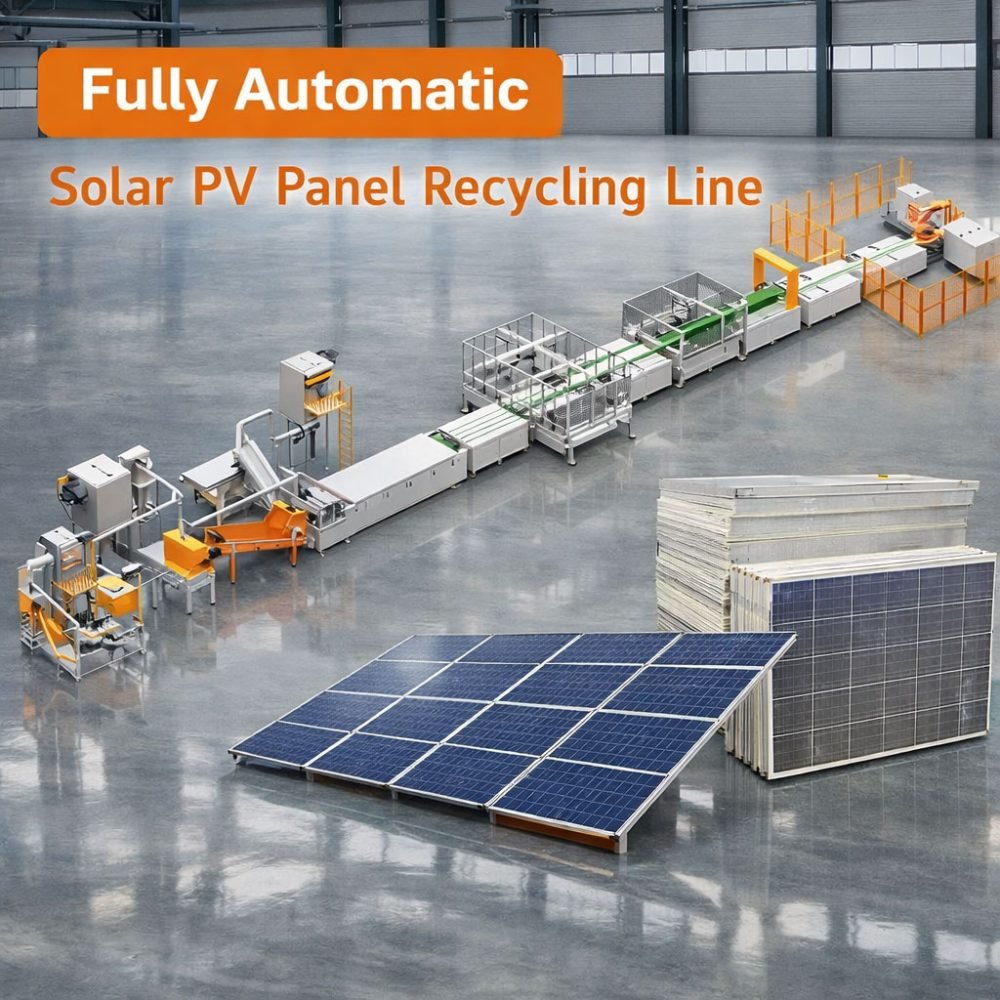
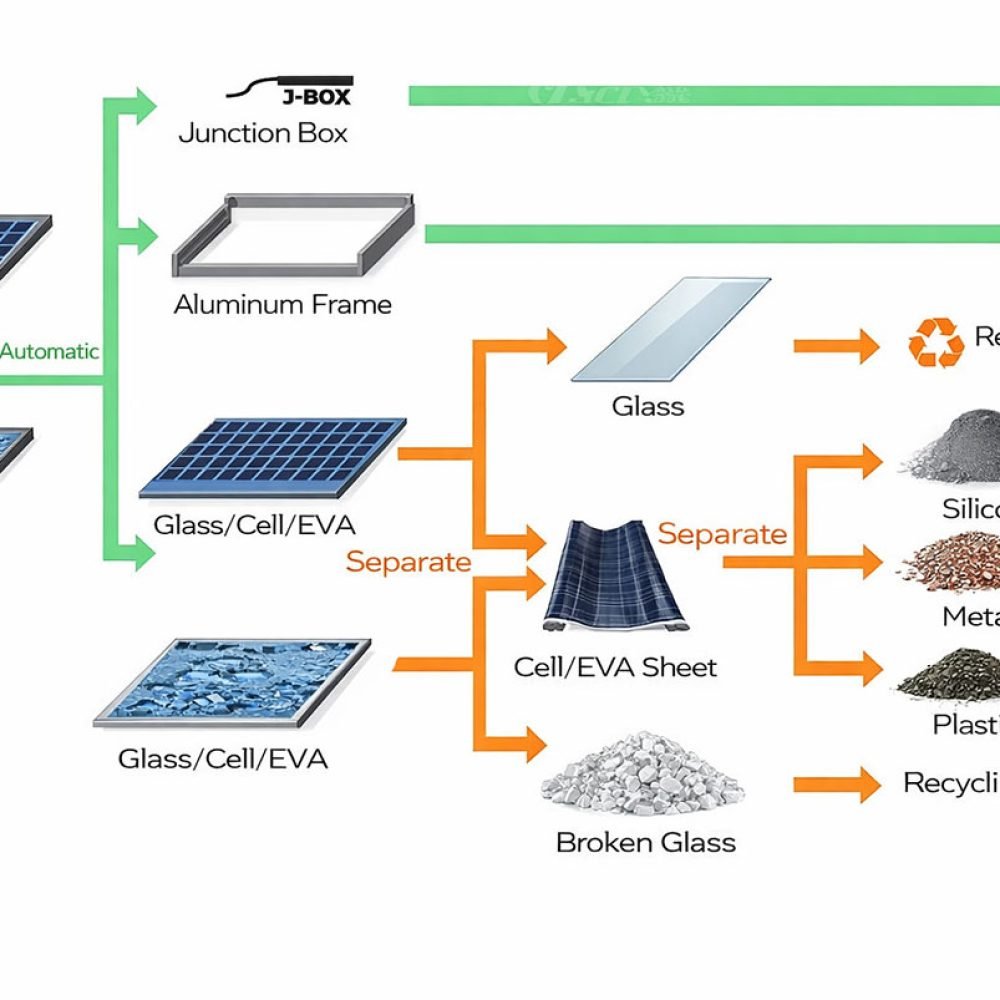
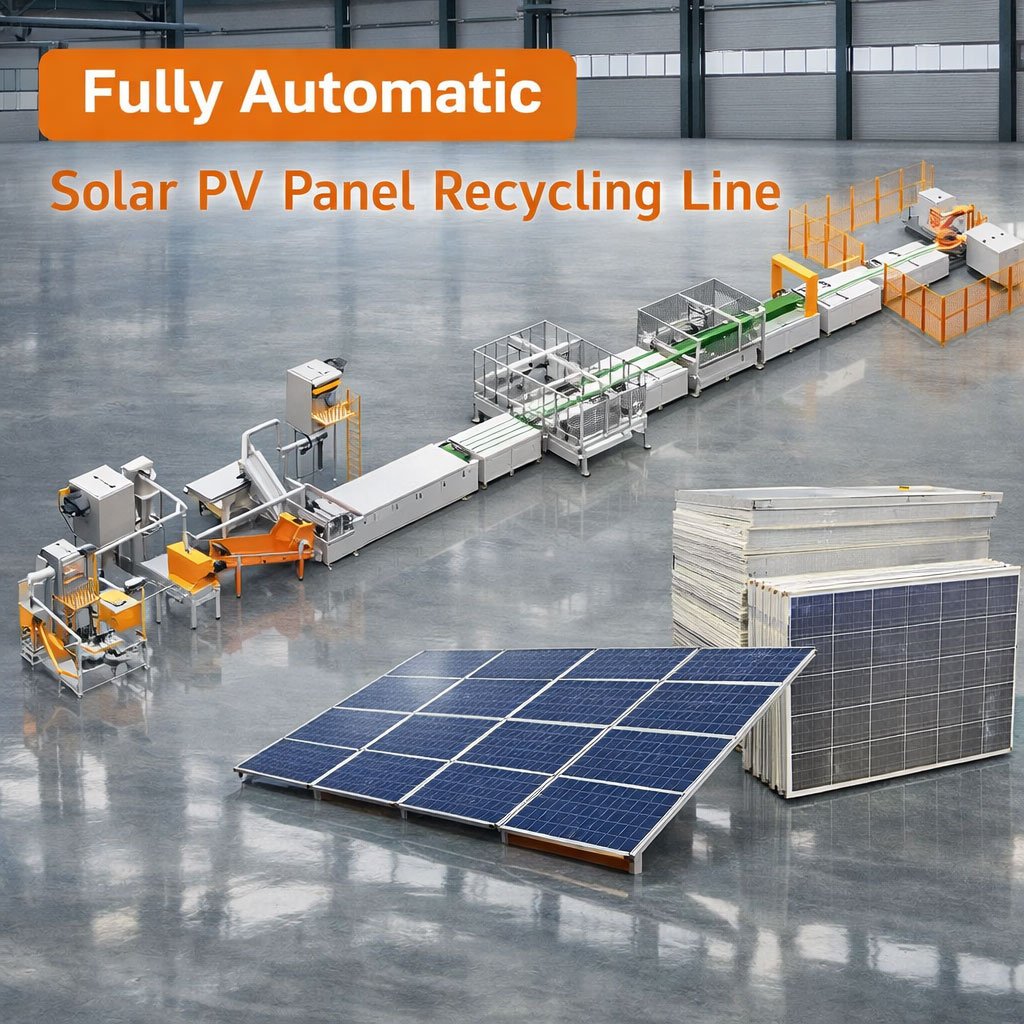
The solar PV panel recycling plant is an advanced physical recycling solution developed for processing end-of-life or damaged photovoltaic panels. It is designed to dismantle solar panels step by step and recover reusable materials including junction boxes, aluminum frames, glass, metals, silicon powder, and plastics. The line supports environmentally friendly treatment while helping recycling businesses create value from waste PV modules.
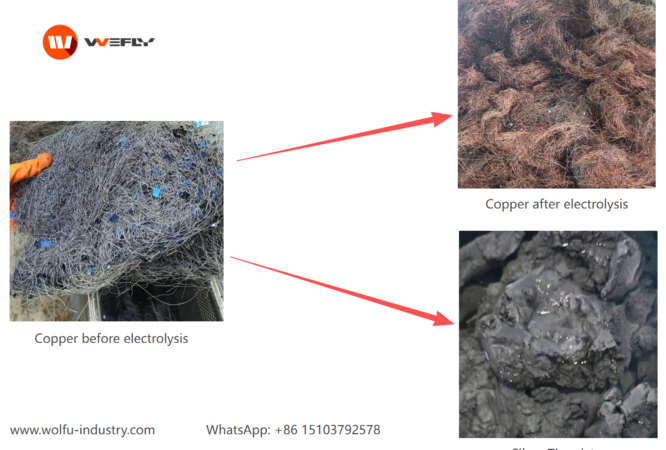
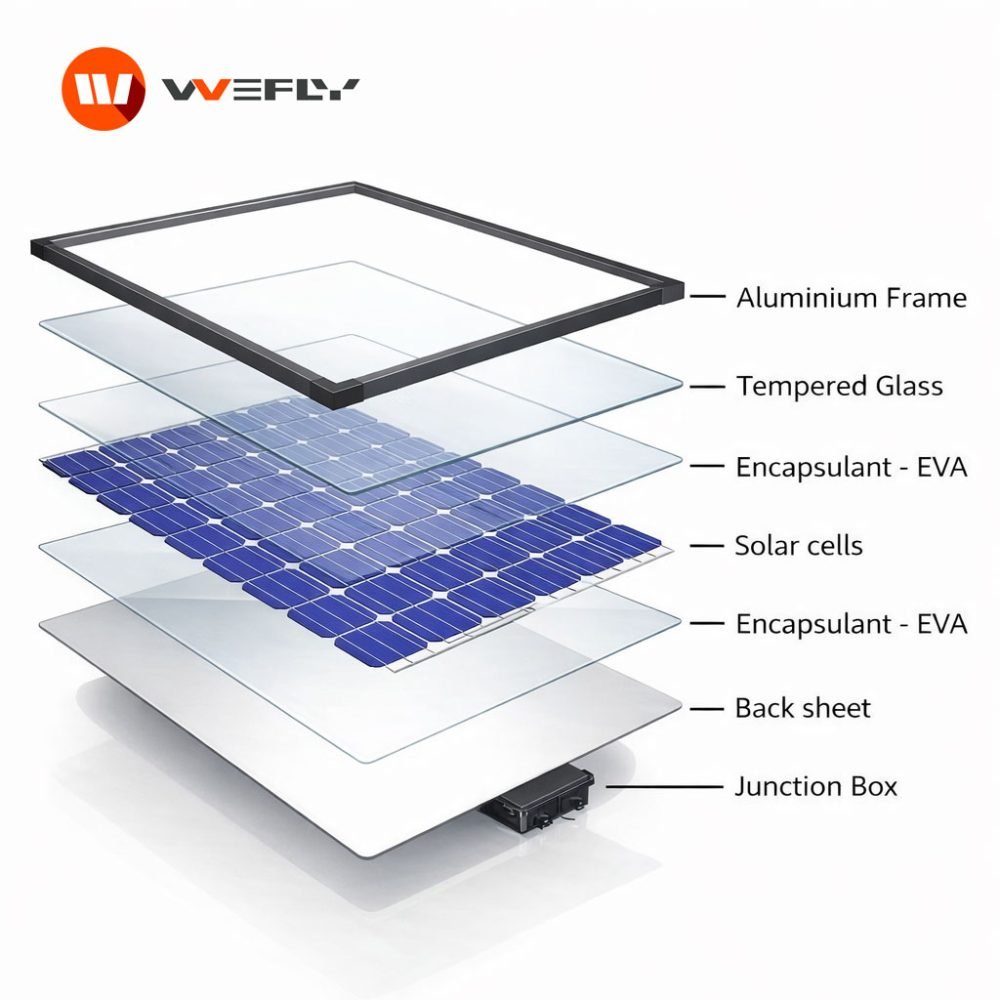
Solar panels typically contain tempered glass, polymer layers, aluminum frames, copper, silver-bearing conductive materials, silicon-based semiconductor materials, EVA encapsulants, back sheets, and junction boxes. The recycling process focuses on separating these materials efficiently so they can be reused in glass, metals, electronics, semiconductor, and plastics applications. The source page states that, in principle, up to 95% of the panel’s materials can be successfully recycled.
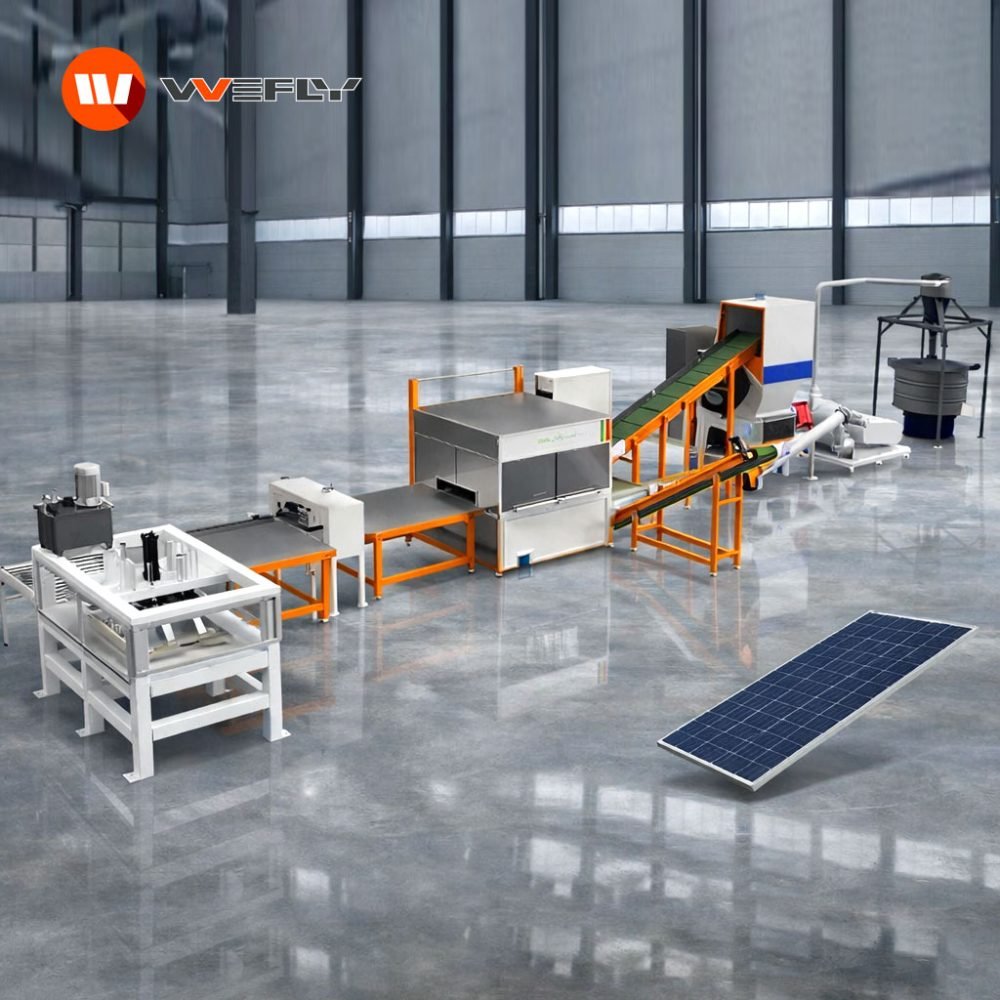
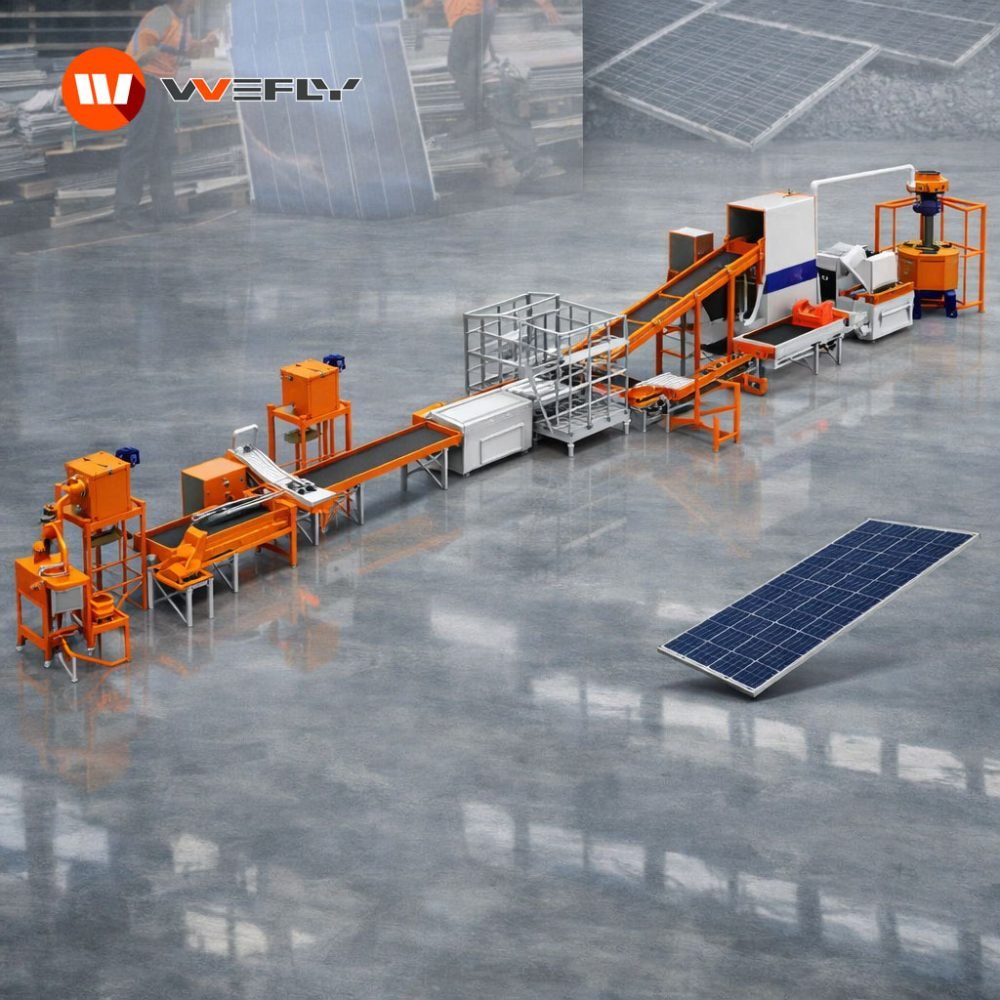
This recycling line is especially suitable for companies handling waste solar modules from decommissioned solar projects, damaged transport stock, or defective production panels. It combines pre-processing, shredding, grinding, airflow vibration separation, electrostatic separation, and dust collection into one complete recycling workflow.
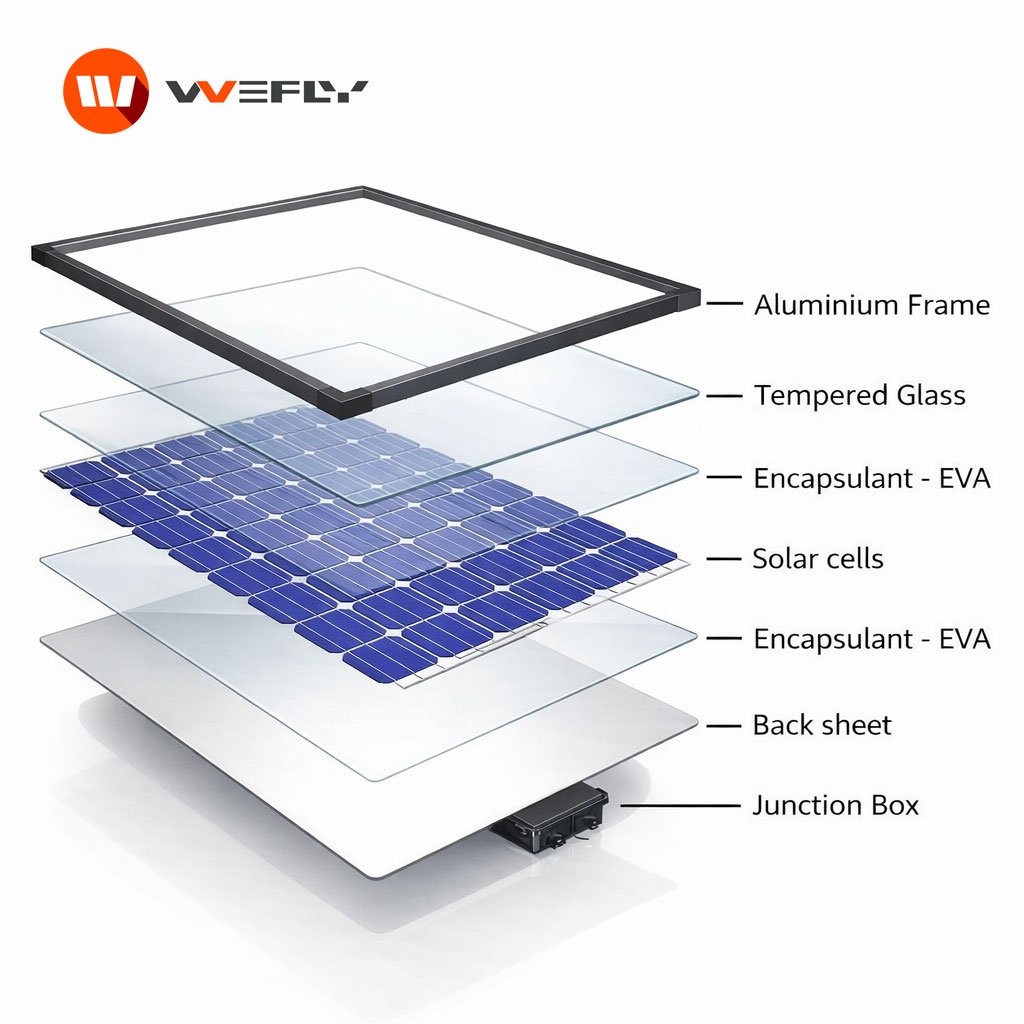
Raw Materials
- Waste solar PV panels
- End-of-life photovoltaic modules
- Damaged solar panels
- Defective PV panels from production or installation
Final Products
- J-Box
- Aluminum Frame
- Glass
- Metal
- Silicon Powder
- Plastic
Workflow
1. Pre-processing
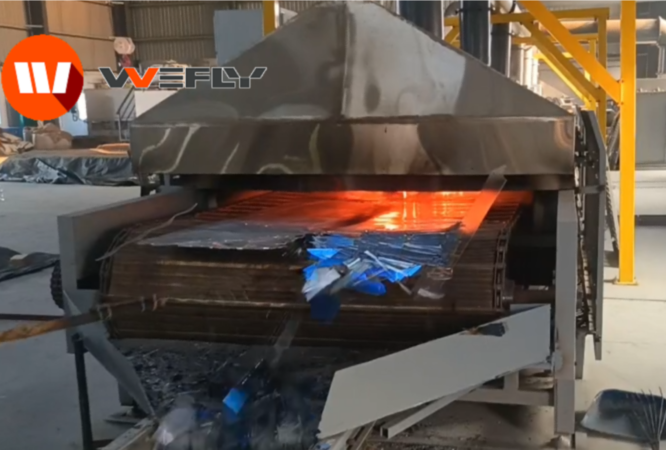
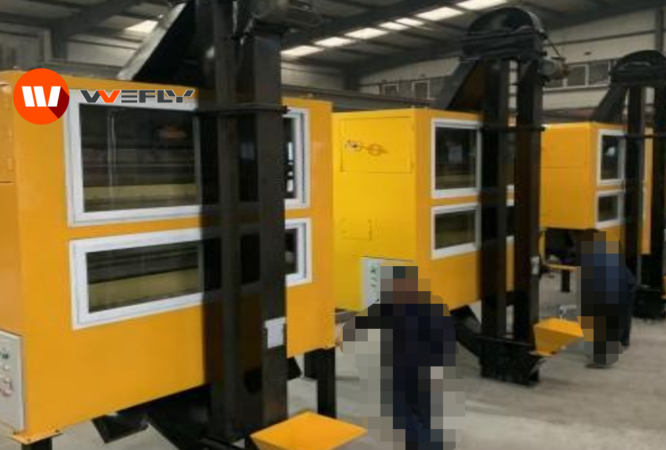
The process begins with pre-treatment equipment. A J-Box Separator removes the junction box, an Al Frame Separator dismantles the aluminum frame, a rubber edge removal machine removes sealing edges, and a Glass Separator separates the glass panel from the inner layers to prepare materials for further processing.
2. Crushing and Grinding
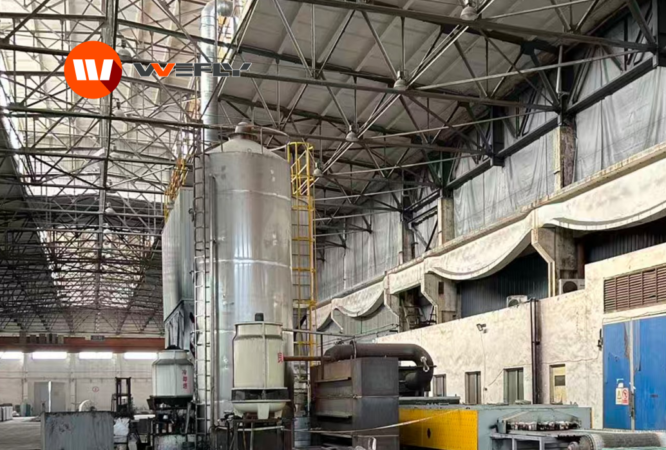
After pre-processing, a belt conveyor feeds the materials into a double-shaft shredder, which reduces the material into strips of about 50 mm long and 10–20 mm wide. A blades cutting crusher further reduces the size to about 1–1.5 cm, followed by a grinding machine that turns the material into 15–20 mesh powder for later separation.
3. Separation and Collection
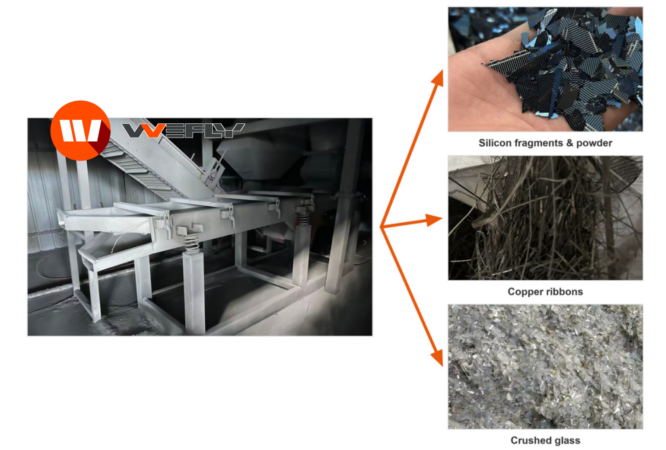
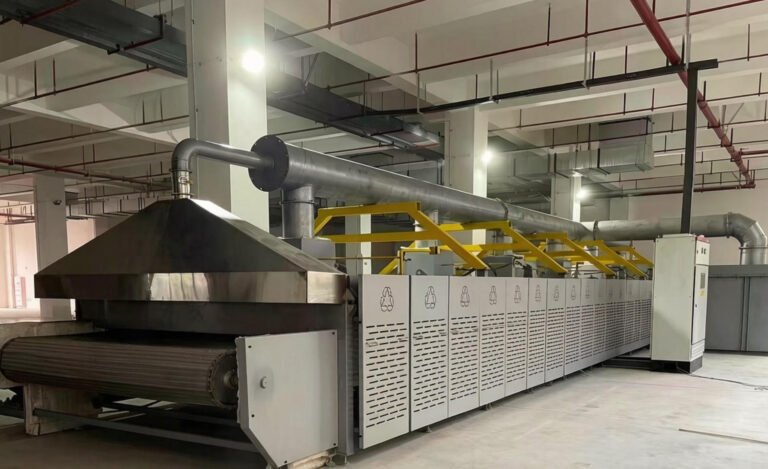
In the final stage, an airflow vibration separator separates copper and other materials using airflow and vibration, while an electrostatic separator removes residual metal from non-metal materials to improve metal recovery. A dust collector captures dust generated during recycling, helping reduce environmental pollution and improve the working environment.
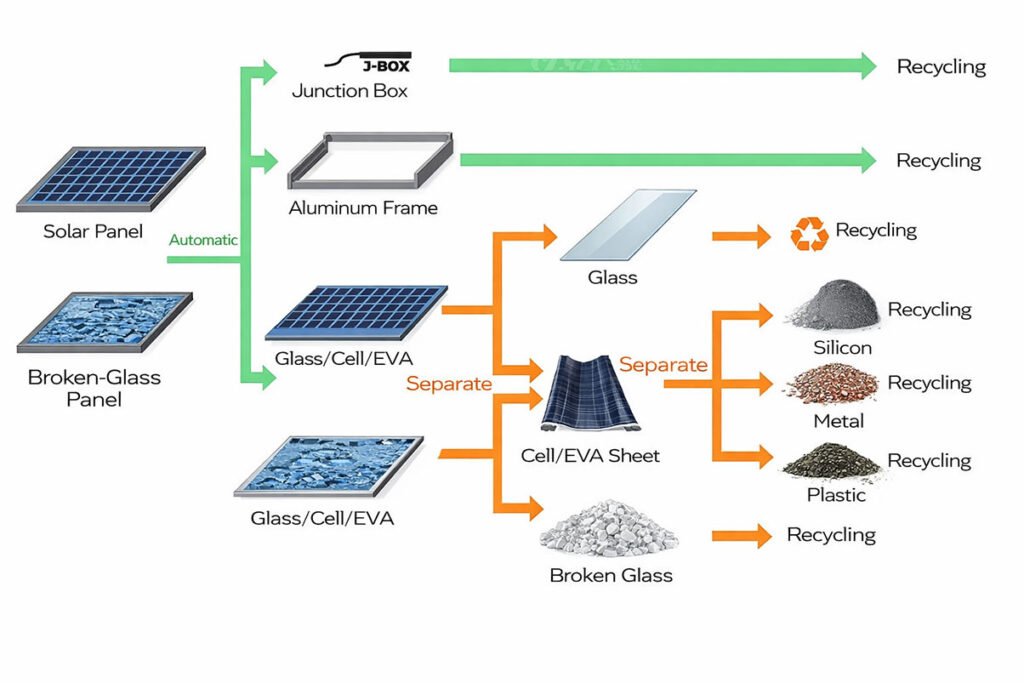
Advantages
Efficient Physical Recycling
The line uses physical dismantling, crushing, grinding, airflow separation, and electrostatic separation to recover valuable materials from solar panels without relying on a single simple crushing step.
Multi-Material Recovery
It can recover junction boxes, aluminum frames, glass, metals, silicon powder, and plastics, which helps improve the total recycling value of waste photovoltaic panels.
High Recovery Potential
The source page notes that the combination of glass, aluminum, polymers, silicon, copper, and silver-bearing materials in solar panels can, in principle, be recycled at rates of up to 95%.
Environmental Protection
The integrated dust collection system reduces dust emissions during operation and supports cleaner plant conditions.
Business-Oriented Solution
This line is suitable for companies that want to enter the solar recycling business by processing end-of-life PV modules and turning waste into reusable resources. This is an inference based on the page’s positioning around recycling businesses and recovered-value materials.
Applications
- Solar panel recycling plants
- Renewable energy waste treatment centers
- E-waste and industrial recycling businesses
- End-of-life solar farm dismantling projects
- PV manufacturing scrap recycling