
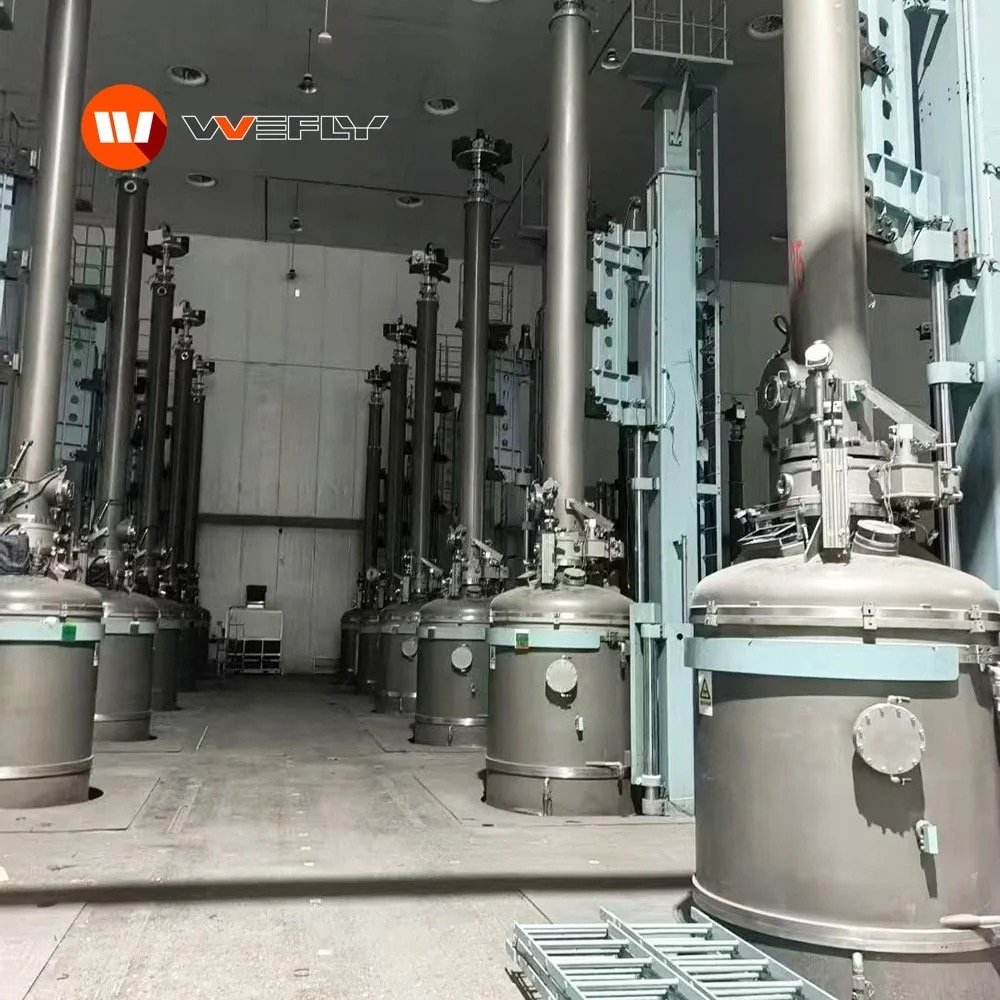
Monocrystalline Silicon Growth Furnace for CZ Ingots
A Monocrystalline Silicon Growth Furnace is a critical piece of equipment for producing single crystal silicon ingots used in photovoltaic wafers, semiconductor substrates, and advanced electronic materials. As demand for high-quality silicon materials continues to grow, manufacturers need crystal growth equipment that can provide stable temperature control, accurate pulling speed, reliable rotation control, and clean atmosphere protection.
Unlike ordinary melting equipment, a silicon growth furnace is designed not only to melt high-purity polysilicon, but also to control the crystal structure during the entire ingot growth process. Small changes in thermal field, pulling speed, rotation speed, or atmosphere condition can affect ingot diameter, crystal quality, and production stability.
View WOLFU Monocrystalline Silicon Growth Furnace
The WOLFU Monocrystalline Silicon Growth Furnace is designed for CZ method silicon crystal growth and single crystal silicon ingot production. It can be customized according to ingot diameter, chamber size, heating method, pulling mechanism, and customer production requirements.
What Is a Monocrystalline Silicon Growth Furnace?
A monocrystalline silicon growth furnace is an industrial crystal growth system used to produce single crystal silicon ingots from high-purity polysilicon. The most common process is the Czochralski method, also known as the CZ method.
In the CZ process, high-purity polysilicon is loaded into a quartz crucible and heated above its melting point. A seed crystal is then dipped into the molten silicon. The seed crystal is slowly pulled upward while rotating, allowing molten silicon to solidify into a cylindrical single crystal ingot.
This process requires extremely stable control. The furnace must manage melt temperature, crystal pulling speed, seed crystal rotation, crucible rotation, chamber atmosphere, and cooling conditions. These parameters directly affect the diameter, crystal orientation, internal quality, and final usability of the silicon ingot.
For photovoltaic and semiconductor applications, consistency is essential. A stable monocrystalline silicon growth furnace helps manufacturers improve yield, reduce defects, and support repeatable ingot production.
Why the CZ Method Matters in Silicon Ingot Production
The CZ method is widely used because it can produce high-quality single crystal silicon ingots with controlled diameter and crystal orientation. These ingots are later sliced into wafers for solar cells, semiconductor devices, and electronic components.
Single crystal silicon has a uniform crystal structure. This makes it valuable for applications that require predictable electrical performance, stable material properties, and high conversion efficiency. In solar manufacturing, monocrystalline silicon wafers are commonly used for high-efficiency photovoltaic cells. In semiconductor manufacturing, single crystal silicon provides the base material for integrated circuits and electronic devices.
The furnace plays a central role in this process. A poor thermal field may cause crystal defects. Unstable pulling speed may affect ingot diameter. Poor atmosphere control may increase contamination. Weak automation may reduce production repeatability.
For this reason, buyers should not treat a silicon growth furnace as a simple high-temperature furnace. It is a precision crystal growth system that must be matched to the target ingot size, process recipe, production capacity, and quality standard.
How the WOLFU Monocrystalline Silicon Growth Furnace Works
Step 1: Loading High-Purity Polysilicon
The process begins by loading high-purity polysilicon into the crucible. Polysilicon quality, particle size, cleanliness, and loading method all influence the stability of the melting stage.
Depending on the required electrical properties of the final ingot, dopants may also be added during the process. These dopants help adjust the conductivity and performance of the final silicon material.
Step 2: Creating a Controlled Furnace Atmosphere
After loading, the furnace chamber is sealed. The process can be carried out under vacuum or inert gas protection, commonly using argon. This controlled atmosphere helps reduce contamination and supports stable crystal growth.
Atmosphere control is important because molten silicon is sensitive to contamination. A clean and controlled chamber environment helps protect the quality of the growing crystal.
Step 3: Melting the Silicon
The furnace heats the polysilicon above the silicon melting point. Depending on the customer’s process requirements, the heating method can be resistance heating or induction heating.
During this stage, the furnace must maintain a stable thermal environment. Temperature control affects melt stability and prepares the material for seed crystal dipping and crystal pulling.
Step 4: Seed Crystal Dipping
Once the silicon is fully molten and the process conditions are stable, the seed crystal is lowered into the molten silicon. The seed crystal provides the starting structure for the single crystal ingot.
This step requires precise positioning and stable control. If the seed crystal is not properly controlled, the crystal growth process may become unstable from the beginning.
Step 5: Crystal Pulling and Rotation
The seed crystal is slowly pulled upward while rotating. At the same time, the crucible may also rotate. The interaction between pulling speed, rotation speed, melt temperature, and thermal field determines the final ingot shape and quality.
Accurate pulling control helps maintain the target ingot diameter. Rotation control helps improve melt uniformity and crystal growth stability.
Step 6: Cooling and Ingot Formation
As the crystal is pulled from the melt, it gradually cools and forms a cylindrical monocrystalline silicon ingot. The cooling process must be controlled to avoid thermal stress and crystal quality problems.
The WOLFU furnace includes a water cooling system to protect key furnace components and support stable long-term operation.
Key Advantages of the WOLFU Monocrystalline Silicon Growth Furnace
Designed for CZ Crystal Growth
The WOLFU furnace is designed specifically for Czochralski method silicon crystal growth. It supports the core requirements of CZ production, including silicon melting, seed crystal control, crystal pulling, rotation control, and atmosphere protection.
This makes it suitable for customers building or upgrading silicon ingot production lines for photovoltaic or semiconductor-related applications.
Precise Pulling Speed Control
Pulling speed is one of the most important parameters in monocrystalline silicon production. If the pulling speed is unstable, the ingot diameter and crystal quality may be affected.
The WOLFU system can be configured with precision pulling speed control to support stable ingot growth and better process repeatability.
Seed Crystal and Crucible Rotation Control
Rotation control helps improve melt behavior and crystal growth stability. In the CZ process, both the seed crystal and crucible may rotate according to the process recipe.
Accurate rotation control helps support uniform heat distribution, stable melt flow, and better crystal growth conditions.
Vacuum or Argon Inert Gas Protection
The furnace can operate under vacuum or argon inert gas protection. This helps reduce contamination and supports a cleaner crystal growth environment.
For high-value silicon ingot production, atmosphere protection is not optional. It is a key factor in maintaining process quality.
PLC and HMI Automatic Control
The WOLFU furnace can be configured with PLC and HMI automatic control. This allows operators to monitor and manage furnace parameters more efficiently.
Automation is especially important for long crystal growth cycles. It helps reduce manual error, improve process repeatability, and support easier operation.
Customized Furnace Design
Different customers may require different ingot diameters, crucible sizes, chamber dimensions, heating structures, and production capacities. WOLFU can customize the furnace according to these requirements.
This customization helps customers match the equipment to real production needs instead of forcing the process to fit a standard machine.
Request a Custom CZ Silicon Growth Furnace Solution from WOLFU
Applications of Monocrystalline Silicon Growth Furnaces
Photovoltaic Silicon Ingot Production
Monocrystalline silicon ingots are widely used in solar wafer production. After growth, the ingots are processed, squared, sliced, and prepared for solar cell manufacturing.
For photovoltaic manufacturers, ingot quality affects wafer quality and solar cell performance. A stable silicon growth furnace helps improve production consistency.
Semiconductor Material Preparation
Semiconductor applications require high material quality and strict process control. A monocrystalline silicon growth furnace can support the preparation of silicon ingots used for semiconductor substrates and electronic materials.
Because semiconductor materials require reliable crystal structure and controlled properties, furnace stability is extremely important.
Advanced Crystal Growth Research
Research institutions and advanced material companies may use customized crystal growth furnaces for process development, material testing, and small-batch crystal production.
For these applications, flexible control and customized furnace configuration are often more important than standard large-scale production capacity.
How to Choose the Right Silicon Growth Furnace
The first factor is ingot size. Buyers should define the target ingot diameter and length before selecting furnace structure, crucible size, and pulling system.
The second factor is production capacity. A furnace for pilot production may have different requirements from a furnace for industrial-scale silicon ingot manufacturing.
The third factor is heating method. Resistance heating and induction heating can be customized according to the customer’s process needs, thermal field requirements, and production goals.
The fourth factor is control precision. CZ crystal growth requires accurate control of temperature, pulling speed, rotation speed, vacuum level, gas atmosphere, and cooling conditions.
The fifth factor is thermal field design. A stable thermal field helps maintain crystal growth quality, reduce defects, and support consistent ingot diameter.
The sixth factor is service support. Installation guidance, commissioning support, spare parts, remote technical assistance, and long-term service are important for stable production.
Related WOLFU Equipment and Resources
For customers working with solar silicon ingot casting, WOLFU also provides the Polysilicon Directional Solidification Furnace , which is designed for solar silicon ingot casting and polysilicon processing.
For high-temperature metal melting and controlled smelting applications, the WOLFU Vacuum Induction Melting Furnace is another related industrial furnace solution.
You can also read WOLFU’s related blog article, Why a Polysilicon Directional Solidification Furnace Matters for Solar Silicon Ingot Production , to learn more about silicon ingot production equipment and process requirements.
Why Choose WOLFU?
WOLFU provides industrial furnace systems, recycling production lines, metal processing equipment, and customized engineering support. For silicon crystal growth projects, customers usually need more than a standard furnace. They need a complete technical solution.
WOLFU can support furnace chamber design, ingot size customization, heating structure selection, thermal field support, pulling mechanism configuration, PLC and HMI automation, water cooling system design, and installation planning.
The company can also provide technical guidance, commissioning support, spare parts service, remote assistance, and long-term after-sales support. This helps customers reduce project risk and improve equipment stability during production.
For photovoltaic silicon, semiconductor materials, and advanced crystal growth applications, a customized monocrystalline silicon growth furnace can help improve process control and production reliability.
Conclusion
A Monocrystalline Silicon Growth Furnace is a precision industrial system for CZ silicon ingot production. It supports silicon melting, seed crystal dipping, controlled pulling, rotation control, atmosphere protection, thermal field stability, and automated operation.
For photovoltaic and semiconductor manufacturers, the quality of the silicon ingot begins inside the furnace. Stable temperature control, accurate pulling speed, reliable rotation control, and clean atmosphere protection all help improve crystal growth quality.
If your project requires a customized CZ silicon growth furnace for single crystal silicon ingot production, WOLFU can recommend a solution based on your ingot diameter, chamber size, heating method, production capacity, and process requirements.
CTA:
Get a Quote for WOLFU Monocrystalline Silicon Growth Furnace
FAQ
What is a monocrystalline silicon growth furnace used for?
It is used to grow single crystal silicon ingots from high-purity polysilicon. These ingots are commonly used for photovoltaic wafers, semiconductor materials, and advanced electronic applications.
What is the CZ method in silicon crystal growth?
The CZ method, or Czochralski method, is a crystal growth process where a seed crystal is dipped into molten silicon and slowly pulled upward while rotating to form a cylindrical single crystal silicon ingot.
Can WOLFU customize the ingot diameter and furnace chamber size?
Yes. WOLFU can customize the furnace chamber, crucible size, ingot diameter, heating structure, pulling system, and control system according to customer production requirements.