
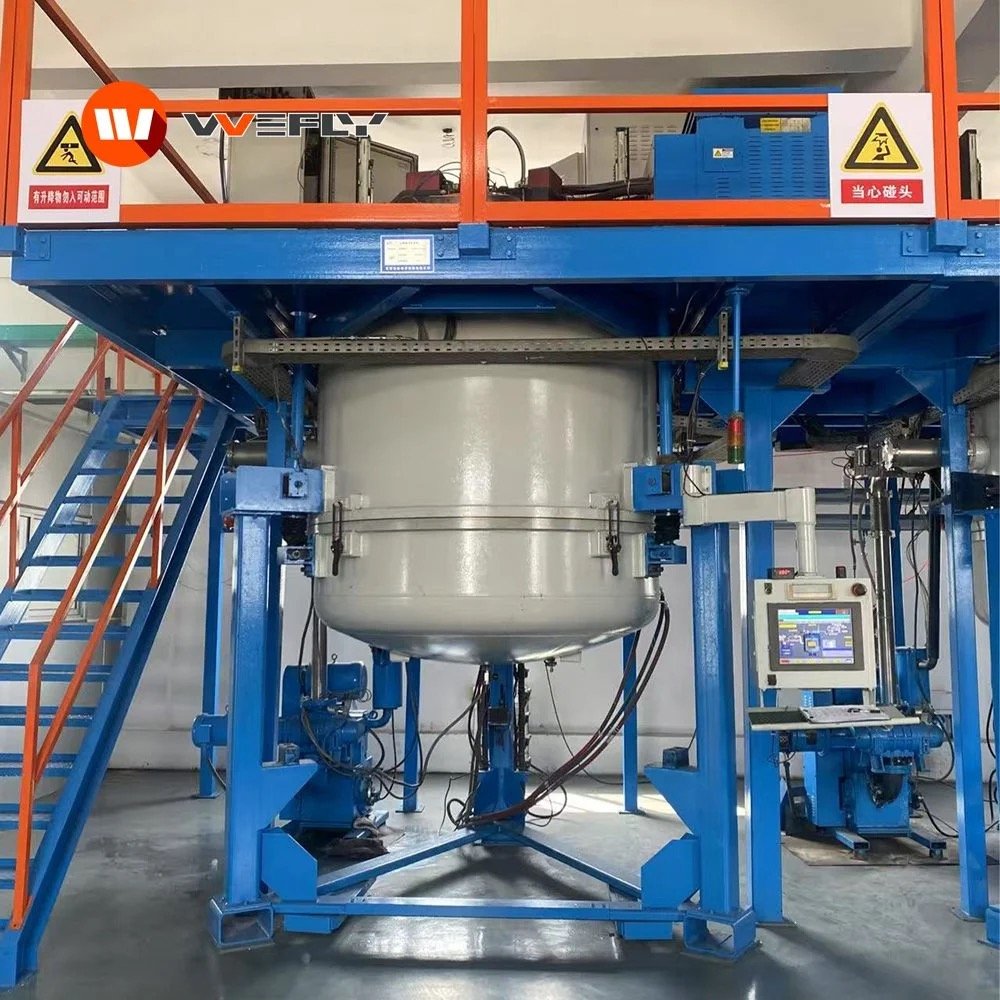
How to Choose a Vacuum Induction Melting Furnace
A Vacuum Induction Melting Furnace is a key piece of equipment for metal smelting, alloy preparation, ore processing, and high-temperature melting applications. However, choosing the right furnace is not only about maximum temperature or price. It depends on your material, production capacity, vacuum requirement, heating method, cooling system, and long-term operating goals.
For factories, foundries, recycling plants, and metallurgical companies, a mismatched furnace can cause unstable melting performance, excessive energy use, low production efficiency, and higher maintenance cost. A properly selected furnace can improve melting stability, reduce oxidation, and support cleaner molten metal preparation.
The WOLFU Industrial Vacuum Induction Melting Furnace is designed for copper ore, iron ore, antimony ore, lead ore, alloys, and other metal materials. This guide explains the main selection points before purchasing a vacuum induction melting system.
What Is a Vacuum Induction Melting Furnace?
A vacuum induction melting furnace uses electromagnetic induction to heat and melt metal materials inside a vacuum chamber. The system usually includes an induction power supply, copper induction coil, vacuum chamber, crucible, cooling system, control cabinet, and discharge structure.
Unlike fuel-fired melting equipment, induction heating transfers energy directly into the metal charge. This allows fast heating, efficient energy use, and accurate temperature control. When combined with vacuum operation, the furnace can reduce oxygen exposure and improve the cleanliness of molten metal.
This type of furnace is commonly used for metal smelting, alloy preparation, recycled metal melting, ore smelting, and molten metal preparation before casting or refining.
Why Furnace Selection Matters
Different metals have different melting points, oxidation behavior, density, impurity levels, and processing requirements. A furnace suitable for one material may not be ideal for another.
For example, copper, iron, lead, antimony, and alloy materials may require different crucible materials, power levels, chamber sizes, and temperature control methods. If the furnace is not matched correctly, the result may be slow melting, unstable temperature, high energy consumption, or poor molten metal quality.
Industrial buyers should evaluate technical requirements before confirming the furnace model. This reduces project risk and improves long-term production performance.
Key Factors When Choosing a Vacuum Induction Melting Furnace
1. Raw Material Type
The first selection factor is the material you plan to melt. Copper ore, iron ore, antimony ore, lead ore, metal scrap, and alloy feedstock all behave differently during heating and melting.
Some materials require higher temperature. Some generate more slag. Some are more sensitive to oxidation. Some require special crucible materials or chamber protection. Before choosing a furnace, confirm the chemical composition, particle size, moisture level, and target final product.
2. Melting Temperature
The second factor is temperature range. The WOLFU vacuum induction melting furnace can support high-temperature melting applications up to 1800°C, making it suitable for many industrial smelting projects.
However, buyers should not only check maximum temperature. They should also confirm working temperature, heating speed, temperature holding stability, and the temperature control method. Stable working temperature is often more important than the highest possible value.
3. Melting Capacity
Capacity should match your actual production plan. A furnace that is too small may limit daily output. A furnace that is too large may increase investment, power consumption, and operating cost.
When choosing capacity, calculate batch weight, daily working hours, melting cycle time, and expected production growth. If production may expand later, select a configuration that allows reasonable future capacity.
4. Vacuum Requirement
Vacuum performance affects the melting environment. A better vacuum system can help reduce oxygen exposure and improve process control for materials that require cleaner melting conditions.
Not every project requires the same vacuum level. Some applications only need reduced oxidation. Others may require stricter atmosphere control. Buyers should discuss the target material quality and process requirements before selecting the vacuum system.
5. Induction Power Supply
The induction power supply determines heating speed and energy transfer performance. Proper power selection helps the furnace melt materials efficiently without unnecessary energy waste.
If the power is too low, melting may be slow. If the power is oversized, investment and energy cost may increase. The correct power configuration should be based on material type, batch size, melting temperature, and production cycle.
6. Crucible and Chamber Design
The crucible directly contacts the molten material, so it must match the metal or ore being processed. Different materials may require different crucible types to reduce contamination, corrosion, or premature wear.
The chamber size should also be practical. It should allow enough space for loading, melting, observation, maintenance, and discharge. A customized chamber can improve usability and production stability.
7. Cooling System
Vacuum induction melting generates intense heat. A stable water cooling system protects the induction coil, furnace body, power supply, and other key components.
Cooling system design should match the furnace power and production intensity. Poor cooling can reduce equipment life and increase downtime risk.
8. Control System
Modern industrial furnaces usually require automatic control. A PLC control system helps operators manage temperature, heating process, equipment status, and safety functions more effectively.
For repeated batch production, programmable control can improve consistency and reduce manual operation errors. This is especially useful for factories that need stable product quality.
Common Applications
Metal Smelting
A vacuum induction melting furnace can be used for copper, iron, lead, antimony, and other metal materials. It is suitable for projects that require high-temperature melting and controlled processing.
Alloy Preparation
For alloy production, accurate temperature control and cleaner melting conditions are important. Vacuum induction melting helps support better batch consistency.
Metal Recovery
Recycling and recovery companies can use vacuum induction melting equipment to process metal scrap or recovered metal materials before casting, refining, or further processing.
Foundry Support
Foundries can use molten metal from the furnace for casting operations. Stable melting quality helps improve downstream casting performance.
Related WOLFU Equipment
For customers who need a non-vacuum induction solution, WOLFU also provides the Medium Frequency Induction Melting Furnace, which is suitable for general metal melting and foundry applications.
For aluminum processing projects, the Aluminum Rod Continuous Casting Machine can support downstream continuous casting after melting preparation.
Why Choose WOLFU?
WOLFU provides industrial furnace systems, recycling equipment, and metal processing solutions. For vacuum induction melting projects, customers often need customized recommendations instead of a standard machine.
WOLFU can help evaluate raw material type, melting temperature, capacity, chamber size, vacuum system, cooling conditions, control requirements, and workshop layout. This helps customers choose a furnace that fits real production needs.
The company also supports equipment design, inspection, installation guidance, commissioning, spare parts service, and after-sales technical support.
Conclusion
Choosing the right Vacuum Induction Melting Furnace requires a careful review of material type, melting temperature, production capacity, vacuum requirements, induction power, cooling system, and control configuration.
A well-matched furnace can improve melting efficiency, reduce oxidation, support cleaner molten metal, and create more stable industrial production. For metal smelting, alloy preparation, ore processing, and metal recovery projects, the correct furnace configuration is a major factor in long-term project success.
CTA: Contact WOLFU today to request a customized solution for the Vacuum Induction Melting Furnace.
FAQ
How do I choose the right vacuum induction melting furnace?
You should consider material type, melting temperature, batch capacity, vacuum requirement, power supply, crucible material, cooling system, and control configuration.
What materials can a vacuum induction melting furnace process?
It can process copper, iron, lead, antimony, alloys, metal scrap, ore materials, and selected recycled metal feedstock depending on the furnace configuration.
Why is vacuum melting useful?
Vacuum melting helps reduce oxygen exposure, improve molten metal cleanliness, reduce oxidation, and support better process control during industrial smelting.