
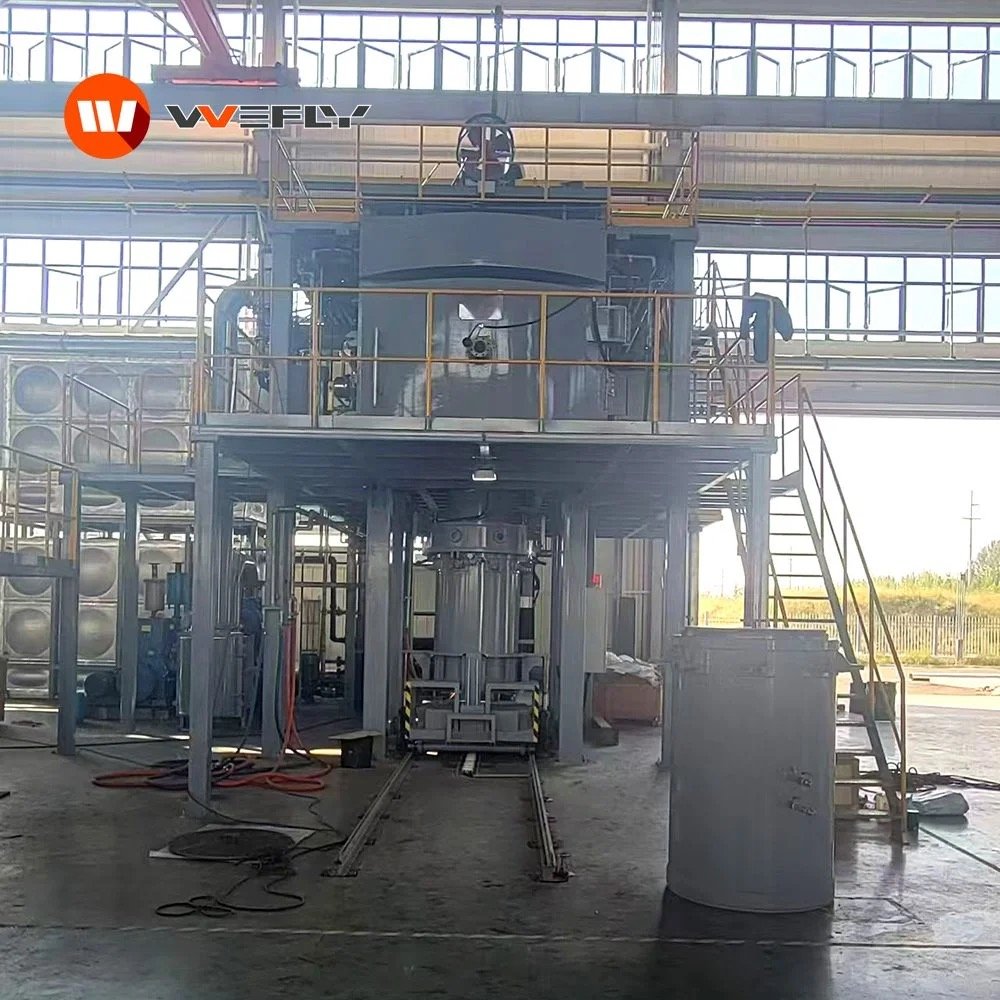
Vacuum Induction Melting Furnace for Metal Smelting
A Vacuum Induction Melting Furnace is a high-efficiency industrial furnace used for melting metals, ores, and alloy materials under controlled vacuum conditions. For factories that need stable smelting performance, cleaner molten metal, and accurate process control, this type of furnace is a practical solution.
In modern metallurgical production, melting quality directly affects the final product. Temperature stability, melting speed, chamber atmosphere, material cleanliness, and equipment reliability all influence downstream casting, refining, alloy preparation, and metal recovery.
The WOLFU Industrial Vacuum Induction Melting Furnace is designed for copper ore, iron ore, antimony ore, lead ore, and other metal material smelting. It combines electromagnetic induction heating, vacuum processing, PLC control, water cooling, and customized chamber design for different industrial applications.
What Is a Vacuum Induction Melting Furnace?
A vacuum induction melting furnace is a melting system that uses electromagnetic induction to heat and melt metal materials inside a vacuum chamber. Unlike traditional fuel-fired furnaces, induction melting directly heats the metal charge through electromagnetic energy.
The furnace usually includes an induction power supply, copper induction coil, melting chamber, crucible, vacuum system, water cooling system, temperature control system, and PLC control cabinet. These components work together to provide fast heating, controlled melting, and stable operation.
Under vacuum conditions, the furnace chamber reduces air exposure during melting. This helps limit unwanted oxidation and contamination. For metals and alloys that require cleaner melting conditions, vacuum induction melting can provide better process control than open-atmosphere melting.
In industrial production, this furnace can be used for ore smelting, metal recovery, alloy preparation, high-temperature melting, and molten metal preparation before casting or refining.
Why Vacuum Induction Melting Matters
Metal smelting is not only about reaching a high temperature. It is also about controlling the melting environment, reducing contamination, improving energy efficiency, and producing stable molten metal for the next process.
Traditional melting methods may expose materials to air, fuel gas, and uncontrolled furnace conditions. This can cause oxidation, impurity pickup, unstable melting quality, or higher post-processing requirements.
Vacuum induction melting helps improve this process by combining two important technologies: induction heating and vacuum control. Induction heating provides fast and efficient thermal energy. Vacuum processing helps create a cleaner and more controlled chamber atmosphere.
For factories working with valuable metals, alloy materials, ore concentrates, recycled metals, or high-temperature smelting projects, the result is better control over melting quality and production repeatability.
How the WOLFU Vacuum Induction Melting Furnace Works
Step 1: Material Loading
The process begins by loading raw materials into the furnace crucible or melting chamber. These materials may include copper ore, iron ore, antimony ore, lead ore, metal scrap, alloy feedstock, or other metal-bearing materials.
Before loading, operators should confirm material size, moisture level, impurity content, and batch weight. Proper preparation helps improve melting efficiency and protects the furnace system.
Step 2: Vacuum Chamber Sealing
After loading, the furnace chamber is closed and sealed. The vacuum system then removes air from the chamber to create a controlled processing environment.
This step helps reduce oxygen exposure during melting. For many metal materials, reducing air contact can improve molten metal quality and reduce unwanted surface oxidation.
Step 3: Induction Heating
The induction power supply sends current through the copper induction coil. This creates an electromagnetic field that heats the metal charge inside the crucible.
Because induction heating acts directly on the material, it can provide fast heating speed and high thermal efficiency. The WOLFU furnace can reach high-temperature working conditions up to 1800°C, making it suitable for demanding smelting applications.
Step 4: Melting and Holding
Once the material reaches the required temperature, it becomes molten metal. The furnace can then hold the melt at a controlled temperature to support process stability.
Holding time depends on the material type, melting goal, batch size, and downstream process. Accurate temperature control helps reduce process fluctuation and improves final product consistency.
Step 5: Molten Metal Discharge
After melting is complete, the molten metal can be transferred for casting, refining, alloying, or further metallurgical processing. The final product from this process is metal liquid ready for the next production step.
Key Advantages of the WOLFU Vacuum Induction Melting Furnace
High-Temperature Melting Performance
The WOLFU furnace is designed for high-temperature industrial smelting, with a working temperature up to 1800°C. This makes it suitable for processing different metal materials and ore smelting applications.
High-temperature performance is important for metallurgical projects because different materials require different melting points, holding temperatures, and process curves.
Efficient Electromagnetic Induction Heating
The furnace uses an induction copper coil as the heating element. Electromagnetic induction heating provides fast, direct, and efficient thermal energy to the metal charge.
Compared with some traditional heating methods, induction melting can improve heating speed, reduce heat loss, and support more responsive process control.
Controlled Vacuum Melting Environment
The vacuum chamber helps reduce air exposure during melting. This is useful for customers who need cleaner melting conditions and more controlled smelting quality.
Vacuum processing can help reduce oxidation and improve the stability of molten metal preparation. This is especially valuable for high-value metal materials and industrial projects requiring better process control.
PLC Control System
The WOLFU vacuum induction melting furnace uses a PLC control system. This allows operators to manage melting temperature, process steps, equipment status, and system operation more efficiently.
For industrial production, PLC control helps reduce manual operation errors and improves repeatability between different batches.
Customizable Chamber Size
Different customers process different materials, batch sizes, and production volumes. A fixed furnace size may not be suitable for every project.
WOLFU can customize the chamber size and furnace configuration according to customer requirements. This helps match the equipment to the actual raw material type, production capacity, and workshop layout.
Stable Water Cooling System
Induction melting equipment generates high heat during operation. A stable cooling system is necessary to protect the induction coil, power supply, furnace body, and related components.
The WOLFU furnace includes a water cooling system to support long-term industrial operation and equipment stability.
What Materials Can This Furnace Process?
The WOLFU vacuum induction melting furnace is suitable for copper ore, iron ore, antimony ore, lead ore, and other metal materials. It can also be used in selected alloy preparation and recycled metal melting applications depending on the project requirement.
For copper-related projects, the furnace can support molten copper preparation before casting or refining. For iron and alloy applications, it can provide high-temperature melting with controlled process conditions.
For antimony, lead, and other metal-bearing materials, the furnace can be used as part of a smelting or recovery process. The specific process design should be evaluated according to material composition, target product, capacity requirement, and environmental conditions.
Because different materials behave differently during melting, WOLFU can help customers review raw material characteristics and recommend a suitable furnace configuration.
Common Industrial Applications
Ore Smelting Projects
This furnace can be used for smelting copper ore, iron ore, antimony ore, lead ore, and selected metal-bearing materials. It is suitable for projects that need controlled high-temperature processing and molten metal output.
Metal Recovery Operations
Recycling and recovery plants can use vacuum induction melting equipment to process metal feedstock and prepare molten metal for further refining or casting.
Alloy Preparation
Manufacturers that need alloy preparation can use induction melting to combine selected metal materials under controlled conditions. This helps improve batch consistency and production control.
Foundry and Casting Support
The molten metal produced by the furnace can be used in downstream casting processes. Stable melting temperature and controlled molten metal preparation are important for casting quality.
How to Choose the Right Vacuum Induction Melting Furnace
The first step is to define the raw material. Copper ore, iron ore, lead ore, antimony ore, alloy materials, and recycled metals may require different furnace designs, crucible materials, power levels, and temperature control settings.
The second step is to confirm the melting capacity. WOLFU’s product page lists flexible melting capacity options from small-scale melting to larger industrial configurations. The right capacity depends on batch size, production schedule, and target output.
The third step is to check the power supply and workshop conditions. Industrial induction melting equipment requires proper electrical supply, cooling water, floor space, ventilation planning, and operator access.
The fourth step is to evaluate control requirements. For basic melting, simple operation may be enough. For repeated industrial production, PLC control and process monitoring are more useful.
The fifth step is to consider future expansion. If production volume may increase later, it is better to choose a furnace configuration that allows stable long-term operation rather than selecting only by the lowest initial cost.
Related WOLFU Furnace and Metal Processing Equipment
For customers who need other industrial melting solutions, WOLFU also provides the Medium Frequency Induction Melting Furnace, which is suitable for metal smelting, foundry production, and industrial melting applications.
For aluminum processing projects, the Aluminum Rod Continuous Casting Machine can support continuous casting production after melting and preparation.
You can also read WOLFU’s related blog article, Medium Frequency Induction Melting Furnace for Metal Smelting, to learn more about induction furnace applications in industrial metal processing.
Why Choose WOLFU?
WOLFU focuses on industrial furnace systems, metal processing equipment, recycling solutions, and customized production line design. For vacuum induction melting projects, customers often need more than a single furnace. They need equipment selection, process matching, installation planning, cooling system configuration, and long-term technical support.
WOLFU can provide customized furnace recommendations based on raw material type, melting capacity, power demand, chamber size, cooling conditions, and workshop layout.
The company can also support customers with pre-shipment inspection, machinery test reports, video outgoing inspection, spare parts support, and after-sales guidance. These services help industrial users reduce project risk and improve equipment operation stability.
For customers working on copper, iron, lead, antimony, alloy, or metal recovery projects, a properly configured vacuum induction melting furnace can improve melting efficiency, process control, and production reliability.
Conclusion
A Vacuum Induction Melting Furnace is an efficient and controlled solution for industrial metal smelting. By combining electromagnetic induction heating, vacuum processing, high-temperature performance, PLC control, and customizable design, it supports cleaner and more stable molten metal preparation.
For metallurgical plants, foundries, recycling facilities, and metal recovery projects, this equipment can help improve melting efficiency, reduce process instability, and support downstream casting or refining operations.
If your project requires copper ore, iron ore, antimony ore, lead ore, alloy, or recycled metal melting, WOLFU can recommend a furnace configuration based on your material, capacity, power supply, and production goals.
CTA: Contact WOLFU today to request a customized quotation for the Vacuum Induction Melting Furnace.
FAQ
What is a vacuum induction melting furnace used for?
A vacuum induction melting furnace is used for melting metals, ores, alloys, and selected recycled metal materials under vacuum conditions. It is suitable for smelting, alloy preparation, metal recovery, and molten metal production before casting or refining.
What materials can the WOLFU vacuum induction melting furnace process?
The WOLFU furnace can process copper ore, iron ore, antimony ore, lead ore, and other metal materials. The exact configuration should be selected according to material type, melting temperature, batch size, and production requirements.
What is the main advantage of vacuum induction melting?
The main advantage is better process control. Vacuum induction melting combines efficient electromagnetic heating with a controlled chamber environment, helping reduce oxidation, improve molten metal cleanliness, and support stable industrial production.