
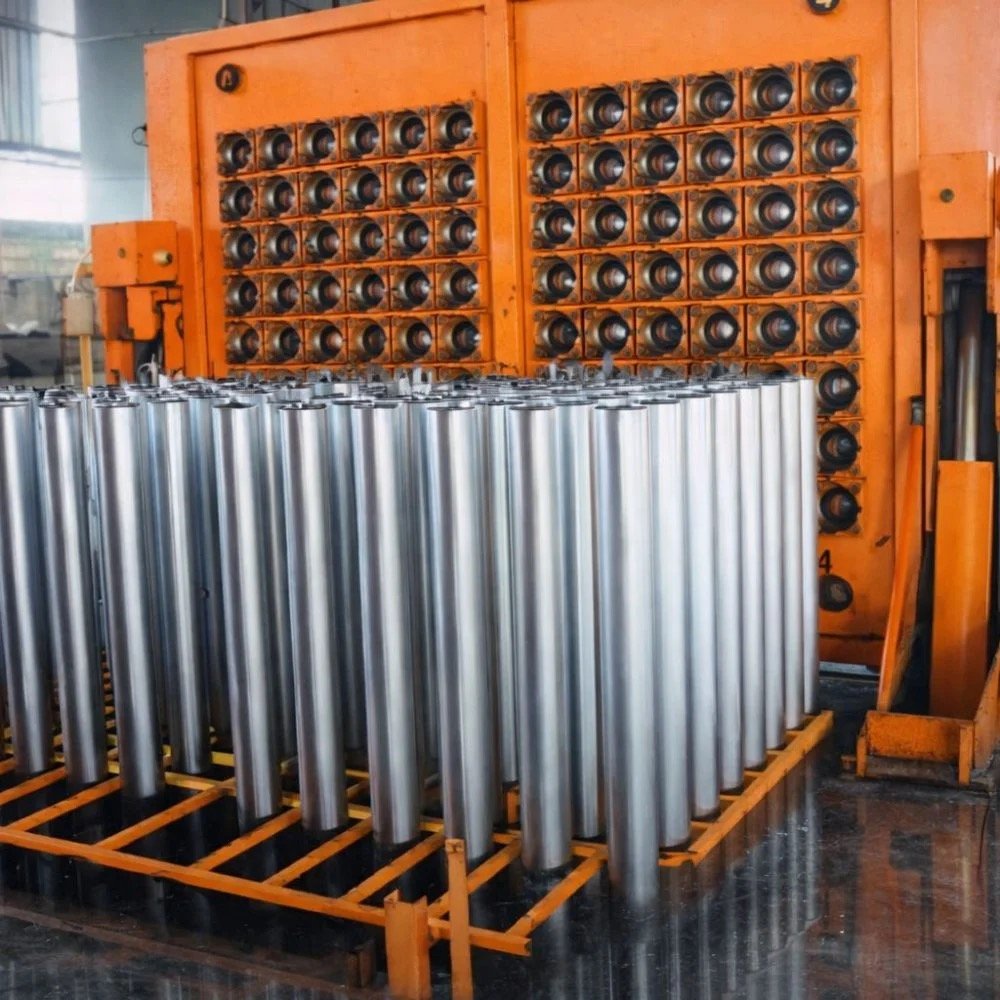
Why an Aluminum Rod Continuous Casting Machine Is a Smart Choice for Efficient Rod Production
An aluminum rod continuous casting machine is a practical solution for manufacturers that need stable output, better material use, and efficient rod production. In aluminum processing, production speed alone is not enough. Plants also need consistent rod diameter, smooth process flow, and a system that can work with recycled aluminum materials. That is why continuous casting systems are widely used in aluminum rod production for wire, cable, and related industrial applications. WOLFU’s product page presents this machine as an integrated production line for 8–20 mm aluminum round bars, designed for efficient production from recycled aluminum scrap, used beverage cans, and aluminum alloy materials.
For many factories, this kind of system is especially attractive because it combines several important steps in one line. According to the product page, the equipment integrates aluminum melting, temperature holding, casting, and cuttinginto a compact process. WOLFU also states that the machine is suitable for small and medium aluminum processing plants, offering a cost-effective route to stable aluminum rod manufacturing.
What Is an Aluminum Rod Continuous Casting Machine?
An aluminum rod continuous casting machine is a production system that converts molten aluminum into continuously formed aluminum rods or round bars. In this type of process, the molten metal is first melted and stabilized, then cast into rod form and cut to the required length. On the WOLFU page, the machine is described as an 8–20 mm aluminum round bar production line that supports continuous casting with stable and efficient output.
This kind of equipment is closely connected to downstream manufacturing. WOLFU specifically notes that the machine is designed for producing small-diameter aluminum or copper rods used in wire and cable manufacturing. That fits broader industry use as well, since rod and bar are common starting forms for later fabrication processes, and wire production commonly begins from rod stock before drawing.
Why Continuous Casting Matters in Aluminum Rod Production
Stable Process Flow
One of the biggest advantages of a continuous casting system is process continuity. Instead of handling each step separately with more manual transfer, a continuous casting line connects melting, holding, casting, and cutting in a more organized flow. WOLFU emphasizes this integrated structure on the product page, noting that the system combines these production stages to help ensure stable and efficient rod output.
For plant managers, this matters because smoother process flow often means fewer interruptions, easier coordination, and more consistent product quality. In practical production, a stable flow can help reduce bottlenecks between furnace work and final billet or rod handling. That is especially useful for factories trying to improve daily output without building an overly complex plant layout.
Better Use of Recycled Aluminum
Another major benefit is raw-material flexibility. WOLFU states that this aluminum rod continuous casting machine can use recycled aluminum scrap, aluminum cans, aluminum wire, coils, and aluminum alloy materials as feedstock. The product page even notes that used beverage cans are considered one of the better raw materials because of their relatively high purity.
This aligns with the broader aluminum industry trend toward higher recycled-metal use. The Aluminum Association notes that recycled aluminum plays a major and growing role in U.S. aluminum supply, and that recycled material can substitute for primary aluminum in many end-use applications. That makes equipment designed for scrap-based remelting and casting especially relevant for today’s market.
Efficient Output for Small and Medium Plants
Not every aluminum processor needs a huge industrial complex. Many businesses need compact equipment that is easier to install, easier to run, and better matched to medium-scale demand. WOLFU positions this machine as a compact production line with small investment, suitable for small and medium aluminum processing plants seeking efficient and cost-effective production solutions.
That makes this kind of machine appealing for growing businesses. A smaller plant can still benefit from an organized production flow, while keeping equipment investment more manageable. When the machine can handle both recycled feedstock and continuous casting, it gives manufacturers a practical path toward upgrading output without overbuilding their operation.
Why the WOLFU Aluminum Rod Continuous Casting Machine Is Practical
The WOLFU Aluminum Rod Continuous Casting Machine is designed for producing 8–20 mm aluminum round bars and is suitable for 5–60 tons per day of production, depending on configuration. The technical parameters on the product page list 380V voltage, 3–8 inch billet size, 30 kg coil weight, and reducer tilting or hydraulic tilting options for furnace operation. These details show that the machine is designed as a practical, configurable solution rather than a one-size-fits-all setup.
WOLFU also states that the final product can be aluminum rod or aluminum bar, and that the standard billet length can reach up to 5 meters, with cutting available based on customer requirements. For a buyer, this means the line is built to support real production needs, including size flexibility and final-length control.
Another practical advantage is the machine’s target market. WOLFU says the equipment is widely used in aluminum processing plants, wire and cable manufacturing factories, and aluminum recycling facilities. Since aluminum wire and cable remain an important downstream use of aluminum products, that application focus makes sense in the context of broader aluminum demand growth.
How the Production Process Works
Step 1: Aluminum Melting Furnace
The first step is melting the aluminum raw material. According to WOLFU, the furnace can process aluminum scrap such as aluminum cans, coils, wires, and aluminum alloy materials. This allows the plant to turn recyclable aluminum into useful molten metal for rod casting.
Step 2: Temperature Holding Furnace
After melting, the molten aluminum is transferred to the temperature holding furnace. WOLFU explains that this stage stabilizes the metal temperature before continuous casting. Temperature stability is important because casting quality depends heavily on having consistent molten-metal conditions during the forming process.
Step 3: Casting Platform
In the next stage, the molten aluminum flows into the casting platform, where it is formed into round billets during the continuous casting process. This stage is the core of the line because it turns molten aluminum into a controlled, repeatable rod form for later handling and downstream use.
Step 4: Cutting Machine
WOLFU states that the standard billet length can reach up to 5 meters, and a cutting machine can then cut the product to the required size. This helps buyers match the output format to their plant needs and later handling requirements.
Main Applications of This Machine
Aluminum Wire and Cable Manufacturing
One of the clearest uses for this equipment is aluminum rod production for wire and cable manufacturing. The WOLFU page directly states that the machine is designed for small-diameter rods used in this sector. Rod is a standard intermediate product before later fabrication steps, and wire production commonly starts from rod stock that is then drawn down to smaller sizes.
Aluminum Recycling Plants
The machine is also a strong fit for recycling applications. Because it can process aluminum scrap, cans, coils, and alloy materials, it supports a practical circular-production model. The Aluminum Association notes that increasing recycled aluminum capacity is a major growth path for the industry, which supports the value of equipment built around recycled-metal utilization.
Small and Medium Aluminum Processing Factories
WOLFU repeatedly positions the system for small and medium plants. That makes it useful for factories that want to add aluminum rod production without investing in a much larger, more complex production system. The compact layout and integrated design can be especially attractive where floor space, staffing, or capital budget is limited.
What Buyers Should Check Before Choosing an Aluminum Rod Casting Line
1. Rod Diameter Range
Buyers should first confirm the finished size they need. This machine supports 8 mm to 20 mm rod diameters, which covers a useful range for round bar and rod production. The selected machine should match both current orders and potential future product plans.
2. Daily Production Capacity
Capacity is another key factor. WOLFU lists 5–60 tons per day, which means different configurations can be matched to different plant sizes. A properly sized line helps avoid under-capacity bottlenecks or unnecessary overspending on a system that is larger than needed.
3. Raw Material Type
Because this line is designed for recycled aluminum scrap, UBC, aluminum alloy, wires, and coils, buyers should assess what feedstock they expect to process most often. A machine that matches the real input material can improve operating efficiency and reduce preparation problems.
4. Tilting and Handling Configuration
WOLFU offers reducer tilting or hydraulic tilting options. Buyers should review which option better fits their plant’s operating style, maintenance expectations, and automation needs. Small engineering details like this can have a real effect on daily usability.
5. Supplier Support
Equipment installation is easier when the supplier provides engineering support. WOLFU states that it offers plant layout design, production line planning, factory testing, shipping coordination, installation guidance, and long-term technical support. For B2B buyers, this is an important part of the decision because service quality can affect how quickly the line goes into stable production.
Why Supporting Equipment Matters
An aluminum rod casting line often works best as part of a larger production setup. On the same WOLFU site, related equipment includes the Induction Melting Furnace, the Closed Water Cooling Tower, and the Crucible Melting Furnace. Matching the casting machine with the right melting and cooling systems can improve line stability and simplify plant planning.
This matters even more in recycling-based operations. If a plant is converting scrap aluminum into cast rod for downstream manufacturing, consistent upstream melting and controlled cooling help protect product quality and keep the line moving smoothly. WOLFU’s full-solution positioning reflects this kind of integrated production thinking.
Final Thoughts
An aluminum rod continuous casting machine is a smart investment for manufacturers that need efficient rod production, stable quality, and better use of recycled aluminum. It offers a practical way to connect melting, temperature holding, casting, and cutting in one organized production line. WOLFU’s product page shows that this machine is built for 8–20 mm rod production, 5–60 tons/day output, and practical use in wire and cable manufacturing, recycling facilities, and small to medium aluminum processing plants.
If your business is looking for a reliable solution for aluminum round bar and rod production, the WOLFU Aluminum Rod Continuous Casting Machine is a strong option to consider. It supports recycled raw materials, compact plant layout, and efficient continuous casting performance. Explore the product here: Aluminum Rod Continuous Casting Machine by WOLFU.
Recommended Internal Links
- Aluminum Rod Continuous Casting Machine
- Induction Melting Furnace
- Closed Water Cooling Tower
- WOLFU Blog