
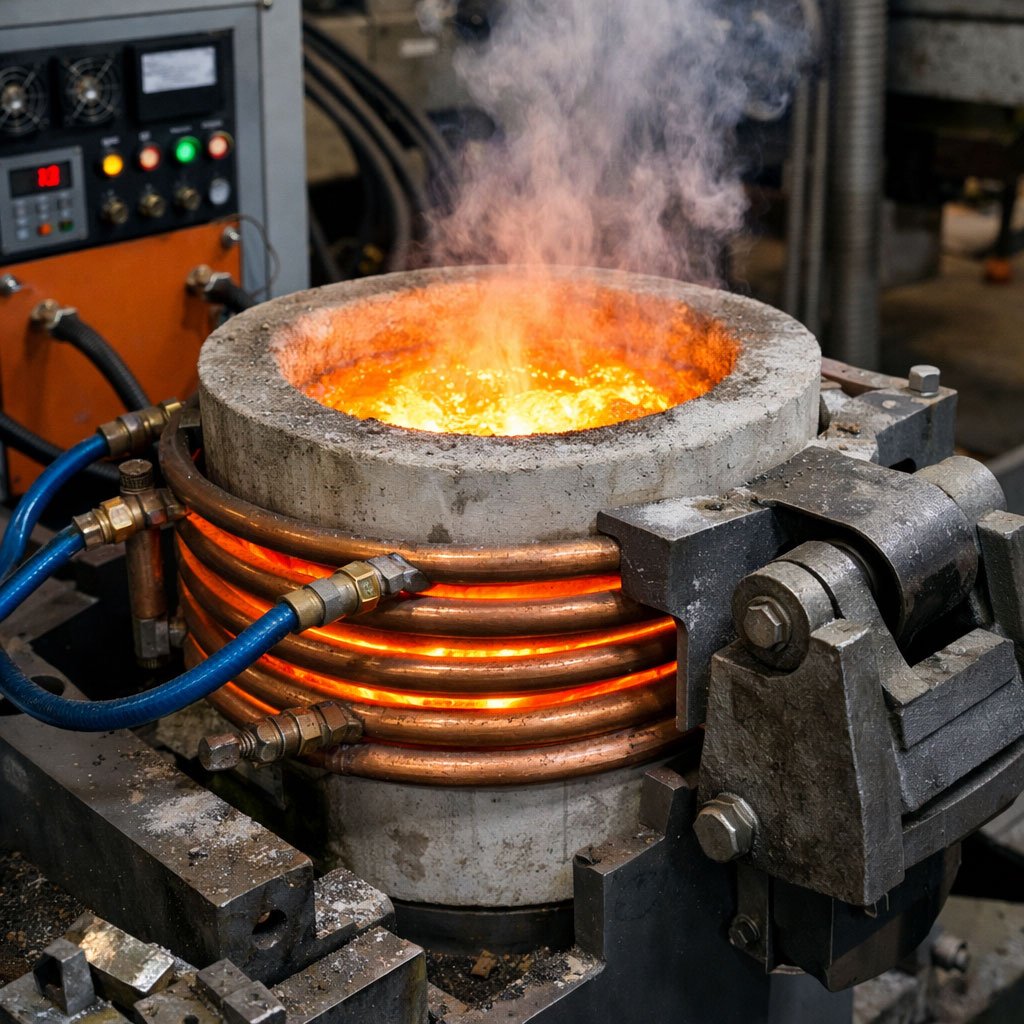
What Is an Induction Melting Furnace and How Does It Work?
An induction melting furnace is a modern metal melting system widely used in metal recycling, foundries, and metal casting industries. It uses electromagnetic induction to heat and melt metals such as aluminum, copper, gold, silver, and steel without direct contact between the heat source and the material.
Compared with traditional fuel furnaces, induction furnaces provide higher efficiency, precise temperature control, faster melting speed, and lower environmental impact. These advantages make them an essential technology for modern metal processing and recycling operations.
1. What Is an Induction Melting Furnace?
An induction melting furnace is an electric furnace that melts metal using induction heating. The system generates a strong electromagnetic field through a copper coil. When metal is placed inside the coil, the alternating magnetic field induces electric currents within the metal, producing heat and eventually melting it.
Induction furnaces are widely used for:
- Aluminum recycling
- Copper and brass melting
- Precious metal refining (gold, silver)
- Steel and iron casting
- Metal ingot production
Because the heating occurs directly inside the metal, induction furnaces provide clean, efficient, and uniform heating.
2. Main Components of an Induction Furnace
A typical induction melting furnace consists of several key components:
- Induction Coil – Generates the electromagnetic field used for heating.
- Crucible – A heat-resistant container that holds the metal during melting.
- Power Supply System – Converts electrical power into high-frequency current.
- Cooling System – Prevents overheating of the coil and electrical components.
- Control System – Regulates power, temperature, and melting parameters.
These components work together to ensure stable and efficient metal melting operations.
3. How Does an Induction Melting Furnace Work?
The working principle of an induction melting furnace is based on electromagnetic induction. The melting process typically follows these steps:
- Power Generation – The power supply sends alternating current to the induction coil.
- Magnetic Field Creation – The coil generates a rapidly alternating magnetic field.
- Eddy Current Formation – The magnetic field induces electric currents within the metal.
- Heat Generation – Electrical resistance within the metal produces intense heat.
- Metal Melting – The metal reaches its melting point and becomes liquid.
Since the heat is generated directly within the metal, the process is fast, energy-efficient, and highly controllable.
4. Advantages of Induction Melting Furnaces
Induction melting technology offers several advantages compared with traditional gas or coal furnaces:
- Energy Efficiency – Converts electrical energy directly into heat.
- Fast Melting Speed – Reduces production time.
- Precise Temperature Control – Ideal for high-quality metal casting.
- Clean and Environmentally Friendly – No combustion or harmful emissions.
- Uniform Metal Quality – Electromagnetic stirring improves metal composition.
These benefits make induction furnaces the preferred choice for modern metal processing facilities.
5. Common Applications
Induction melting furnaces are widely used across multiple industries, including:
- Metal recycling plants
- Aluminum can recycling production lines
- Precious metal refining workshops
- Foundries and casting factories
- Industrial metal ingot production
Small furnaces may melt 1–5 kg of precious metals, while industrial systems can process several tons of metal per hour.
6. Choosing the Right Induction Furnace
When selecting an induction melting furnace, several factors should be considered:
- Type of metal to be melted
- Required melting capacity
- Energy consumption
- Automation level
- Cooling and safety systems
Industrial manufacturers often provide customized solutions depending on production scale and metal type.
7. Conclusion
An induction melting furnace is one of the most efficient and environmentally friendly technologies for modern metal melting. By using electromagnetic induction to generate heat directly inside the metal, it delivers faster melting, higher efficiency, and better metal quality.
With the growing demand for metal recycling and sustainable manufacturing, induction melting furnaces will continue to play a crucial role in the global metal processing industry.
FAQ
What metals can be melted in an induction furnace?
Induction furnaces can melt aluminum, copper, brass, gold, silver, steel, and many other conductive metals.
Is an induction furnace energy efficient?
Yes. Induction furnaces are highly energy-efficient because heat is generated directly inside the metal rather than through combustion.
How fast can an induction furnace melt metal?
Depending on furnace capacity and power level, metals can typically melt within a few minutes to an hour.